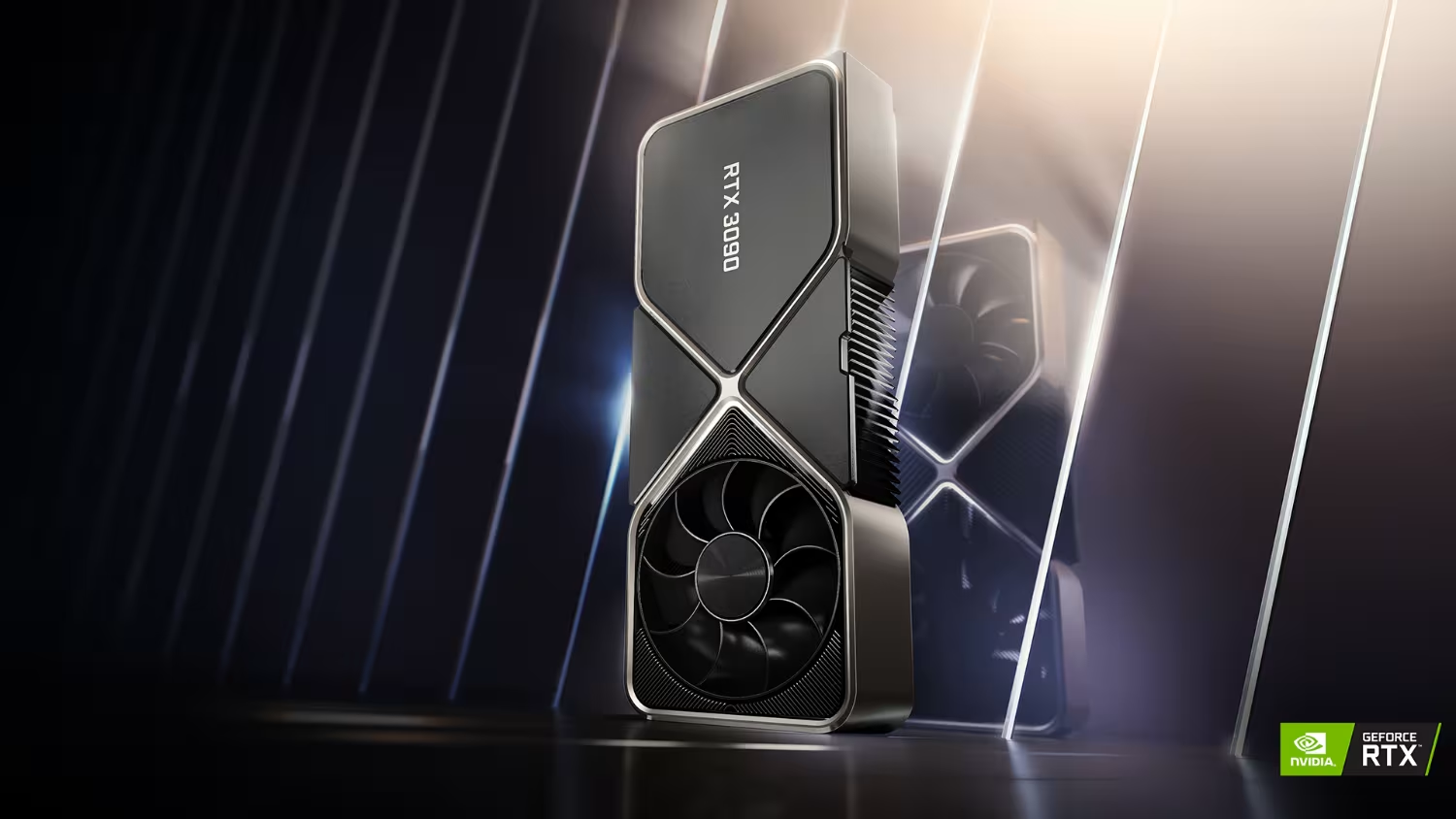
An open-source project called gpu-unlock, by developer Zagitta, promises to free up compute performance that would be limited on NVIDIA's GeForce RTX 30 cards. The tool is a Linux kernel module that acts before NVIDIA's official driver loads, changes hardware speed-selection registers and resets the GPU — without requiring a VBIOS flash or a modified driver.
According to the project's own repository, the unlock doubles the issue speed of FP/BF16 FMA instructions with FP32 accumulation on GA102, GA103, GA104 and GA106 cards, bringing them closer to the behaviour of NVIDIA's professional GPUs. One important classification: this is a STATEMENT by the developer and community reports, not an official confirmation from NVIDIA — so far, no response from the company on the matter has been found.
The reported numbers
The reported numbers are striking. In a community compatibility report cited by the press, an RTX 3090 jumped from 77.5 to 129.6 TFLOPS in BF16 matrix multiplication, and TF32 rose from 40.2 to 69.8 TFLOPS. The RTX 3090 Ti, according to the project's README, went from 87.5 to 157.4 TFLOPS in BF16 and from 42.6 to 82.6 TFLOPS in TF32.
In practice, however, gains depend heavily on the workload. One user reported about 16% improvement in long-prompt processing in local LLM inference, with token generation practically unchanged. In ComfyUI tests on an RTX 3090 Ti, throughput rose by 47% to 59% in BF16-heavy image-generation tasks. In short: large matrices and diffusion benefit; games, for now, have no proven gain — there are no independent FPS benchmarks.
How it works — and the risks
The project, created on October 18, 2026 and already with hundreds of stars on GitHub, combines the technique used to unlock CMP mining GPUs with the pre-driver timing of the UEFI approach. Installation is opt-in: it only works with the gpu_unlock.targets parameter on the kernel command line, and the module does nothing once NVIDIA's driver has taken over the card. There is also an experimental Windows port, demonstrated on a single system.
A warning is in order: the tool is experimental, touches firmware and the system boot, and installing it on a main PC carries risks. But the bigger story is something else — old hardware, bought years ago, gaining new life for local AI without buying a new card. If the numbers hold up in independent testing, the debate about artificial performance segmentation between gaming and professional cards gains a strong new chapter.
Sources: Zagitta/gpu-unlock repository on GitHub; Notebookcheck; WiseVoter.
Image credit: official NVIDIA GeForce RTX 3090 artwork, via TweakTown.
Transparency: this article was produced with the assistance of artificial intelligence, based on public posts on X and online sources, including the project's original repository and specialist press coverage. We recommend checking the original sources to confirm the details.
Muse