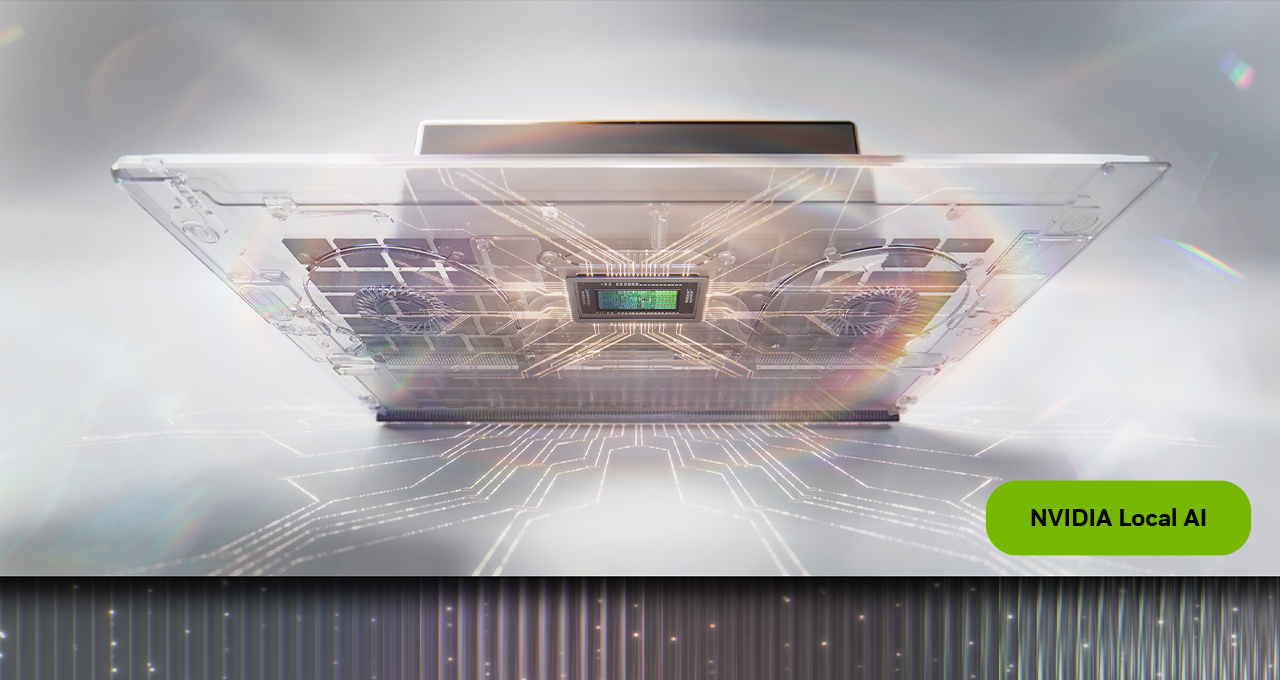
NVIDIA advanced its local AI ecosystem with the Personal AI Router (PAIR) and the RTX Spark platform, which combines a Blackwell GPU and Grace CPU in a superchip with up to 128 GB of unified memory and 1 petaflop of FP4 performance. Partners such as Lenovo and Acer are preparing compact PCs, and game developers including EA, Embark Studios and Ubisoft announced title support on the platform.
What happened?
During and after IFA 2026, NVIDIA detailed tools for running AI agents locally. PAIR is open-source software that discovers compatible PCs on the home network (RTX 20 series or newer, DGX Spark, RTX Spark and Mac M4+) and distributes inference requests among them without changing the agent harness. It works with Ollama, LM Studio and now has llama.cpp support.
In an official demo, a five-subagent workload took about 18 minutes on a single RTX Spark laptop and 8 minutes 48 seconds on a three-device cluster. llama.cpp and vLLM optimizations promise up to 1.9x faster local inference. Larger open models, including Nemotron 3.5 and Qwen, gained support.
Why this matters
The approach reduces cloud dependency for agents, improves privacy and makes use of idle home hardware. RTX Spark positions itself as a compact Windows PC that combines creation, AI development and gaming with ray tracing and DLSS, differentiating from the Mac experience on certain workloads.
Support from major publishers broadens the appeal beyond developers and AI enthusiasts. Management features in the NVIDIA App allow allocating the GPU between foreground apps and background agents.
What changes in practice
Users with multiple RTX PCs can build a local cluster without buying additional dedicated hardware. Developers gain a simpler path to local agents and larger models. Players on RTX Spark will have access to optimized titles from known studios, though full support depends on each release.
PAIR does not split a single model across GPUs; it routes independent requests. Performance results vary by model, hardware and workload parallelism.
Image credit: NVIDIA | Source: official NVIDIA blogs and IFA 2026 coverage
By Grok