CONFIRMED: six Japanese companies — TOPPAN Holdings, AISIN, Asahi Kasei, SoftBank, AGC and DIC — announced on 28 October 2026 a joint research and development project to build a materials development platform based on quantum computing. The proposal was selected by NEDO, Japan's New Energy and Industrial Technology Development Organization, under its programme for enhanced infrastructures for post-5G information and communication systems.
The project runs from fiscal 2026, ending 31 March 2027, through fiscal 2028. Its goal is to create a next-generation platform combining quantum computing calculations with artificial intelligence technologies such as machine learning, taking quantum computing from demonstration to real industrial application.
Why combine quantum computing and AI
According to the announcement, discovering new materials faster is an urgent priority for keeping Japanese chemical and materials manufacturers globally competitive. Data-driven approaches struggle to secure sufficient, high-quality, high-precision training data, while computational science simulations see costs surge as they gain accuracy and scale.
Quantum computers, which operate on the principles of quantum mechanics, have the potential to simulate the properties of molecules and electrons more efficiently than conventional computers. The hurdle is that current qubit counts and error rates do not yet allow large-scale calculations using quantum computers alone. The project's bet is to combine both worlds to work around those precision and scale limits.
The project's three tracks
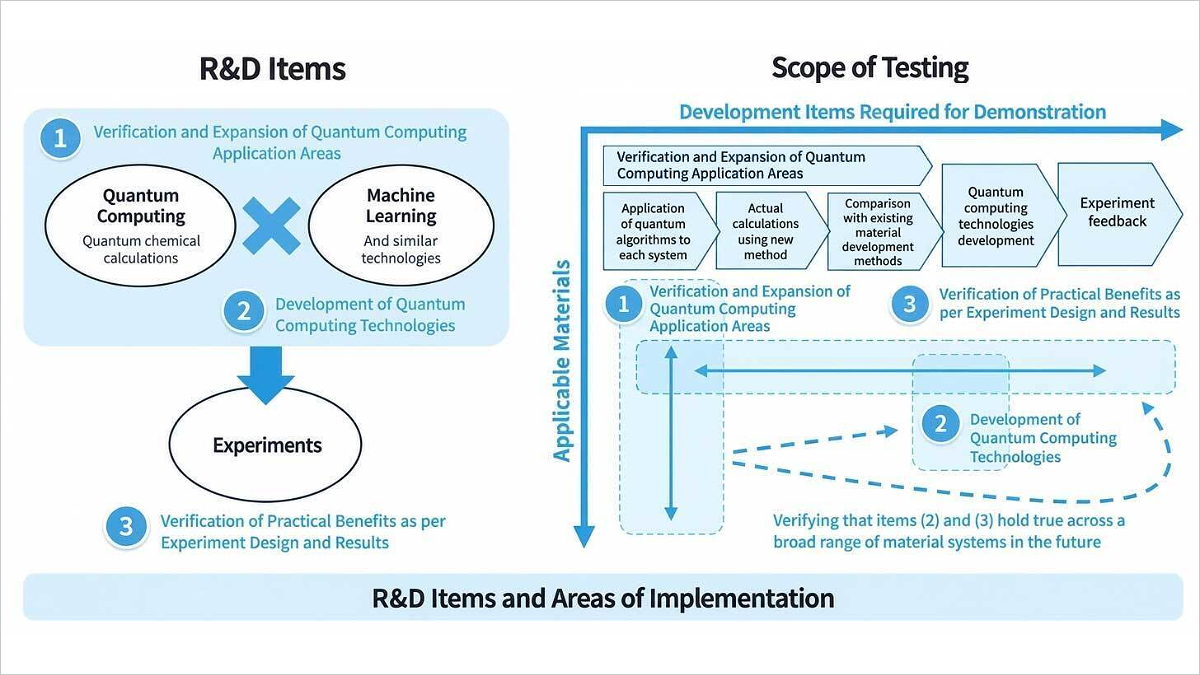
The first track verifies where quantum computing can be applied, among materials in high industrial demand, such as those needed for next-generation batteries, optical functional materials for new displays and sensors, and superconducting materials for next-generation devices.
The second track develops quantum computing utilisation technologies, integrating quantum calculations with AI to expand the scope of computational methods and verify solutions to the scale and cost limitations of conventional methods.
The third track runs simulation demonstrations with experiment feedback: materials are synthesised and evaluated based on simulation results, and experimental results are compared against simulated data to improve prediction accuracy and verify the practical benefit of quantum computing.
Each company's role
Rather than targeting a single material, the technologies will be applied across several industrially vital materials systems, with each company handling verification in its area of strength. TOPPAN works on hybrid quantum and classical algorithm methods for additive materials; AISIN verifies the application to superconducting materials; Asahi Kasei studies organic compounds such as electrolytes, polymer materials and inorganic materials such as electrodes.
SoftBank uses a computing platform connecting quantum computers with supercomputers to generate high-level data useful for materials development, with demonstrations in areas such as next-generation batteries. AGC develops methods for optical glass and electronic materials, and DIC predicts key properties of colorants and semiconductor materials before synthesis. The companies will also collaborate with specialised quantum computing institutions.
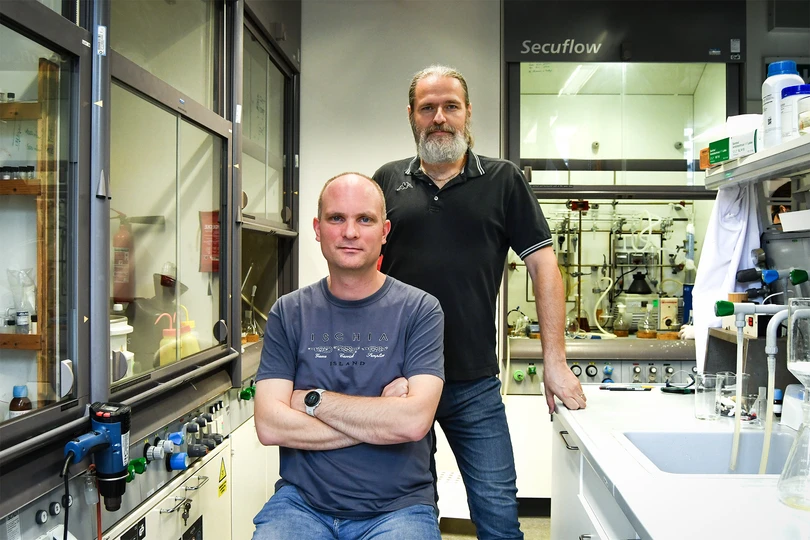
Image credit: SoftBank Corp., in material published with the project's official announcement.
Source: joint official announcement by the six companies, published by SoftBank on 28 October 2026.
Transparency: this article was prepared with the assistance of artificial intelligence, based on cross-checking public posts on X and the internet sources cited below. Readers are advised to consult the original sources to verify the data.
Muse