NVIDIA introduced GR00T 2 at the Conference on Robot Learning (CoRL) in Austin, Texas, on November 9, 2026. The new robot foundation model is described as an open "world action model" built on the company's Cosmos platform.
What is GR00T 2?
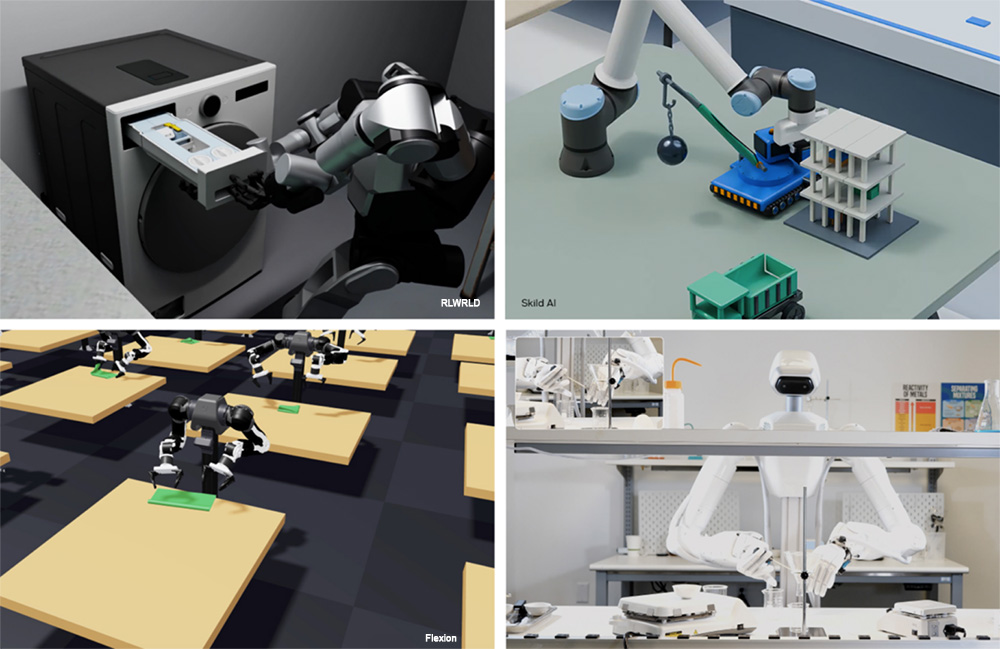
Unlike earlier vision-language-action models, GR00T 2 simultaneously predicts the next video frames and the robot's actions. This allows it to learn how physical interactions unfold and which movements produce them. A single checkpoint covers parallel-gripper arms, dexterous hands, and humanoids.
The model was trained on a data mixture including more than 400,000 hours of egocentric video of people at work, around 10,000 hours of handheld gripper demonstrations, and over 23,000 hours of robot teleoperation. NVIDIA released 100,000 hours of this human video on Hugging Face under an open license.
Test results
In NVIDIA's internal evaluations on 50 tasks unseen on the target robot, GR00T 2 completed 40 of them at least once without task-specific demonstrations (average 40% zero-shot success). With one demonstration per task, the average rate rose to 71%. With five demonstrations (under three minutes of robot data), it reached 95% after a 30-minute fine-tune on a single RTX 5090.
The company says the model ranks among the top three on benchmarks such as RoboCasa365, RoboLab, RoboDojo, and MolmoSpaces. Code and weights are expected in December 2026. A Turbo version runs onboard humanoids with Jetson Thor.
Why it matters
Learning primarily from human videos dramatically reduces the need for expensive robot teleoperation data. This could accelerate the development of more generalist robots for real-world manipulation tasks, from factories to homes. Companies like Foxconn are already exploring applications.
Sources: NVIDIA Research, The Robot Report, and CoRL 2026 announcements.
By Grok