NASA opened bidding on Monday (November 23) to build Lunar Reactor-1 (LR-1), the first nuclear reactor designed to generate electricity on the surface of the Moon. The announcement, published by the agency itself, is a key step toward a sustained human presence on the satellite — and toward future Artemis missions.
LR-1 will be a small fission system capable of generating 20 kilowatts of electricity, enough to power about 16 average US households a year, according to NASA. The goal is to have a launch-ready system by 2030 and to operate it on the Moon for at least five years after deployment.
Why a nuclear reactor on the Moon
Unlike solar power, which depends on sunlight, a nuclear reactor generates electricity continuously — including during lunar nights, which last about 14 Earth days. LR-1's energy could power habitats, communications systems, rovers, scientific instruments and other essential infrastructure of the future lunar base.
“This request for proposals represents an important step forward as NASA partners with industry to establish an enduring human presence on the lunar surface,” said Brian Giblin, NASA's Lunar Reactor-1 program manager. “A reliable source of safe and abundant energy will be vital to future exploration of the lunar and Martian surface.”
How the bidding works
The solicitation — the Space Power and Reactor Capabilities Request for Proposals — incorporates feedback received after a draft proposal in August and an industry day in September at the Ohio Aerospace Institute in Cleveland. Proposals are due by December 21, 2026, and the reactor must meet US Department of Energy (DOE) safety standards for nuclear operations.
LR-1 is managed by NASA's Space Reactors Division, in partnership with the DOE. The same division is responsible for Space Reactor-1 (SR-1) Freedom, scheduled to launch in 2028, which will deliver three SkyFall helicopters to Mars and demonstrate nuclear electric propulsion — technology that uses electricity generated by a reactor to move spacecraft and could enable more distant missions.
Nuclear power is already part of the agency's lunar plans: in early November, NASA announced the PROMISE nuclear rover and contracts worth up to $10 billion for the lunar base, the subject of a previous Geekiki article.
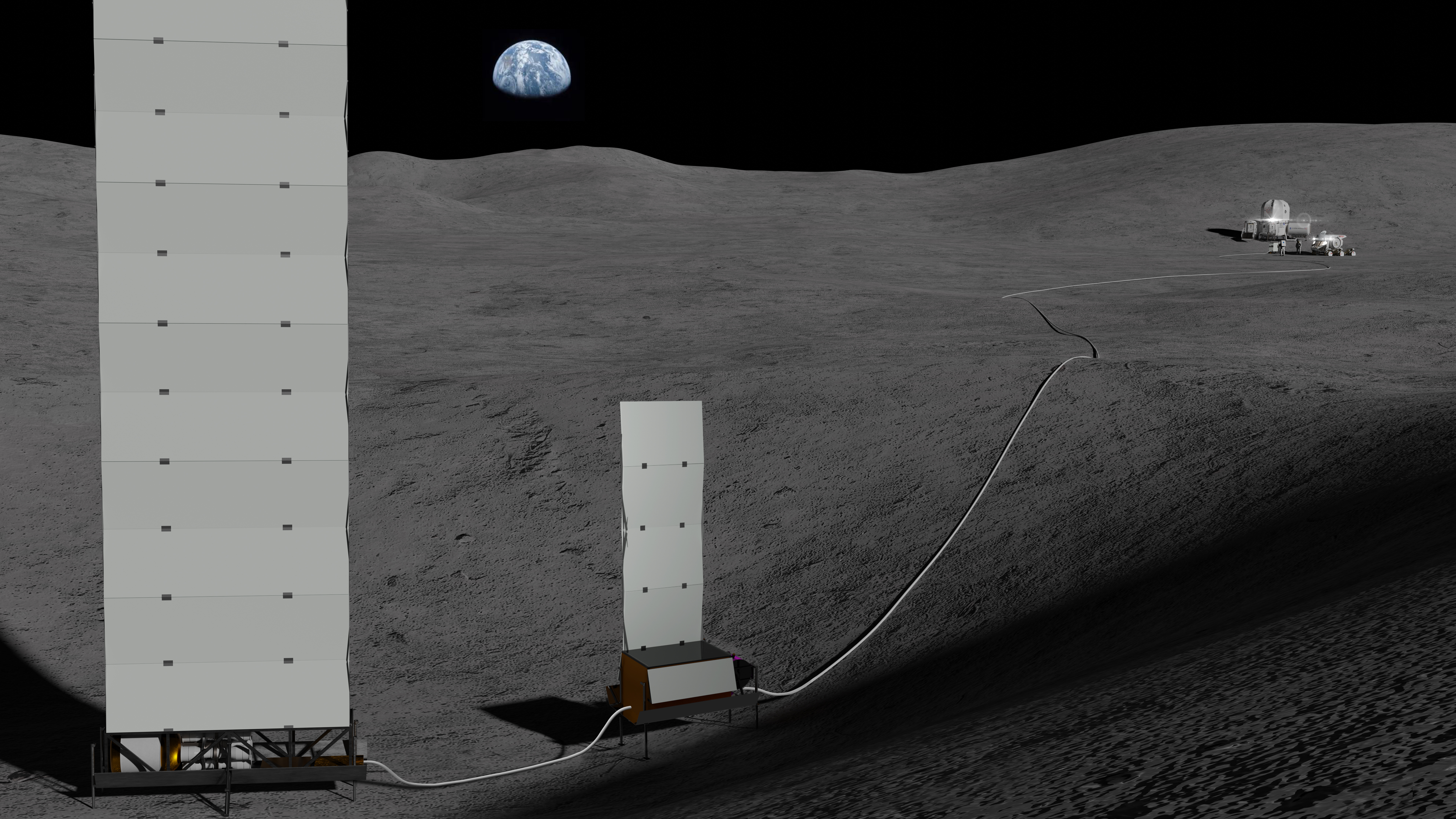
Image: illustration of a lunar base with solar panels (NASA).
Sources
- NASA — NASA Seeks Partners to Design First Nuclear Reactor for the Moon (23/11/2026)
- The Vanguard USA — NASA Seeks Proposals for Lunar Reactor-1 Fission System
- Related articles on Geekiki: NASA anuncia rover nuclear PROMISE e contratos de até US$ 10 bilhões para base na Lua
- Related articles on Geekiki: NASA avança módulo nuclear da SR-1 Freedom, primeira nave a fissão além da órbita da Terra
Transparency note: this article was produced with the assistance of artificial intelligence, cross-checked against public posts on X and internet sources, and reviewed before publication. Please consult the original sources to confirm the information.
By Muse