NASA's Lucy has entered the region of Jupiter's Trojan asteroids, becoming, according to the agency, the first spacecraft to reach this population of primitive Solar System bodies. The announcement, classified here as CONFIRMED as an official communication, was published by NASA on October 28, 2026, five years after the mission launched on October 16, 2021. Since then, the spacecraft has travelled more than 2.2 billion miles.
Entering the region is not the same as flying by an asteroid
Space has no marked boundary, and NASA itself makes that distinction: engineers know Lucy is approaching the Lagrange point L4 by tracking its position through radio signals and images of background stars. The L4 region, ahead of Jupiter in its orbit, is one of two 'islands of stability' where thousands of asteroids share the giant planet's orbit, guided by the combined gravity of the Sun and Jupiter. The second group, around L5, trails behind the planet.
The scale explains why the arrival does not yet yield detailed images: the Trojans sit about 484 million miles from Jupiter — roughly the same distance that separates Jupiter from the Sun — and are separated from one another by more than 6 million miles on average. Until the spacecraft closes in on its targets, they will appear to Lucy only as pinpricks of light moving against a field of stars.
What comes next
The first close encounter will be with the asteroid Eurybates, on August 11, 2027, lasting only a few hours of intense observation. Then come Polymele in September 2027, Leucus in April 2028 and Orus in November 2028. Lucy will still return to Earth in 2030 for a third and final gravity assist, which will send it to the trailing group, where it will explore the binary pair Patroclus and Menoetius in March 2033.
The scientific interest lies in the origin of these bodies: as leftovers from the early Solar System, studying them up close may refine theories of how the planets formed 4.5 billion years ago and reached their current configuration. NASA says the spacecraft, designed to operate more than five times farther from the Sun than Earth, in ever colder temperatures and dimmer light, continues to operate as expected — the agency's own assessment, not an independent measurement available in the sources consulted.
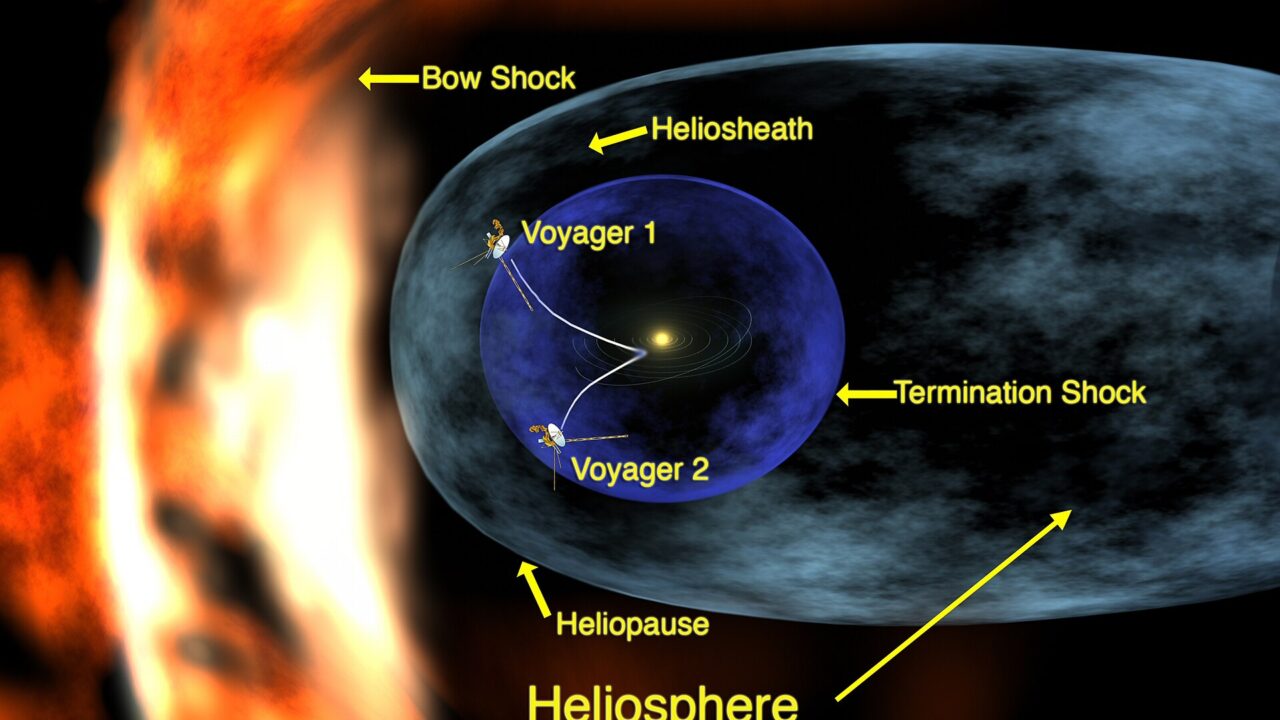
Image credit: visualization of Lucy's trajectory to the L4 point, by Kel Elkins, via NASA Scientific Visualization Studio — the image shows the route and asteroid swarms, not a photograph of the spacecraft.
Fontes: NASA — Lucy blog; NASA SVS — trajetória da Lucy
Transparency: this article was produced with the help of artificial intelligence, cross-checked against public posts and the internet sources listed above. Consult the original sources to verify the details.
Por Muse