Libreboot has dropped its ban on AI-generated contributions a month after creating it. On Friday, November 20, 2026, the project's maintainer, Leah Rowe, deleted the AGENTS.md file from lbmk, Libreboot's build system, arguing that the ban was unenforceable: she said she was not going to enforce it, that she would end up making exceptions over time, and that she could not promise what she could not reliably deliver. On the same day, the project's site published the AI Slop Reduction Policy, which replaces the ban.
What changes
AI-assisted contributions are allowed in Libreboot again. In place of the outright ban, the project promises efforts, "where feasible", to reduce AI's influence on the code it uses — which may include reverting patches upstream, rewriting parts and even forking projects. The policy itself makes clear that it is neither a fixed rule nor a disguised ban: the text says the page does not ban the use of or facilitation of AI in the project, and that Libreboot is too small a project to fight the whole world.
Why the ban fell
The core argument is practical: the projects Libreboot depends on already accept AI-generated code. Coreboot, for example, does not reject AI-generated contributions to its repository, and the same goes for other projects, such as EDK2 and several GNU projects. To genuinely oppose AI, Libreboot would have to remove all AI code from every project it uses — and, as the maintainer wrote, it cannot just fork every project under the sun. The ban had been created in October 2026, in harsh language, and was refined over the following weeks; it lasted about a month.
A concrete example appears in the policy itself: a patch fixing a bug was reverted because the fix was AI-generated — as a result, battery charge thresholds can no longer be set automatically (they can still be adjusted with ectool). That is the kind of cost the new policy accepts paying, case by case, instead of a blanket ban.
The maintainer's position
Rowe has not changed her mind about the technology: in the text, she says she is personally against LLM technology in its current form and always prefers human-made work. But she says she will judge each contribution on its merits — and that, if the result is more people escaping proprietary software, the end justifies the means. Libreboot is a coreboot distribution that replaces proprietary BIOS/UEFI firmware on boards and laptops with free firmware; its mission, in the policy's own words, is to vastly increase the number of people using free boot firmware. The project's latest release, 26.11 "Rubber Duck", came out on November 12.
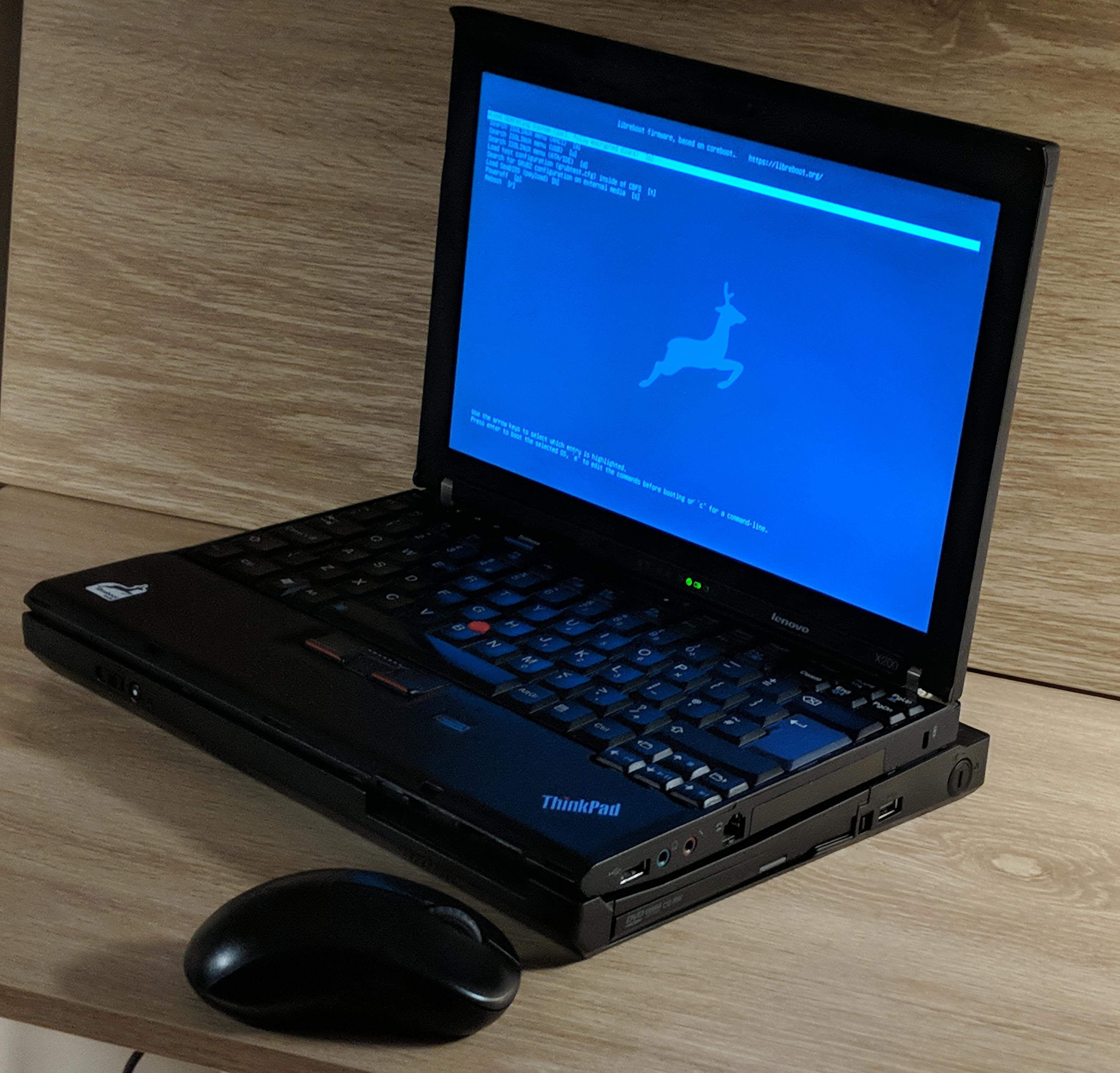
Image: ThinkPad X200 running Libreboot on a docking station (photo: Crocfarts, via Wikimedia Commons).
Sources: Libreboot — AI Slop Reduction Policy; Libreboot — news; ExplainX — Libreboot AI Policy Reversal: What Changed; Codeberg — libreboot/lbmk.
Transparency note: this article was produced with the assistance of artificial intelligence, cross-checking public posts on X and sources on the internet, and reviewed before publication. Check the original sources to confirm the information.
Por Muse