A Northwestern University-led team has developed a computational technique that removes starlight glare from James Webb Space Telescope (JWST) images with unprecedented precision — and, reapplied to observations from two years ago, it revealed the giant exoplanet 51 Eridani b where conventional processing could not separate it from residual glare. The study was published on November 4, 2026, in the journal Nature.
Photographing an exoplanet is like trying to spot a firefly next to a floodlight: even relatively bright young giant planets can be 100,000 times fainter than their host stars. JWST uses coronagraphs, masks that block most starlight, but some light still leaks through as a hazy pattern. No telescope stays perfectly still, and shifts on the scale of nanometers change that pattern, so a reference image never matches the observation exactly.
The new technique, called FLIP (Physics-based Learning for Imaging Planets), does not rely on reference images alone. It builds a “digital twin” of the telescope, simulating how starlight travels through its mirrors to its detectors, and tunes millions of parameters until it faithfully reproduces the unwanted glare — which is then subtracted from the image. The authors stress an important nuance: they used computational tools similar to those used to train AI models, but did not use AI to identify the planet; the method rests on the known physics of the telescope.
In the decisive test, the team reanalyzed JWST observations of the star 51 Eridani A in the NIRCam F430M filter. The conventional KLIP method had not detected 51 Eridani b in the original analysis; with FLIP, the planet emerged at its expected location, with a detection above 5 sigma. This matters because 51 Eridani b was already known from ground-based telescopes — what was hidden was its image in these JWST data, precisely at the 4.3-micrometer wavelength where carbon dioxide in its atmosphere absorbs light and makes the signal even fainter.
Across the three systems tested — HIP 65426, 51 Eridani and TYC 5899, the last with no known planets — FLIP was 2 to 15 times more sensitive than conventional techniques. For the authors, the most immediate path is to revisit existing archives: science may have been left on the table for lack of adequate analysis tools. In the longer term, the technique could help study atmospheres at other wavelengths and inform future telescopes such as NASA’s proposed Habitable Worlds Observatory — without, by itself, amounting to the discovery of a habitable world.
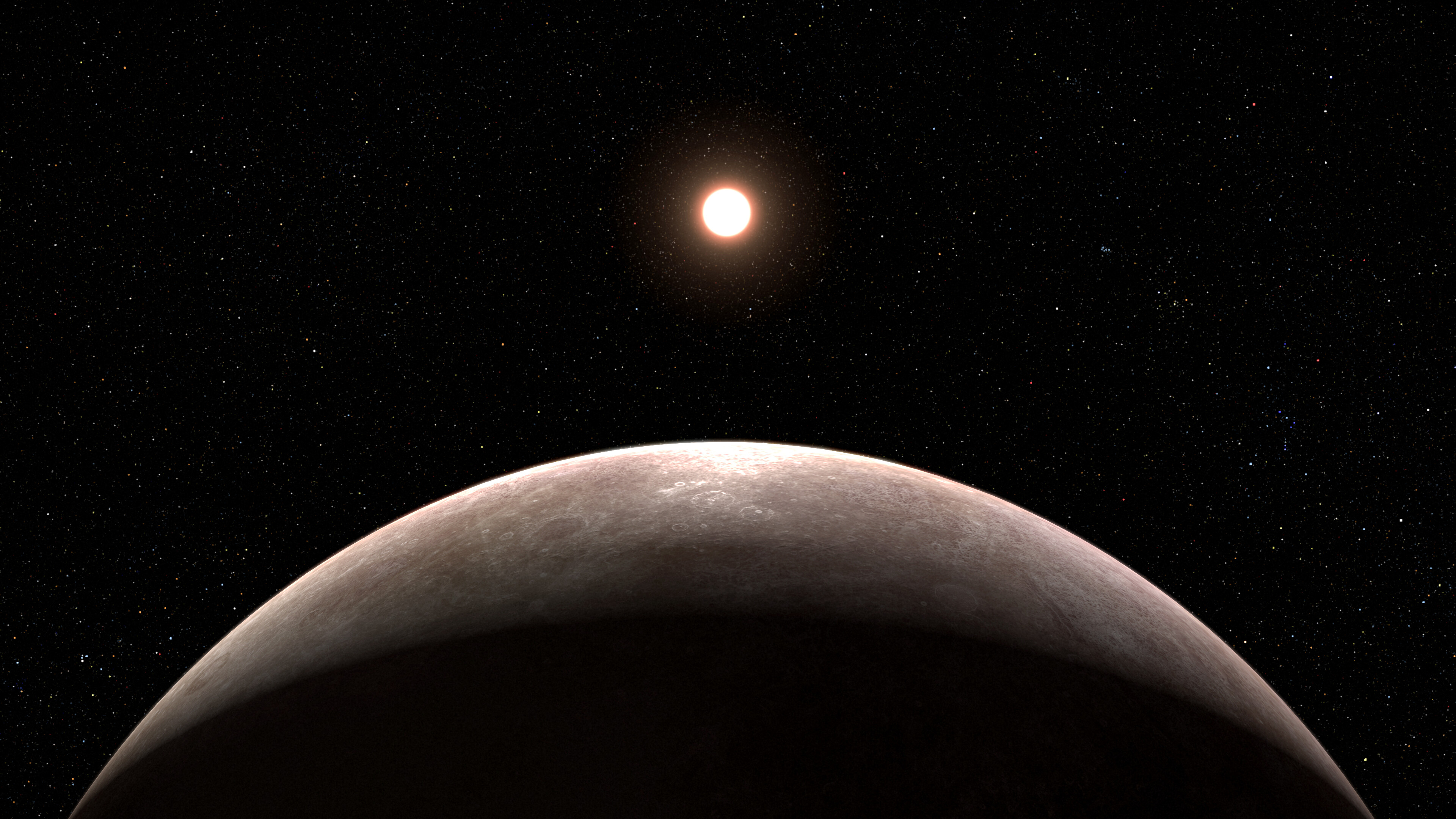
Image credit: illustration of an exoplanet and its star, NASA, ESA, CSA, L. Hustak (STScI), via ESA/Webb. The image is illustrative and does not show 51 Eridani b.
Sources
- Phys.org: Giant planet emerges from two-year-old JWST data thanks to glare-removal technique
- Scientific American: NASA’s James Webb Space Telescope is wobbly — scientists have a fix that could reveal new alien worlds
- Nature: Imaging exoplanets below the telescope stability limit (DOI: 10.1038/s41586-026-11213-z)
Transparency: this text was produced with the assistance of artificial intelligence, based on the study published in Nature and on journalistic coverage online, cross-checked against the sources below. Consult the original sources to confirm the details.
Muse