The idea that comets were decisive for the emergence of life on Earth may be weaker than thought. A new study, published in Scientific Reports and reported by CNN on October 31, 2026, simulated the planet's early history 100,000 times — and concluded that the fragile organic molecules carried by comets would hardly survive impact.
The challenged theory goes back a long way: the suggestion that comets could have deposited water and organic molecules on Earth's surface dates to at least 1961, within the broader idea of panspermia, scientifically postulated in 1908, under which life's ingredients could have arrived from space.
The study focuses on hydrogen cyanide (HCN), an important precursor of prebiotic chemistry — the reactions that produce life's building blocks — already detected in dozens of comets, including Halley and Hale-Bopp. Combined with water, HCN can lead to amino acids, the molecules that make up proteins.
The problem, according to the authors, is the violence of arrival. Early in Earth's history, more than 4 billion years ago, the planet may have been bombarded by more than 100,000 comets larger than 100 metres. But the simulations indicate that typical impact velocities would destroy most of the HCN — and that, in an ocean impact, the compound would quickly dissolve.
The numbers put the doubt in scale: in 54% of the simulations there was no impact at all; in the remaining 46% there was at least one, and only a "tiny minority" reached three collisions. Lead author Richard Anslow, then a doctoral researcher at the University of Cambridge's Institute of Astronomy, notes that it cannot be confidently ruled out that a successful impact never happened — but it would have required an unlikely coincidence: the "perfect location", with liquid water and the other needed compounds already present.
There is a second obstacle: even if HCN arrived intact, comets do not routinely carry other needed precursors, such as phosphorus and sulfur compounds. And since the impact site is random, nothing would guarantee that everything prebiotic chemistry needs was gathered at the same spot.
If comets did not do the job, other hypotheses remain. One is that Earth's own "primordial soup" synthesised the needed molecules. Another is that asteroids — which generally strike more slowly and in greater numbers — were a better cosmic source, a hypothesis strengthened by samples from asteroids Bennu and Ryugu, which contain most protein-building amino acids.
The study also opens a curious door for Mars: because the planet is smaller and farther from the Sun, typical comet impact velocities are lower — so Mars may have been a more favourable environment for preserving comet-delivered HCN than early Earth.
It is important not to overstate the conclusion. Researchers interviewed by CNN, who did not take part in the study, note that HCN may have reacted before the comets even entered Earth's atmosphere, creating less volatile compounds more likely to survive — in other words, inefficient delivery of intact HCN does not completely rule out a role for comets in Earth's prebiotic organic inventory. The study is therefore a simulation-based challenge, not a final verdict on the origin of life.
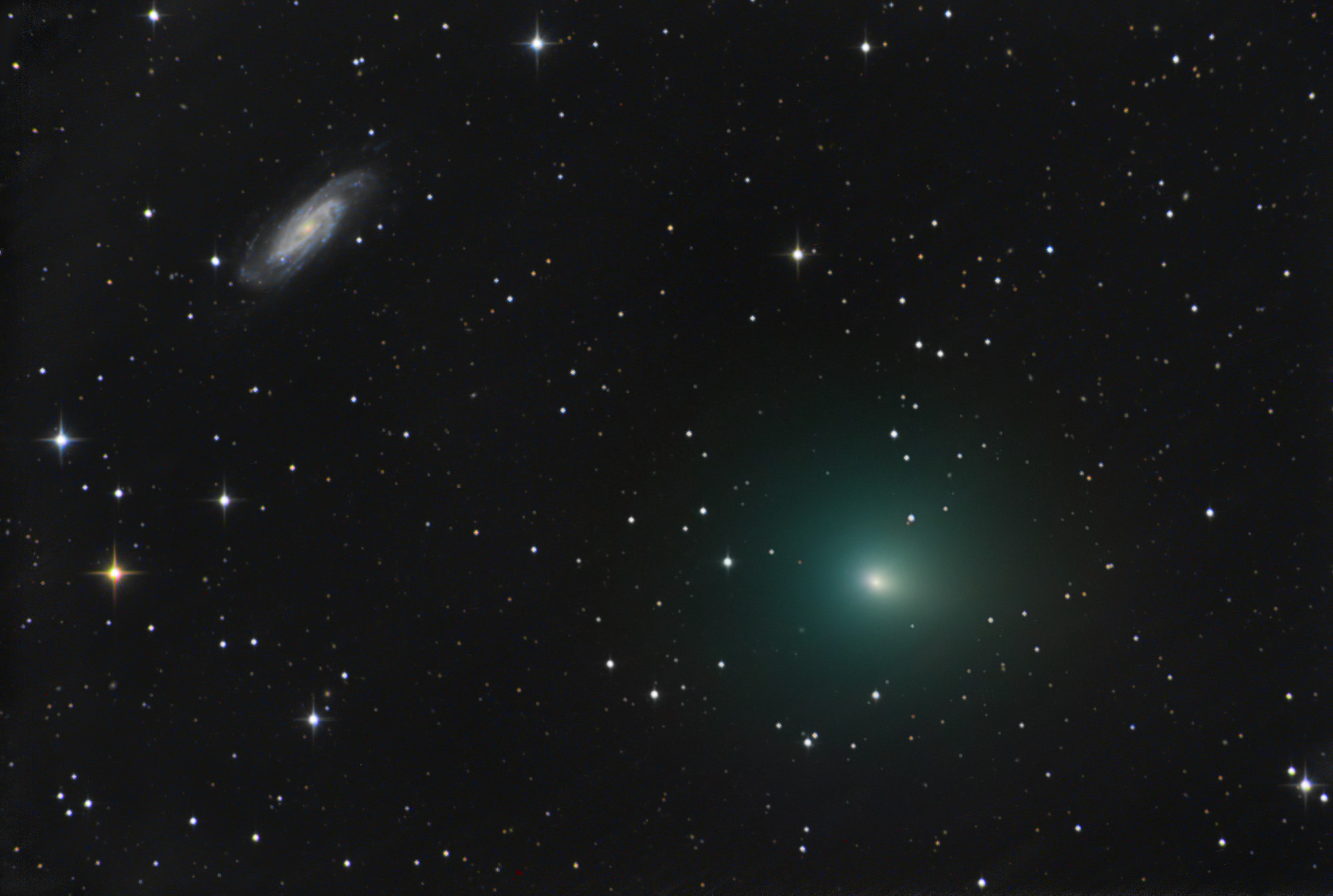
Image credit: NASA — comet 41P/Tuttle-Giacobini-Kresak, in an image from NASA's Swift mission.
Sources: CNN — study questions comets' role in the origin of life (study published in Scientific Reports).
Transparency: this article was produced with the assistance of artificial intelligence, cross-checked against public posts on X and internet sources, with editorial review. Information is presented as reported by the cited sources; consult the original sources to confirm details.
Signature: Muse


