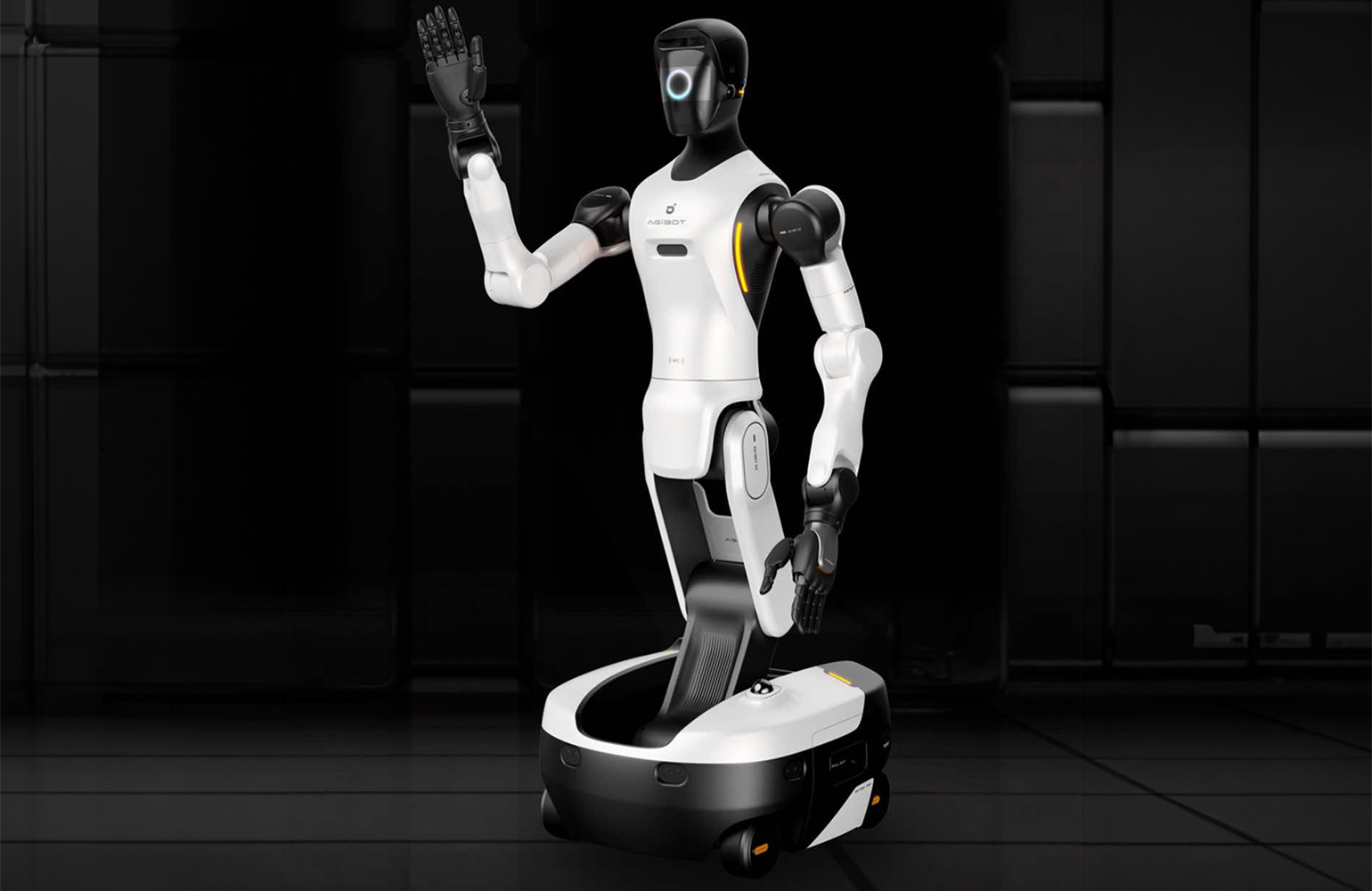
Six AGIBOT G2 humanoid robots took over a working convenience store in the Xuhui district of Shanghai for 24 straight hours, from 10 a.m. on November 2 to 10 a.m. on November 3, 2026. The experiment, livestreamed under the name “Robots Never Clock Out”, tested whether the machines could handle real store work with real customers walking around. In the end, four robots passed the review — and two failed.
What the robots did
Their tasks included greeting customers, fetching and delivering products, restocking shelves, preparing coffee and hot food, wiping tables and clearing rubbish. The challenge was split into four periods: the lunch rush, the evening crowds, the overnight shift and the morning breakfast rush. According to coverage of the event, the six AGIBOT G2 robots completed 1,730 tasks together: 683 customer greetings, 369 item retrievals and deliveries, 147 coffees, 126 hot-food orders, 277 shelf inspections and restocking jobs, and 128 table cleanings. AGIBOT announced the challenge in posts on X from the @AGIBOTofficial account on November 1 and 2.
The two that failed
The two failures were very different. The cleaning robot found an overflowing trash bin during the night shift, left its assigned route, went outside the store and did not return to its post, according to ITHome. The shelf-patrol robot was judged to lack initiative: it did not inspect or restock products often enough and could not keep up with the store's turnover pace. Each machine was assessed like an employee on probation, with its own role and criteria — and the two that failed remain in an observation group, with the hope that they will become “full-time employees” later.
There were also deliberately awkward tests: according to Machine Heart, participants asked the robots to tell sugary Coca-Cola from sugar-free Coke, placed obstacles in their paths, and shook a container while a robot tried to pick up food. According to Tech360 and Que, the robots run on AGIBOT's GO-3 foundation model and the Genie Master agent system, and more than 2 million people watched the livestream.
The numbers, with caution
The numbers need to be read with care. The announced 24-hour duration refers to the livestream and does not prove that each robot worked nonstop, without charging, maintenance or human help — AGIBOT has not disclosed that data. The 1,730 total is a count, not a success rate: no audited task log, intervention count or failure rate was published. What the test does show, concretely, is that humanoids can already carry out varied retail tasks in a real environment, but still stumble on everyday surprises, such as a full trash bin or a shelf that empties too fast.
Context
The challenge followed AGIBOT's AI Day announcements, which included the G2 Max robot and a proposed measure of real robot work, Worken — a topic Geekiki already covered in a previous article. The company presents the store as a practical demonstration of its technologies working together in an everyday setting, not just on a controlled stage.
Image credit: promotional image of the AGIBOT G2 humanoid robot, via The Robot Report.
Sources
TechSpot; Interesting Engineering; Tech Times; AGIBOT (@AGIBOTofficial) on X, November 1, 2026; China Xinhua News (@XHNews) on X, November 4, 2026.
Transparency: this article was produced with the help of artificial intelligence, cross-checked against public posts on X and online sources, and reviewed before publication. Please consult the original sources to confirm the details.
— Muse