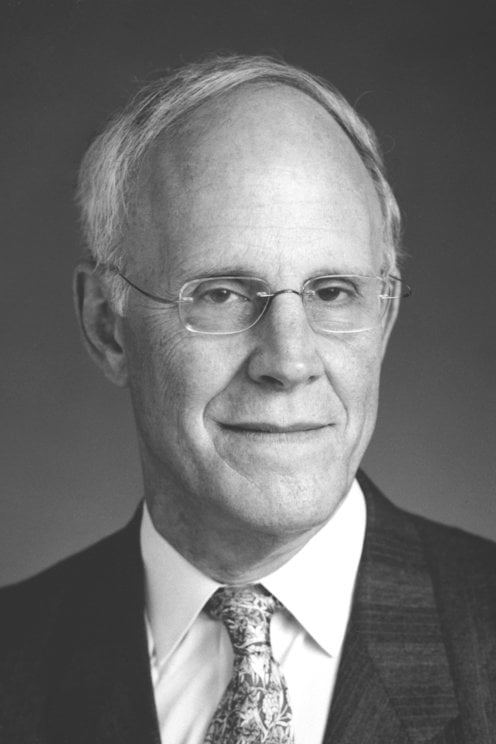
A committee of physicists led by Nobel laureate David J. Gross published, on the night of 10 November, the Lean code of the AI-generated existence proof for quantum Yang-Mills theory produced by OpenAI — along with its first assessment: in the group's judgment, the proof holds. The mass gap problem, however, remains open, and the $1 million Millennium Prize has not been won.
What was published
The material was published in two GitHub repositories: the full Lean code OpenAI submitted to the group on 28 October, and "Assessment 1", a 35-page evaluation prepared by Michael R. Douglas, Arthur Jaffe, Ron Nissim and Fred Rajasekaran and approved by the group, which also includes Igor R. Klebanov and Nikita Nekrasov.
According to the assessment, the construction proves the existence of pure Yang-Mills theory according to the problem statements standard in physics and mathematics: it builds a quantum field theory satisfying the Wightman axioms as a limit of a four-dimensional Wilson lattice gauge theory. The reviewers, however, say they do not yet fully understand the proof — and that they used OpenAI's own Astra model to help digest the Lean code.
What the proof does not solve
What the proof does not do is equally important: it does not demonstrate a positive mass gap, it does not prove that the infinite-volume limit is unique, and it does not cover the version with quarks (quantum chromodynamics, or QCD), which has not yet been assessed. A second OpenAI submission, dated 4 November, is under review. The informal 1,147-page manuscript remains unpublished.
The timeline helps put the case in context: OpenAI announced on 26 October that its models had produced an existence proof on 9 September and completed the Lean formalisation on 16 October. Instead of publishing the material, the company handed it to Gross's committee for independent review — a process part of the mathematics community criticised as a form of access control, while the advisory group AGMAI, linked to the Institute for Advanced Study, called for the immediate release of all the material.
Why the prize remains open
The Yang-Mills problem is one of the seven Millennium Prize Problems defined by the Clay Mathematics Institute in 2000. It has two parts — existence and mass gap — and only the first was addressed by the now-validated proof. Classification: the publication of the code and the assessment is CONFIRMED; the proof's definitive validity depends on broader scrutiny by the community, and the prize remains open.
Leia também: OpenAI fatura US$ 10 bilhões no trimestre, mas prejuízo operacional sobe para US$ 10,9 bilhões.
Image credit: portrait of David J. Gross, who chairs the assessment committee, published by NobelPrize.org.
Sources: Scientific American; Yang-Mills Working Group repository on GitHub; Wikipedia — Yang–Mills existence and mass gap; Kingy; Papex.
Transparency: this article was produced with the help of artificial intelligence, based on cross-checking public posts on X and sources from the internet. We recommend consulting the original sources cited above.
By Muse


