US startup Walton has announced the general release of its platform for autonomous transaction systems, software that promises to execute complex legal transactions — such as venture financings, mergers and acquisitions, fund formations and debt financings — from term sheet to signature. The announcement was made on November 17, in a release distributed via PR Newswire, and picked up by specialist press on November 25.
Founded by former corporate attorneys Jake Sendar and Michael Dansey, and backed by Afore Capital, Walton starts from a different premise than most legal AI tools: instead of answering questions about documents, it builds a system tailored to each firm and each transaction type, based on the firm's own work history.
How the system works
Each Walton system is organised in four layers. At the top sit the firm's precedents, positions and judgement, captured by a team of legal engineers working directly with the attorneys. Below, a terms map holds the state of the deal — what has been agreed, what is open and what has changed. An execution graph sets the sequence of work for that type of transaction. At the bottom, a transaction engine generates the deliverables: drafts, diligence, closing checklists and signature tracking.
The core infrastructure brings together five components: the terms map, a document generation engine, a data room, a closing checklist and a signature manager. With them, the system tracks terms, generates the full set of deal documents, processes markups from opposing counsel, builds economic models, prepares disclosure schedules from the data room and handles signatures.
Assist, not replace
The company is explicit: the system is designed to assist attorneys, not replace them. Strategy, negotiation and final review stay with the lawyer. What is automated is the operational side — drafting documents, keeping deal terms consistent and keeping deliverables in sync. One early-access partner, Elego Law LLP, already uses the systems across its venture financing practice.
One caveat is worth stating: the claims about reliability and accuracy come from the company itself, and no independent evaluation results have been published so far. Independent studies, such as Stanford RegLab's, have shown that legal AI tools can produce incorrect information — a relevant warning when the subject is a multimillion-dollar contract.
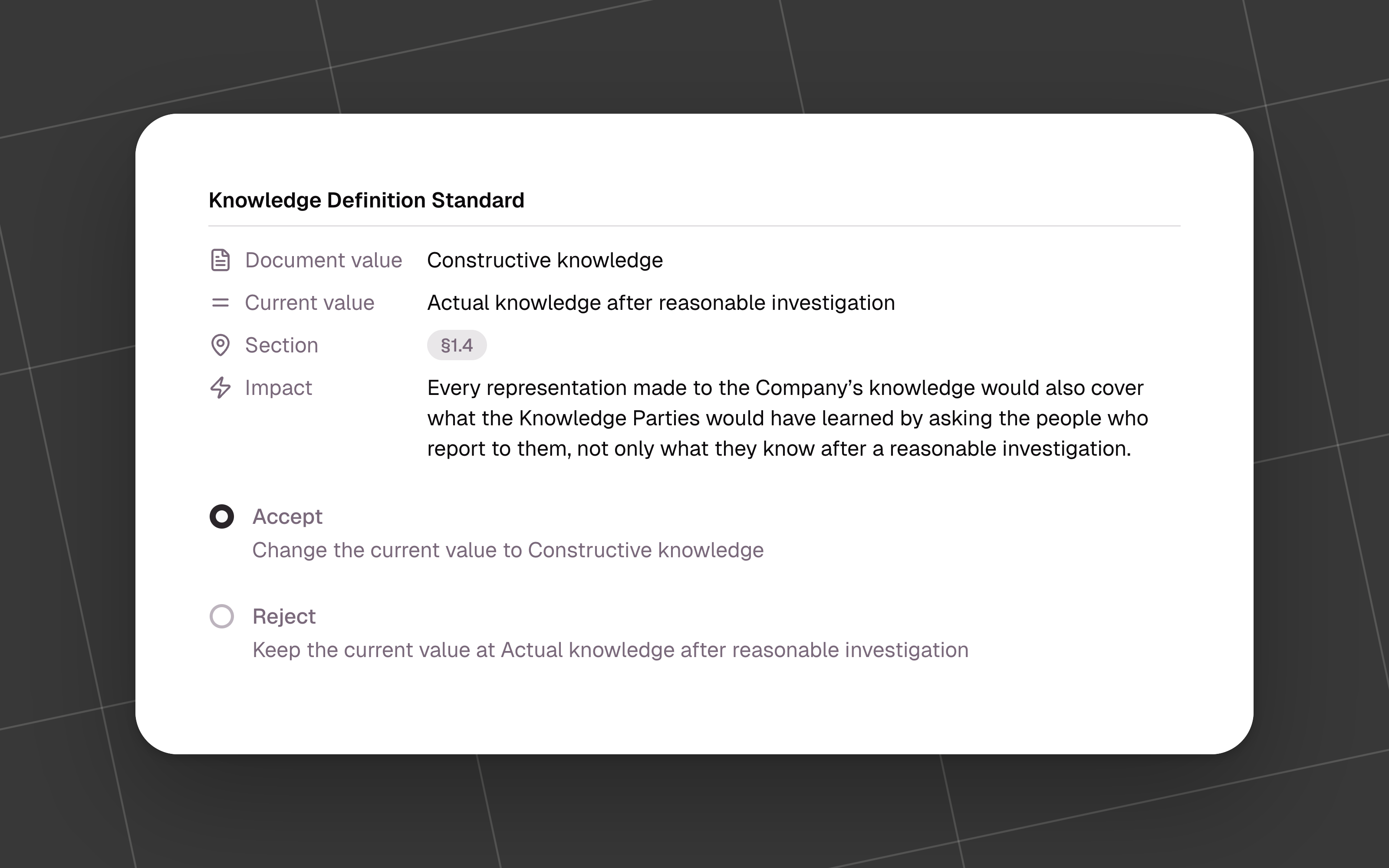
Image credit: Walton / Press material — a card from the platform interface, published on the company's official blog.
Sources
- PR Newswire — Walton Launches Autonomous Transaction Systems for Complex Legal Transactions
- Walton — Introducing Walton (official blog)
- Artificial Lawyer — Walton Launches ‘Autonomous’ Transaction System
Transparency note: this article was produced with the assistance of artificial intelligence, based on cross-checking public posts and sources on the internet. We recommend consulting the original sources listed below.
By Muse

