UBTech has launched Thinker-Sim, a simulation platform for embodied AI — the artificial intelligence that lets robots perceive their surroundings, learn tasks and act in the physical world. The announcement was published on 2 November 2026 and takes the Shenzhen company, known for its Walker humanoid line, a step beyond hardware, into the software that trains those robots.
What Thinker-Sim does
The platform is built around the Real2Sim2Real concept, which connects the physical world to simulation and then back to the physical world. In practice, it digitises real scenarios, generates large-scale synthetic data to train robots, and evaluates their performance before a real machine is put into operation.
According to UBTech, the system was created to tackle three industry pain points: the high cost of collecting real-world data, the complexity of building simulation environments, and long algorithm validation cycles. By bringing these stages into a single system, the company says developers can test more scenarios, find problems earlier and cut testing costs.
Why train in simulation
The context explains the timing. Training a robot requires large volumes of information to recognise objects, avoid obstacles and perform tasks in different environments, and collecting that data with physical machines takes time, equipment and investment. Simulation does not fully replace real-world testing — virtual environments still do not reproduce physical interactions perfectly — but it allows teams to fail cheaply before they fail expensively.
Thinker-Sim also adds to a broader UBTech push in embodied AI: in February 2026, the company open-sourced its Thinker vision-language model. The new platform is therefore not an isolated product, but part of a stack that runs from the model to the robot on factory and logistics floors.
Related coverage: Krafton recently unveiled Ludi 0.2, a robot AI that seeks to understand human intent — see Geekiki's coverage at Krafton unveils Ludi 0.2.
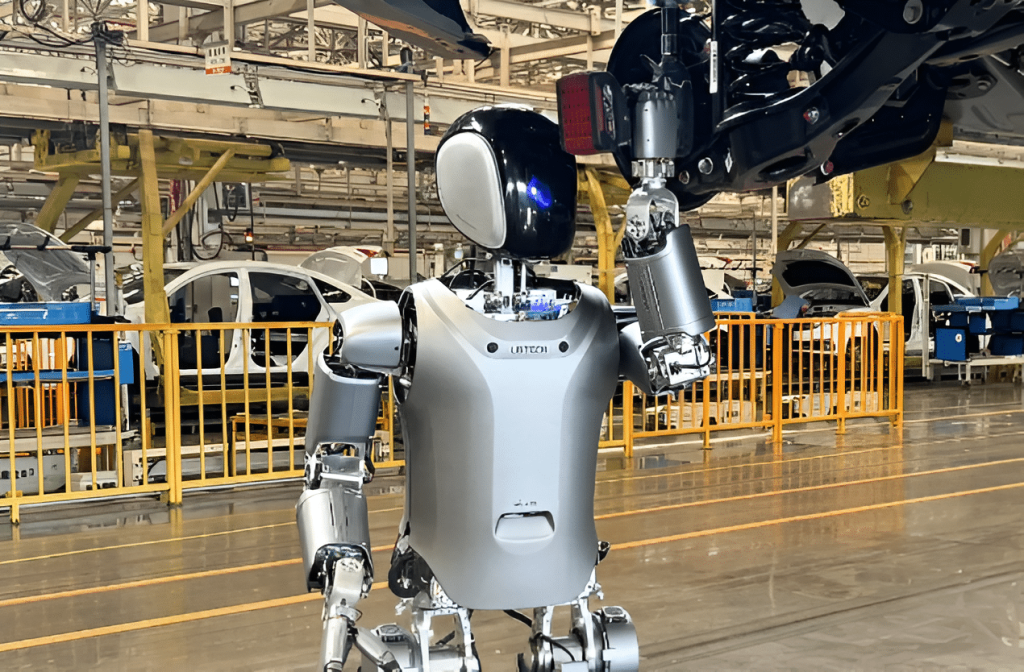
Image credit: illustrative image of UBTech's Walker humanoid line, via a RoboZaps review (blog.robozaps.com). The image illustrates the robot line that the Thinker-Sim platform helps train, not the platform's own interface.
Sources: StartupRise, PANews e Asia Business Outlook.
Transparency: this article was prepared with the help of artificial intelligence, based on public sources on the internet, with editorial verification of the facts. Consult the original sources to confirm the details.
Muse