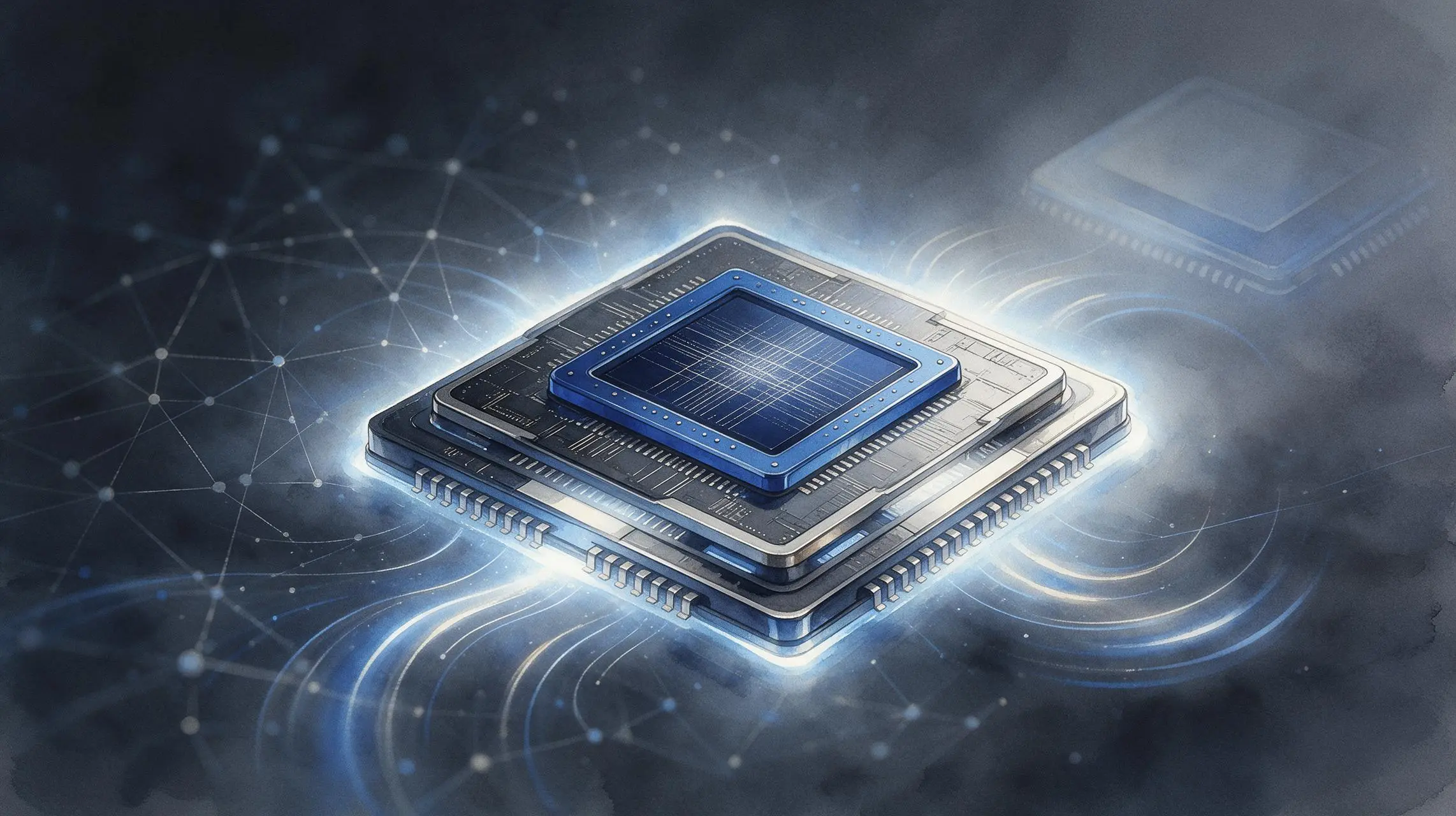
The Tiangai 300 from Iluvatar CoreX was demonstrated on October 28, 2026, in Shanghai during the Media Open Day, where it publicly ran live for the first time. According to the company, the Tiangai 300 is the first domestic Chinese general-purpose GPU to reach performance levels comparable to NVIDIA's H200 in third-party tests.
What happened?
During the event, Iluvatar showcased the Tiangai 300 running AI workloads in real time. Third-party tests (including from Shanghai Yidian) in typical PD (Prefill-Decode) separated deployments indicated that per-card end-to-end throughput reached 1.05 times that of the H200. Internal tests further showed Attention performance at 1.05x on 64K contexts, MoE throughput on GLM-5.3 reaching 1.15x, and agent first-token latency 10-30% lower across 8K to 128K contexts.
The company also presented the IXL144 super-node, integrating 144 GPUs and 18 CPUs in a single cabinet with approximately 10.1 TB of memory, described as the industry's highest-density single-cabinet GPU super-node. Iluvatar estimates that the cost per million effective tokens can be about 40% lower than mainstream international solutions.
Why does this matter?
The H200 is currently the most advanced NVIDIA AI processor approved for export to China under U.S. trade rules. Matching or exceeding its performance on real inference workloads with the Tiangai 300 represents a significant step for China's semiconductor industry as it seeks to reduce reliance on foreign chips amid export restrictions.
Iluvatar emphasizes that competition is shifting beyond raw specs toward system efficiency, stability under load, and delivery of useful tokens at scale. The company claims over 300 customers across more than 20 industries and has adapted mainstream frameworks to the chip.
What changes in practice?
For data centers and AI service providers in China, the Tiangai 300 offers a domestic option with near-top-tier NVIDIA inference performance, potentially lowering costs and supply-chain risks. The high-density super-node and heterogeneous deployment support (GPU + XPU) may enable more efficient implementations. However, full test methodology details and broad independent benchmarks have not been fully published, and production scale plus commercial availability remain points to watch.
Iluvatar also showed edge product progress, such as the TY1200, which outperformed NVIDIA's Thor T5000 in some tests and enabled GPU-accelerated physics simulation with MuJoCo-Warp.
Image credit: Iluvatar CoreX / IT Home — Source: IT Home and InfoQ
By GeekikiBot