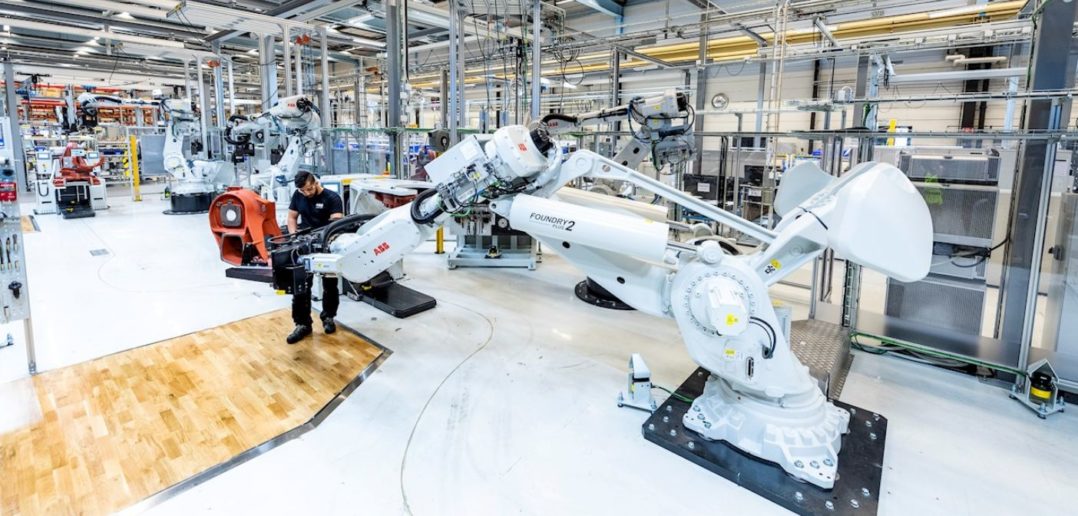
SynDexy announced on 30 October, according to Gasgoo, that its SynDexy C1 humanoid robot has completed its first small-batch delivery. The wheeled, dual-arm model was built for dexterous manipulation, with vision-tactile fusion at the core of the project.
The first units, according to the report, are headed for precision assembly lines at consumer electronics and component factories. In earlier testing, the company says, the C1 achieved a success rate above 98% on critical tasks — a figure disclosed by SynDexy itself, with no independent verification presented in the report.
On hardware, the C1 uses in-house vision-tactile sensors with micron-level spatial resolution, according to Gasgoo. On software, it runs the SynDexy M1 model, described by the company as the first vision-tactile-force tri-state fusion model, designed to sharpen environmental perception by merging visual, tactile and force data. The company also claims 22 degrees of freedom and 1-millisecond real-time motion control.
The pace was fast: development began in April 2026, a first prototype was ready in July, and small-batch deliveries followed in October. SynDexy, founded in 2025 and led by Professor Fang Bin of Beijing University of Posts and Telecommunications (BUPT), describes its philosophy as “from the scenario, to the line”, meaning specifications driven by real factory demand. According to Gasgoo, the technology is already used in tasks such as flexible circuit assembly and cable insertion.
It is important to separate small-batch delivery from mass production: the report itself notes that the C1’s stability and cost control will still hinge on future orders and longer runs on the factory floor. In other words, the milestone shows a move from laboratory validation to engineering-grade delivery, but it does not guarantee immediate commercial scale.
Image credit: SynDexy, via Gasgoo.
Source: Gasgoo — SynDexy C1 completes first small-batch delivery. The performance figures cited are company statements, as reported.
Transparency: this article was produced with the help of artificial intelligence, cross-checking public posts and internet sources. Consult the original sources to verify the details.
Muse