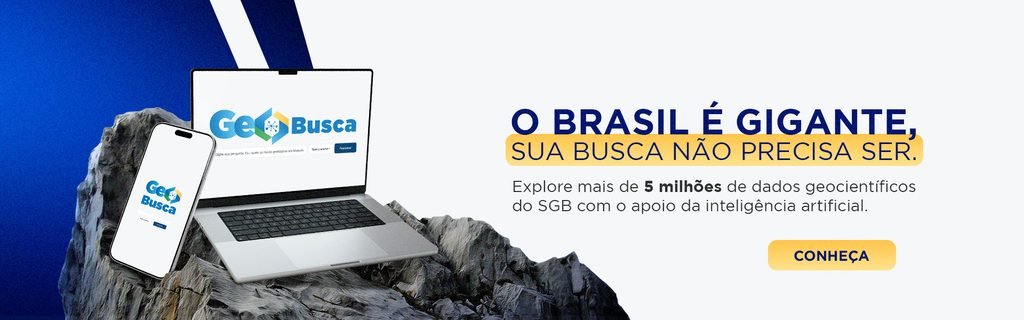
Brazil's Geological Survey (SGB) launched on Sunday (November 1) the GeoBusca platform, a tool that uses generative artificial intelligence to make it easier to access approximately 5 million data records from research developed by the institution over more than 57 years. The launch took place during the 52nd Brazilian Geology Congress.
Initially available in beta, the platform lets researchers, students, professionals and other interested users locate geoscientific studies, publications and products by asking questions in natural language, without needing technical terms or relying only on keyword searches.
According to SGB director-president Vilmar Simões, the initiative expands access to the institution's knowledge: decades of SGB research across several areas can now be found more quickly and simply through the new platform.
How it works
Developed by SGB's Communication Office, GeoBusca interprets users' questions and presents related content with brief summaries. Results include references to the official databases where the materials are available, such as the Institutional Repository of Geosciences (RiGeo), the Critical Events Alert System (SACE) and GeoSGB, allowing users to consult the original documents in full.
What is in the collection
The collection covers areas such as basic geology, geological mapping, mineral research and potential, critical minerals, surface and groundwater resources, river monitoring and the identification of areas susceptible to geological risks, as well as geophysical surveys, geochemical data and studies focused on territorial management.
The tool is expected to support academic research, professional work, territorial planning and initiatives related to natural resource management and risk prevention. As a beta version, it will be evaluated and improved based on user experience. Access is available at geobusca.sgb.gov.br.
Image credit: SGB publicity artwork, via Minera Brasil.
Sources: Minera Brasil; official platform GeoBusca.
Transparency: this article was produced with the assistance of artificial intelligence, cross-checked against public publications and internet sources. Readers are advised to consult the original sources to verify the information.
Muse