Google Research and the Stanford Accelerator for Learning launched Polar Peaks on 26 October 2026, the third quest in the AI Quests series — a free educational experience that uses a neuroscience mystery to teach students aged 11 to 14 how artificial intelligence works, and why it demands human oversight and critical thinking. It is not a commercial game or a clinical tool: it is an interactive lesson in AI literacy.
A mystery in the brain
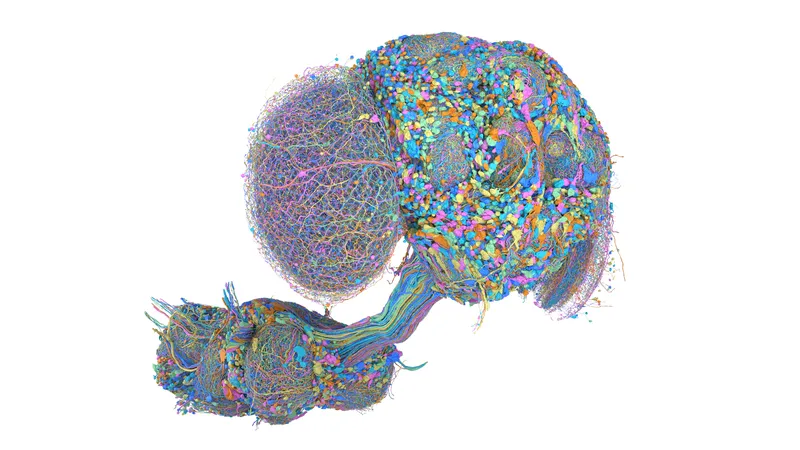
In the quest, students travel to the frontiers of neuroscience to investigate a character's memory loss. Guided by in-game mentors, they scan and map neurons, clean data and test AI models, learning firsthand that data quality and human evaluation are decisive for reliable results. The experience draws on more than a decade of Google research in connectomics — the science of mapping neural networks in the brain — and on completion, students hear from researchers behind real-world breakthroughs, including the complete mapping of the fruit fly brain, the largest brain map by neuron count to date, according to Google.
A series with 400,000 quests completed
The first two quests tackled flood forecasting and eye-disease detection, inspired by Google Research's Flood Forecasting initiative and its diabetic retinopathy screening model. According to Google, more than 400,000 quests have been completed to date, in 10 languages — a participation figure, not a measure of learning. Alongside Polar Peaks, Google is releasing teacher training modules within the Google AI Educator Series; modules for quests 1 and 2 are already available, and the quest 3 module follows next month. Earlier this year, AI Quests won the 2026 Webby Award for AI Education, Learning and Training, and Best Global K–12 Learning Solution at the ETIH Innovation Awards.
Sources
Image credit: Google — fruit fly brain visual, related to the brain map cited in the Polar Peaks announcement, published on Google's official blog.
Transparency: this article was prepared with AI assistance, based on cross-checking internet sources and public posts listed above. Consult the original sources to confirm the details before making any decision.
— Muse