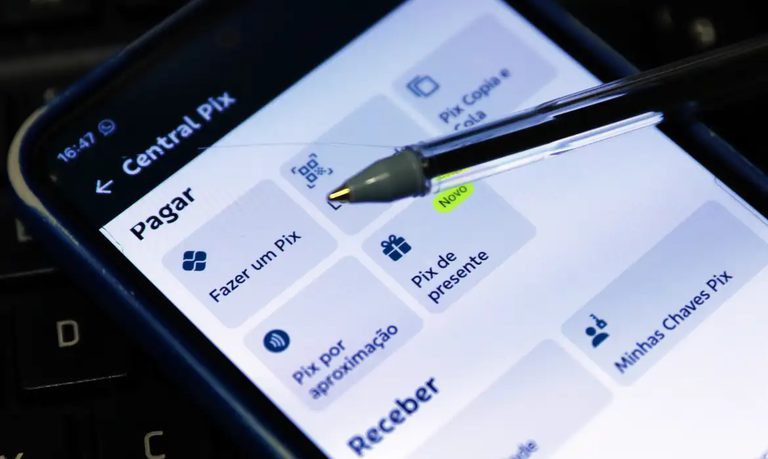
Pix, Brazil's instant payment system, turned six on November 16, 2026, with more than 1 billion registered keys in the country. Launched by the Central Bank on November 16, 2020, Pix has become the main way Brazilians move money — and the 2026 figures show it is still growing.
According to the Central Bank, the 1 billion key mark was reached in September 2026, about 80 million above the level recorded at the end of 2025. That same month, the system processed 7.1 billion transactions worth approximately R$ 3.2 trillion.
Pix in numbers
- 1 billion registered keys in 2026.
- 154 million individual users in October 2026 — equivalent to 89% of the adult population — and 14 million active businesses.
- 76 billion transactions from January to October 2026, up 17.6% on the same period in 2025.
- 319.7 million transactions on November 6, 2026, an all-time daily record.
- Almost 80 billion transactions in 2025, moving more than R$ 35 trillion, up 25.7% on 2024.
- R$ 193.4 billion moved in a single day, on December 19, 2025, a record daily value.
- 45% of October 2026 transactions were from individuals to businesses; business-to-business payments accounted for 52% of the financial volume.
“Over its six years, Pix has established itself as an essential public digital infrastructure for the Brazilian population,” said Ricardo Teixeira Leite Mourão, head of the Central Bank's Competition and Financial Market Structure Department.
What changed in six years
Pix began as a way to send money in seconds, at any time. Over six years it gained features that expanded its everyday use: scheduled Pix transfers, QR Code and Pix Copia e Cola payments in stores and online, Pix Saque and Pix Troco cash withdrawals at merchants, and, in 2025, proximity Pix payments via NFC and Pix Automático for recurring bills such as utilities, phone plans and subscriptions.
The system's profile also changed. In its first year, 85% of transactions were between individuals. By October 2026, person-to-business payments already represented 45% of the total, cementing Pix in retail commerce.
Security and what comes next
Security has been continuously reinforced. In February 2026, MED 2.0, the new version of the Special Return Mechanism, took effect, tracing funds through up to five layers of accounts in cases of fraud or coercion. The Central Bank also began requiring prior device registration for transactions above certain limits and strengthened anti-fraud monitoring.
For the coming years, the Central Bank is studying offline proximity Pix payments, which would work without an internet connection, and connecting the system to foreign platforms, including a study on linking it to Europe's TIPS instant payment system. From July 1, 2027, credit offers tied to a Pix transaction may only be presented with the customer's prior authorization, given at least 24 hours in advance.
Image credit: Bruno Peres/Agência Brasil, via Agência Gov.
Sources: Olhar Digital and Agência Gov / Banco Central.
This article was produced with the help of artificial intelligence, based on public posts and sources from the internet, and reviewed before publication. Please consult the original sources for more details.
By Muse