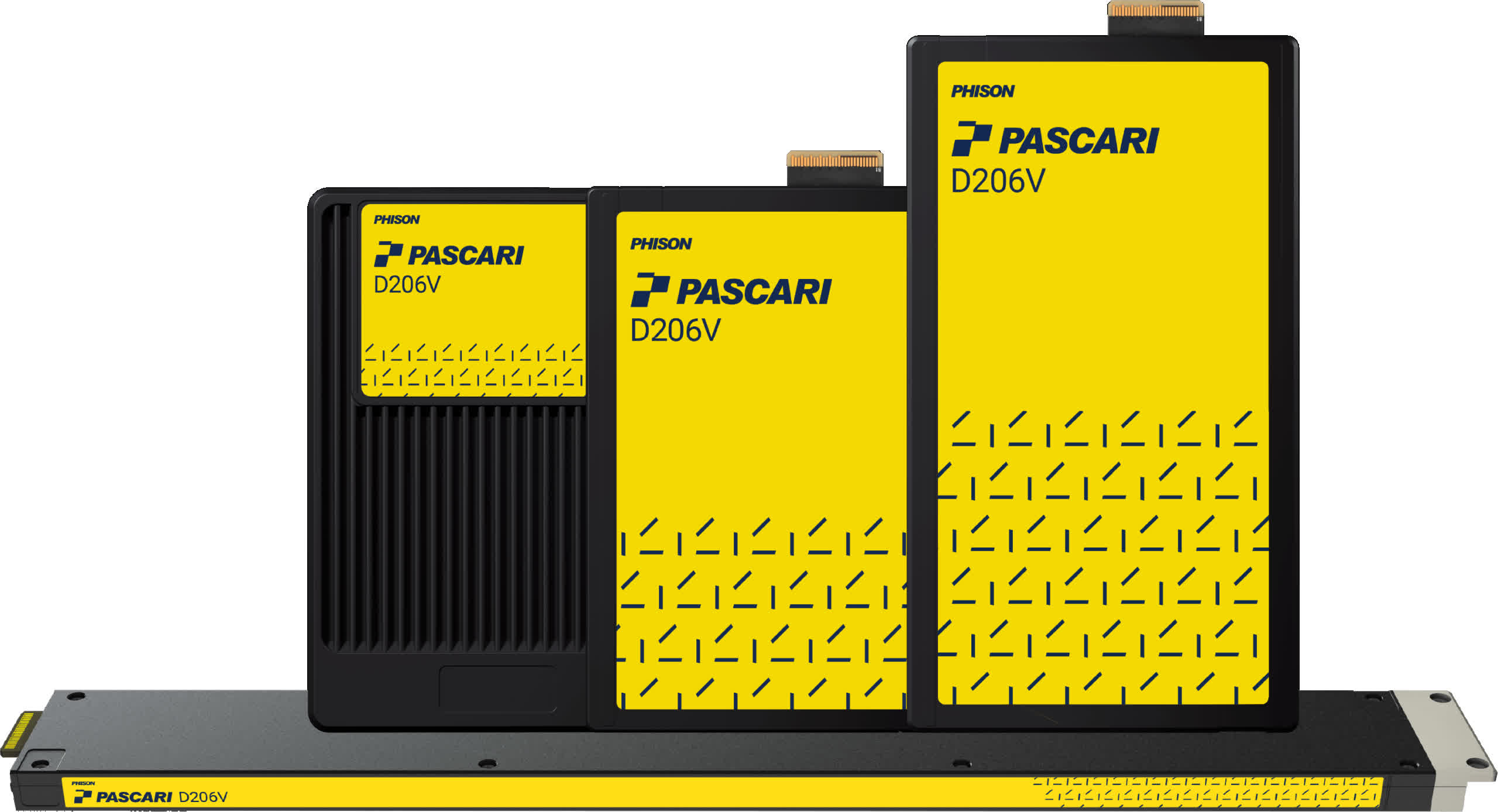
Phison showcased at Supercomputing 2026 (SC26) in Chicago an enterprise Phison SSD with NPU and 64 GB of onboard memory running at 130 GB/s. The idea is to process AI data where it already lives.
What happened?
The computational storage concept allows running frameworks such as PyTorch, vLLM, OpenVINO and llama.cpp directly on the drive. Instead of sending entire datasets to the host (CPU or GPU), the SSD filters and processes in parallel and returns only relevant results. Phison claims this can cut transfers by 10 to 100 times for suitable workloads. More information in coverage from Tom's Hardware and TechSpot.
The company also presented a Mixed Media design that combines high-endurance pSLC cache with QLC capacity behind a single 16-channel controller, plus the PCIe Gen 6 X3 controller.
Why does this matter?
In AI servers, much time is spent moving data. Processing on storage frees CPU/GPU and reduces bus bottlenecks. Using standard frameworks avoids proprietary SDKs. The product is still in development; final capacity, interface and availability details have not been confirmed.
What changes in practice?
For data centers and AI clusters, it could mean less data movement and better efficiency for filtering, inference or pre-processing tasks. The NPU’s 36,800 DMIPS figure is an old metric and does not replace TOPS, but the internal memory bandwidth is the stated strength.
Sources: SC26 announcement reported by Tom's Hardware, TechSpot, TechPowerUp and Guru3D.
Image credit: Phison / reproduction | Source: TechSpot / Tom's Hardware
By Grok