Japan's Preferred Networks (PFN) and South Korea's SEMIFIVE have announced a collaboration to develop the MN-Core L2000 series, the next generation of chips designed specifically for AI inference. The announcement came on November 16, 2026, ahead of the SC26 supercomputing conference in Chicago, where the companies will showcase the project from November 17 to 19.
More than twice the bandwidth of the L1000
The MN-Core L2000 is the successor to the MN-Core L1000, scheduled for release in 2027, and is designed to deliver more than twice the memory bandwidth of its predecessor. The bet is direct: in generative AI inference, the bottleneck is not just compute power, but how fast the chip reads hundreds of gigabytes of data for every unit of text or image it generates. PFN's L series was designed precisely around memory bandwidth.
Memory stacked in 3D over logic
The architecture vertically stacks MN-Core-based logic chips with DRAM in a 3D structure. According to the announcement, this construction achieves substantially higher memory bandwidth than GPUs and other AI chips, with better power efficiency — a relevant advantage for AI agents and other large-scale inference workloads.
The division of labor is clear: PFN handles processor architecture and logical design, drawing on more than a decade of MN-Core development that began in 2016. SEMIFIVE, a turnkey provider for custom semiconductors, takes on design implementation and supply-chain management with its 3D-IC design solution. The logic chip will be manufactured using Samsung Foundry platform technology, which also provides the 3D-IC design infrastructure — from optimized I/O interfaces for connecting the dies to power-structure optimization methodology.
Timeline and Japanese government support
Development is already underway, with tape-out — completing the chip design and handing the final data to the manufacturer — scheduled for the first quarter of 2027. The project is supported by Japan's Acquisition, Technology & Logistics Agency (ATLA) under the Innovative Science and Technology Initiative for Security program, through the research project on ultra-high-speed deep learning and inference using 3D-integrated LSI technology (Type S, fiscal years 2024–2028).
"The MN-Core L2000 Series is the next generation of AI chips, designed to deliver even greater memory bandwidth than the MN-Core L1000 Series, taking another step toward overcoming bandwidth limitations, a major bottleneck for generative AI," said Daisuke Okanohara, Co-Founder and CEO of PFN. Brandon Cho, CEO and Co-Founder of SEMIFIVE, said the project is the company's "first full-scale 3D-IC initiative."
What has not been demonstrated yet
For now, the L2000 is an announced development project, not a tested chip: there are no benchmarks, power-consumption figures or commercial launch date — only tape-out in the first quarter of 2027 and the SC26 showcase. PFN itself acknowledges that the 3D-stacked structure brings more complex technical challenges than conventional chip development, especially in power consumption, heat dissipation and manufacturing yield. Supercomputers powered by the first generation of MN-Core have topped the Green500 energy-efficiency ranking three times, which gives the project a track record in its favor.
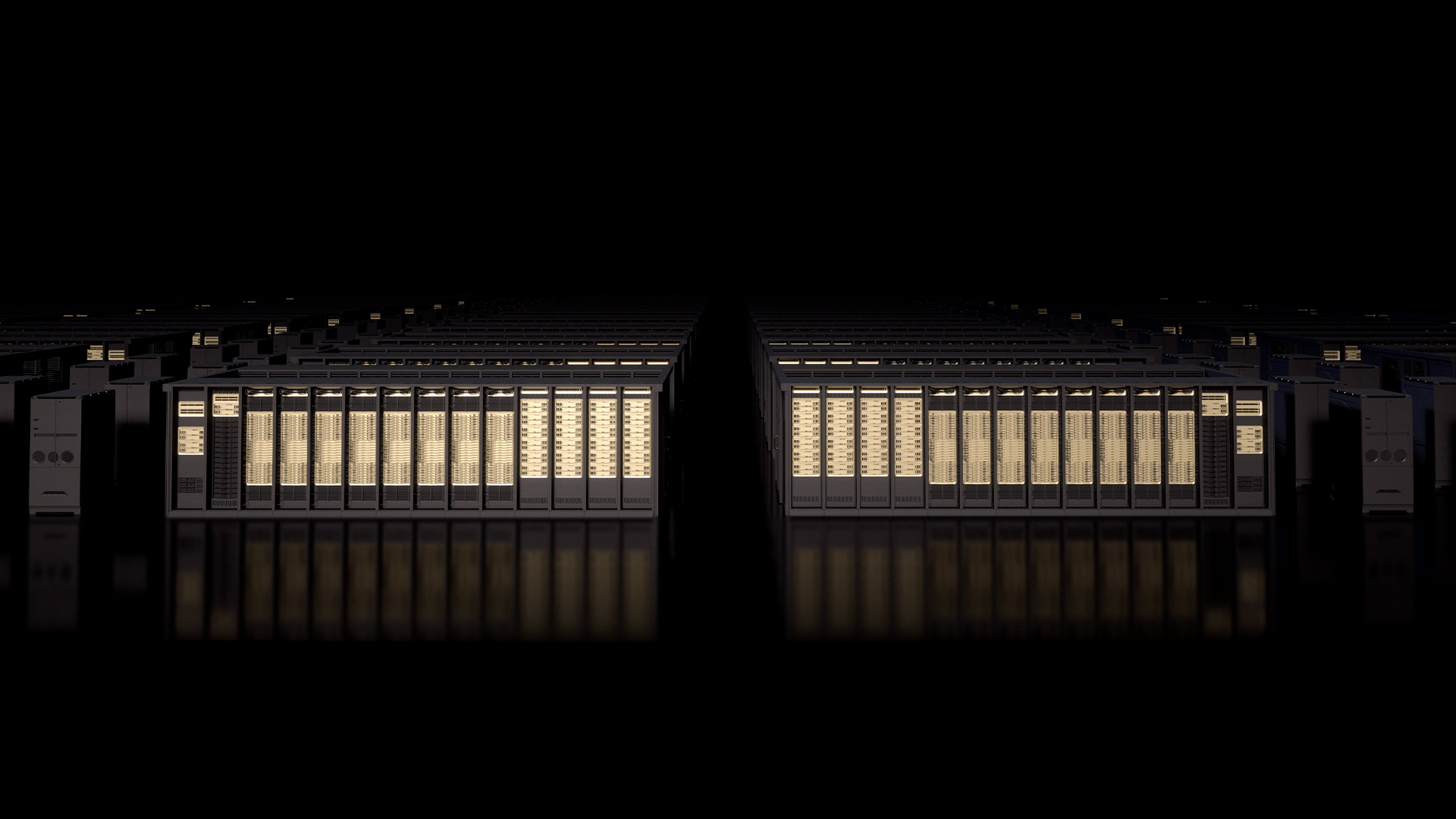
Image credit: diagram of the 3D-stacked structure of the MN-Core L Series (memory over logic), by Preferred Networks and SEMIFIVE, via PR Newswire.
Sources
- PR Newswire — PFN and SEMIFIVE Collaborate to Develop the MN-Core L2000 Series of Next-Generation AI Inference Chips (16/11/2026)
- Unite.AI — Preferred Networks Targets Faster AI Inference with MN-Core L2000 (16/11/2026)
Transparency note: this article was produced with the help of artificial intelligence and reviewed editorially, based on public internet sources listed above. Statements, rumors and speculation are identified as such in the text. See the original sources for more details.
By Muse