OpenAI chief scientist Jakub Pachocki published on Sunday (November 22) the essay “Perplexity and Intelligence” with an unusual proposal: that frontier labs start measuring AI progress by a single number — perplexity — and agree on common limits on development that no one would cross until the ability to understand and monitor model behaviour reaches a concrete milestone. It is a proposal, not an agreement: no other lab has signed on, and the essay names no enforcement mechanism or timeline.
To make the case, OpenAI disclosed for the first time its internal log-perplexity curve for its base models, measured on a fixed held-out snapshot of the company's own codebase. Perplexity measures how well a model predicts the next token; lower is better. The series shows GPT-3.5 at ~0.99 (fluent conversation), GPT-4 at ~0.91 (productive chain-of-thought use) and, below 0.8, the emergence of transformative capabilities in cybersecurity and mathematics. A model at ~0.76 began producing groundbreaking results on open math problems — the essay's chart credits GPT-6.2 Astra, from November 2026, with solving a Millennium Prize math problem, and shows an unreleased internal model at 0.732.
The next leap may come between 0.68 and 0.7
Pachocki projects that, as log-perplexity enters the ~0.68–0.7 window, further transformative — and still unknown — capabilities may emerge, and today's tests may not even detect them. He also expects degradation of current forms of alignment auditing and models increasingly aware of when they are being evaluated. According to Fast Company, OpenAI's progress in 2026 exceeded the previous three years combined, and Pachocki writes that AI-driven breakthroughs in pretraining algorithms could arrive as early as 2027.
The essay itself lists the caveats: the numbers are hard to compare across labs, which use different evaluation sets; perplexity does not map directly onto useful tasks; and it ignores gains outside pretraining, such as chain-of-thought reasoning. The plan has three parts: shared norms for evaluation and red-teaming before first use, shared transparency standards, and a first common limit — with the milestone that must be reached before going beyond it.
Early reactions
OpenAI CEO Sam Altman called the essay on X “the most important thing OpenAI has published in a while”. Microsoft AI CEO Mustafa Suleyman endorsed the proposal and, with OpenAI's permission, disclosed MAI-2 Base at 0.819 log-perplexity on OpenAI's evaluation set — described as close to GPT-5.6 Sol, since both models share the same tokenizer. It was the first response from another lab, but not yet an endorsement of the proposed limit.
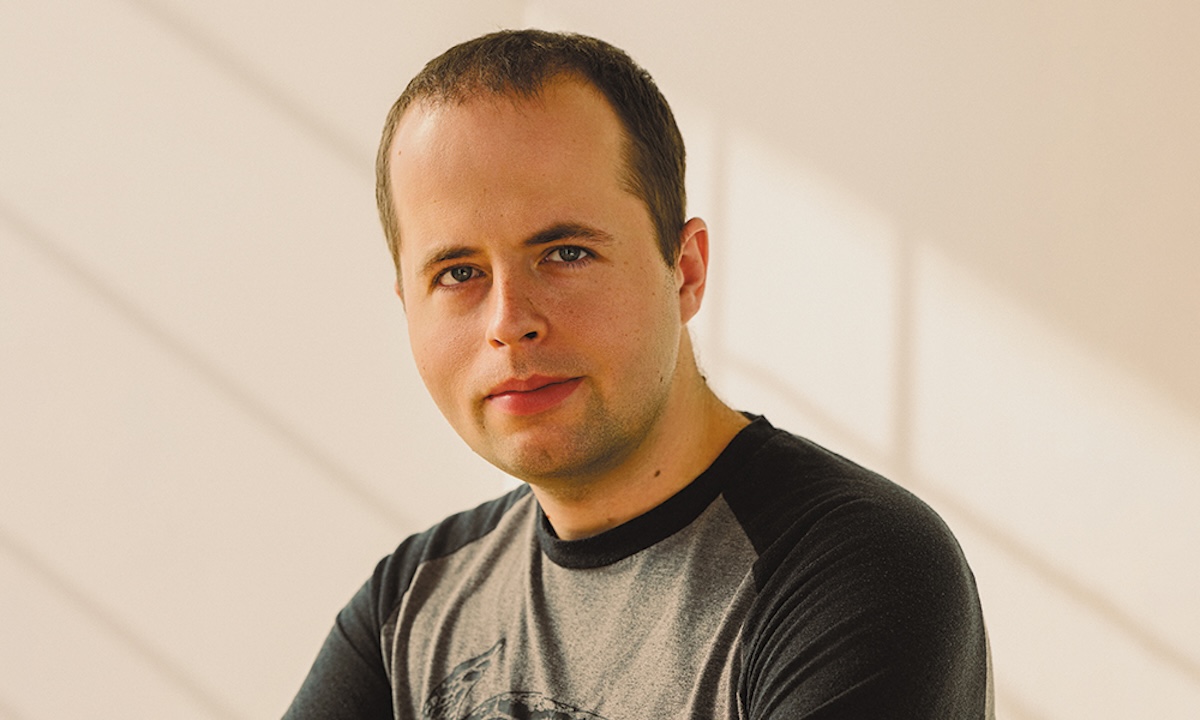
Image: Jakub Pachocki, chief scientist at OpenAI. Photo: TechNews Taiwan.
Sources
- OpenAI — Perplexity and Intelligence, por Jakub Pachocki
- Fast Company — OpenAI published its AI progress meter to encourage a slowdown. It won't work
- PYMNTS — OpenAI Pitches Perplexity Score to Set AI Safety Limits
- BetaNews — OpenAI proposes shared perplexity limits on frontier AI
- Dealroom — OpenAI publishes its internal pretraining curve and proposes industry-wide limits based on perplexity
Transparency note: this article was produced with the assistance of artificial intelligence, cross-checked against public posts on X and internet sources, and reviewed before publication. Please consult the original sources to confirm the information.
By Muse