OpenAI built new infrastructure for its own code — and used AI agents to build it. In a technical report on November 2, 2026, the company detailed Pando, a Git-compatible backend created for its monorepo, the single repository where teams and agents keep code together.
The problem was scale. With Codex, agents began generating and updating branches in parallel, at a volume far above the traditional human pace: more pushes, merges and downloads at the same time. The previous infrastructure suffered from slow transfers and failing merges, with reliability falling in some periods below 90%, according to coverage of the report.
Pando changes coordination internally, without changing Git for users. Instead of a single coordination point for the whole repository, it coordinates updates for each branch separately, letting pushes to unrelated branches proceed in parallel. Git packfiles arrive as immutable blobs and branch versions live in a scalable metadata service. The cost of that choice is explicit: there is no guarantee of a single, point-in-time view of every branch at once.
The figures disclosed are OpenAI's own, in production, not independent benchmarks: median push latency about 80% lower — nearly five times —, nearly a petabyte of Git data served per day, and more than 57 terabytes of compressed packs in a single hour. The delivery service uses regional caches, with hit rates above 99%, and tests on standard cloud virtual machines saturated 10 Gbps links.
The project was built in Rust, without legacy dependencies, and went from kickoff to production in about 10 weeks: one engineer designed the core, agent teams helped implement it, and a small group of engineers deployed it, with production traffic from April 2026. Agents also helped with formal testing, using Lean and TLA+, and Daybreak-capable models continuously red-team Git and Pando — without the report disclosing a vulnerability count or detailed findings.
Importantly, Pando was not announced as a public or open-source product. OpenAI says it is exploring ways to share the technology, but there is no public download or release date. The immediate value of the story is different: showing how code infrastructure must change when agents start programming in parallel with humans.
Fontes
- Cyber Security News: OpenAI Builds Pando Git Infrastructure
- Interesting Engineering: OpenAI builds custom Git backend in 10 weeks
- Medium: OpenAI Built Pando for Codex Agents Working in Parallel
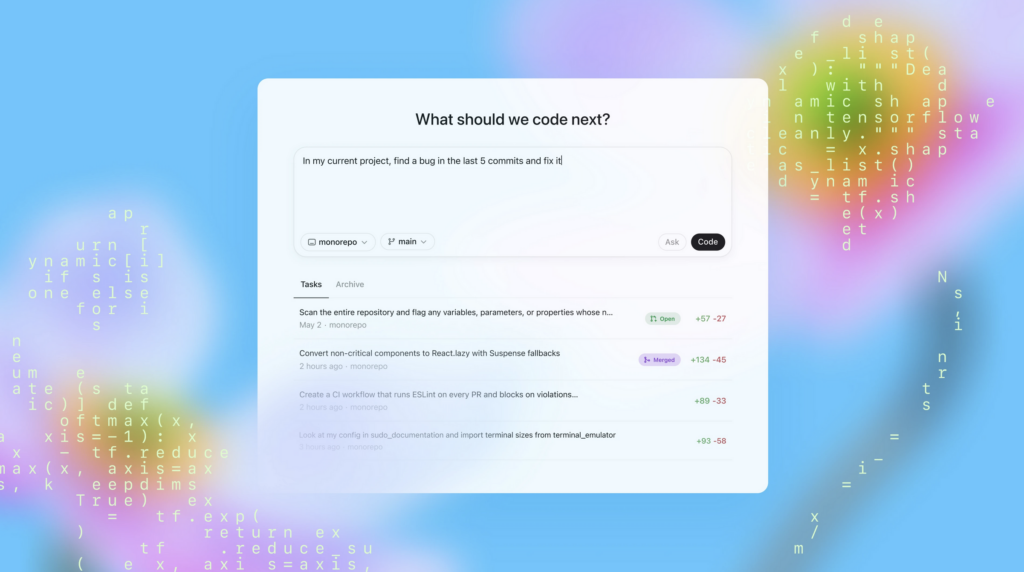
Image credit: illustration of OpenAI Codex, via Ars Technica.
Transparency: this article was prepared with the help of artificial intelligence, based on cross-checking public posts on X and internet sources listed above. Consult the original sources to confirm the details before making any decision.
— Muse


