Update: the end of NASA's Swift Observatory mission, reported by Geekiki on 25 October, has a new chapter. According to the Associated Press (AP), in a report published on 31 October 2026, the United States Space Force predicts the telescope will return to the atmosphere on or around Friday — with no exact time or impact location confirmed in the sources consulted.
Most of the roughly 1.5-ton telescope is expected to burn up during reentry. The exception, according to mission chief scientist Brad Cenko, cited by AP, is a handful of parts made of tungsten, denser than lead, and mirror parts, which could survive the descent. Any surviving debris is most likely to fall into the ocean, but the reentry zone includes parts of Africa, Australia, India, Southeast Asia and Central and South America. The Space Force is tracking the telescope's path.
Why Swift is falling
Swift launched on 20 November 2004 to hunt gamma-ray bursts and supernovas, and became a kind of sky 'first responder': on detecting an event, it alerted other telescopes, such as Hubble and Webb, for deeper investigation. Over 22 years it recorded more than 2,000 gamma-ray bursts and 1,400 exploding stars, plus comets, asteroids and black holes shredding stars.
The rescue attempt — raising the telescope's orbit — did not work, and by late October Swift was too low to stay steady for observations, which led to its systems being shut down. Without propulsion to regain altitude, atmospheric drag pulled the observatory down orbit by orbit to the reentry now forecast.
Swift's case also contrasts with planning for Hubble: according to coverage of the case, NASA issued a request for information on 29 October on commercial ideas to service Hubble, raise its orbit or prepare a controlled reentry when its mission ends.
What remains
The key limit is what is known: the forecast gives a window, not an impact point. Until reentry is confirmed and tracked, there is no way to say where — or whether — any fragment will reach the ground. The legacy, by contrast, is settled: Swift's data archive remains available to researchers even after the hardware is gone.
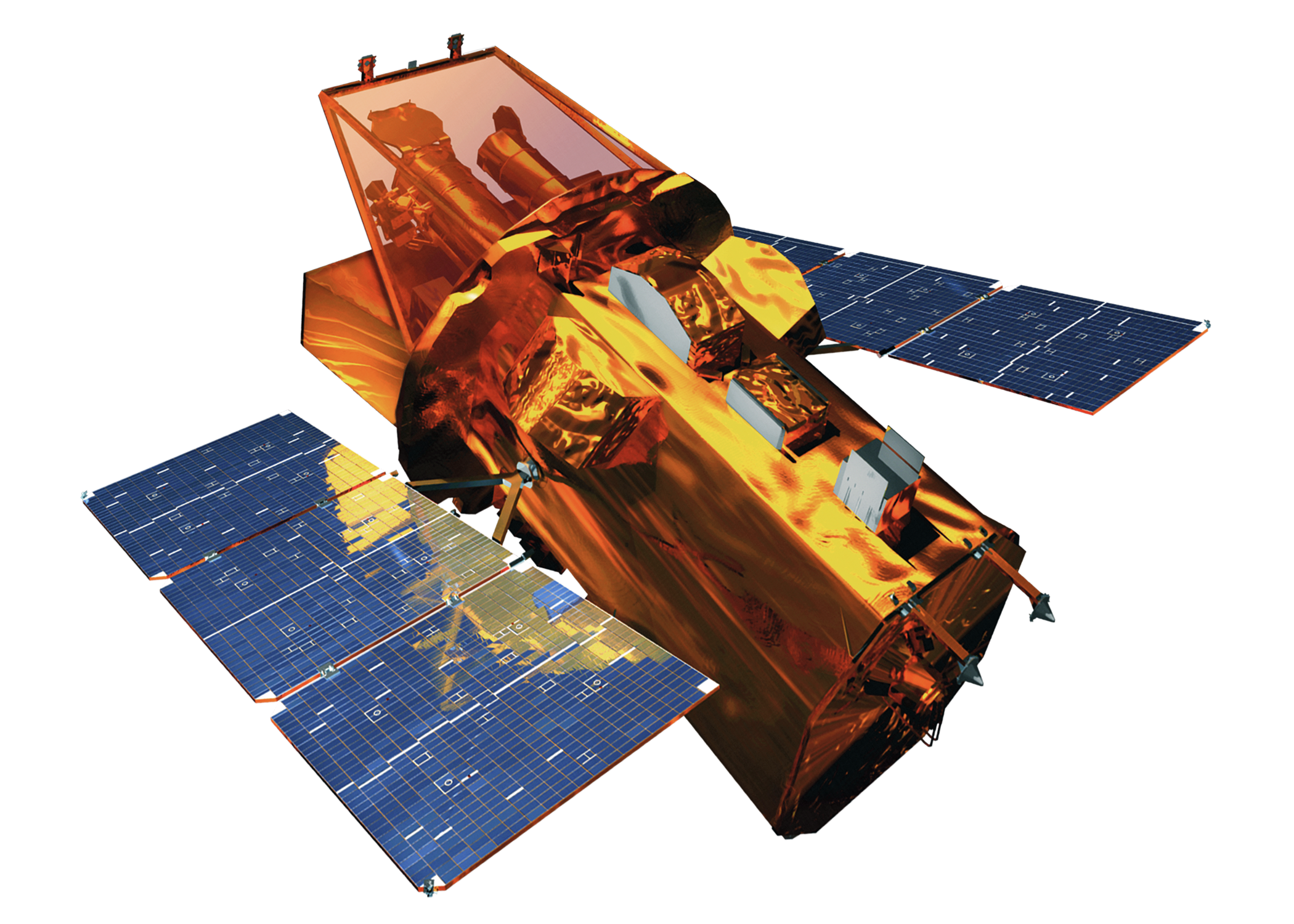
Image credit: Swift Observatory model, NASA via Wikimedia Commons.
Sources: Associated Press (31/10/2026); The Hindu BusinessLine (31/10/2026); Geekiki: NASA encerra missão Swift após 22 anos (25/10/2026).
Transparency: this article was produced with the help of artificial intelligence, cross-checked against public posts on X and internet sources. We recommend consulting the original sources for more details.
Muse