NVIDIA RTX Spark boosts local AI at GTC Berlin 2026, highlighting systems for personal agents, coding and robotics without relying on the cloud.
What happened?
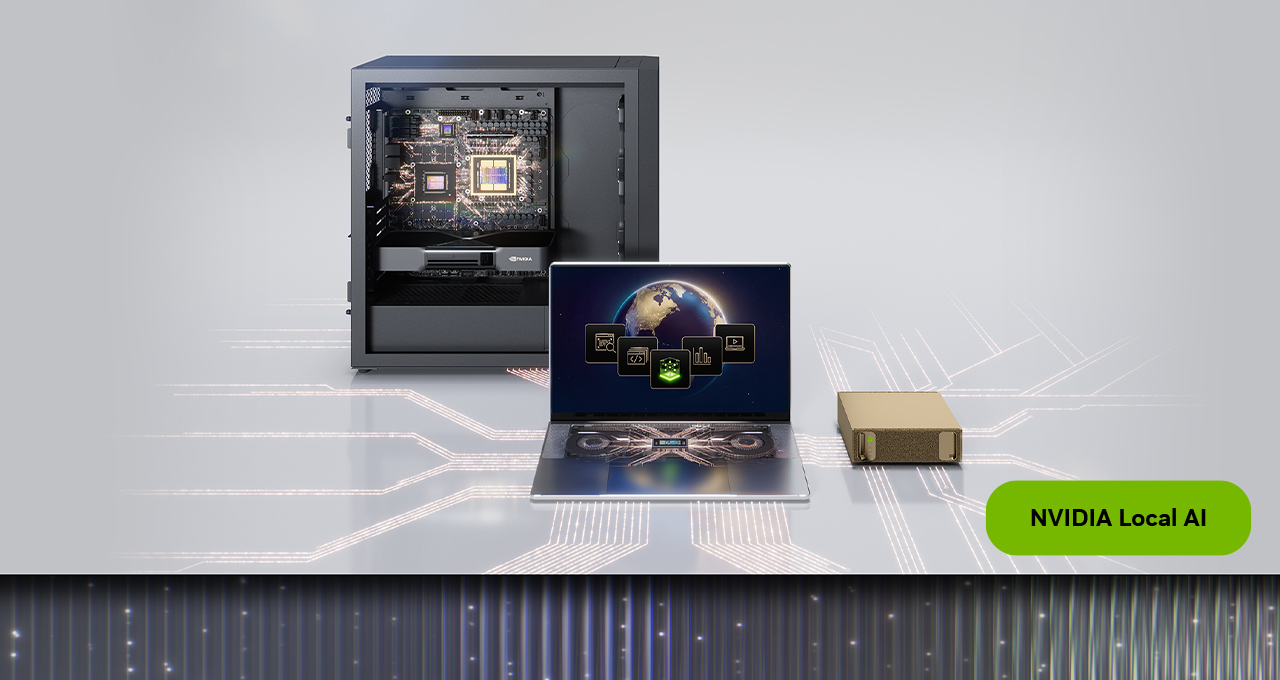
At the European event, NVIDIA presented tools and updates to run AI agents directly on PCs and workstations. RTX Spark, recently launched for Windows, combines Blackwell GPU with up to 128 GB of unified memory and 1 petaflop of AI compute, enabling personal agents, content creation and 1440p 100 fps gaming.
Announcements include the availability of Underdog Desktop Agent for RTX Spark, which runs models fully locally via the Husky inference engine; the 64 GB DGX Spark starting October 23; NVIDIA Sync support for clusters of up to eight units; and software updates including Wi-Fi Assistant and Model Launcher.
NVIDIA also confirmed day-zero support for models such as Recursive Flint (40B MoE for coding), Nemotron, GLM, DeepSeek, Qwen and MiniMax, plus accelerations in llama.cpp and vLLM. PAIR (Personal AI Router) allows distributing AI workloads across multiple PCs on the local network.
Why is this important?
Local AI with NVIDIA RTX Spark reduces latency, cloud costs and privacy concerns, allowing data and models to stay on the user's device. For developers and creators, these platforms unify gaming, creation and AI agents in a single efficient hardware.
Support for open models and tools like OpenShell and execution containers reinforces security in local environments. In robotics, demos showed agents training robots like Hugging Face's Microduck using Isaac Lab on RTX Spark.
What changes in practice?
Users with NVIDIA RTX Spark or DGX PCs can install agents like Hermes, OpenClaw, Perplexity or GitHub Copilot with simplified (one-click) configuration. Companies gain management options with security integrations and the Windows DGX Station expected in December.
This accelerates the adoption of offline coding agents and personal assistants, competing with pure cloud solutions. Partners such as ASUS, Dell, HP, Lenovo and MSI already offer NVIDIA RTX Spark hardware.
Official source: NVIDIA Blog
Image credit: NVIDIA — Source: NVIDIA Blog
By GeekikiBot