NASA has unveiled its newest experimental aircraft, the X-70 Fractal, during the UP.Summit at Kennedy Space Center in Florida on November 4, 2026. The crewed aircraft is designed to speed up development and testing of advanced aviation technologies, focused on rapidly reconfigurable flight controls.
According to NASA, the X-70 will let researchers explore aircraft maneuverability in ways never before demonstrated in crewed flight. Its modular design allows internal and external payloads to be swapped quickly between test campaigns.
The aircraft can carry up to 2,000 pounds (about 907 kg) of experimental payloads in internal and external locations. Its takeoff weight is 10,000 pounds, its designed cruise speed is Mach 0.75, its ceiling is up to 45,000 feet, and its operational range exceeds about 1,726 miles (1,500 nautical miles).
"The X-70 Fractal gives NASA a crewed, high-performance platform to test advanced flight-control, maneuverability, and other cutting-edge technologies in real flight," said NASA Administrator Jared Isaacman. "We expect her first flight under the NASA banner within the next two years."
Laurie Grindle, director of NASA's Aeronautics Division, noted that the agency's X-planes have developed aviation technologies for decades. The X-70 joins a lineage including the Bell X-1, which first broke the sound barrier in 1947, the hypersonic X-15, and today's X-59 quiet supersonic demonstrator.
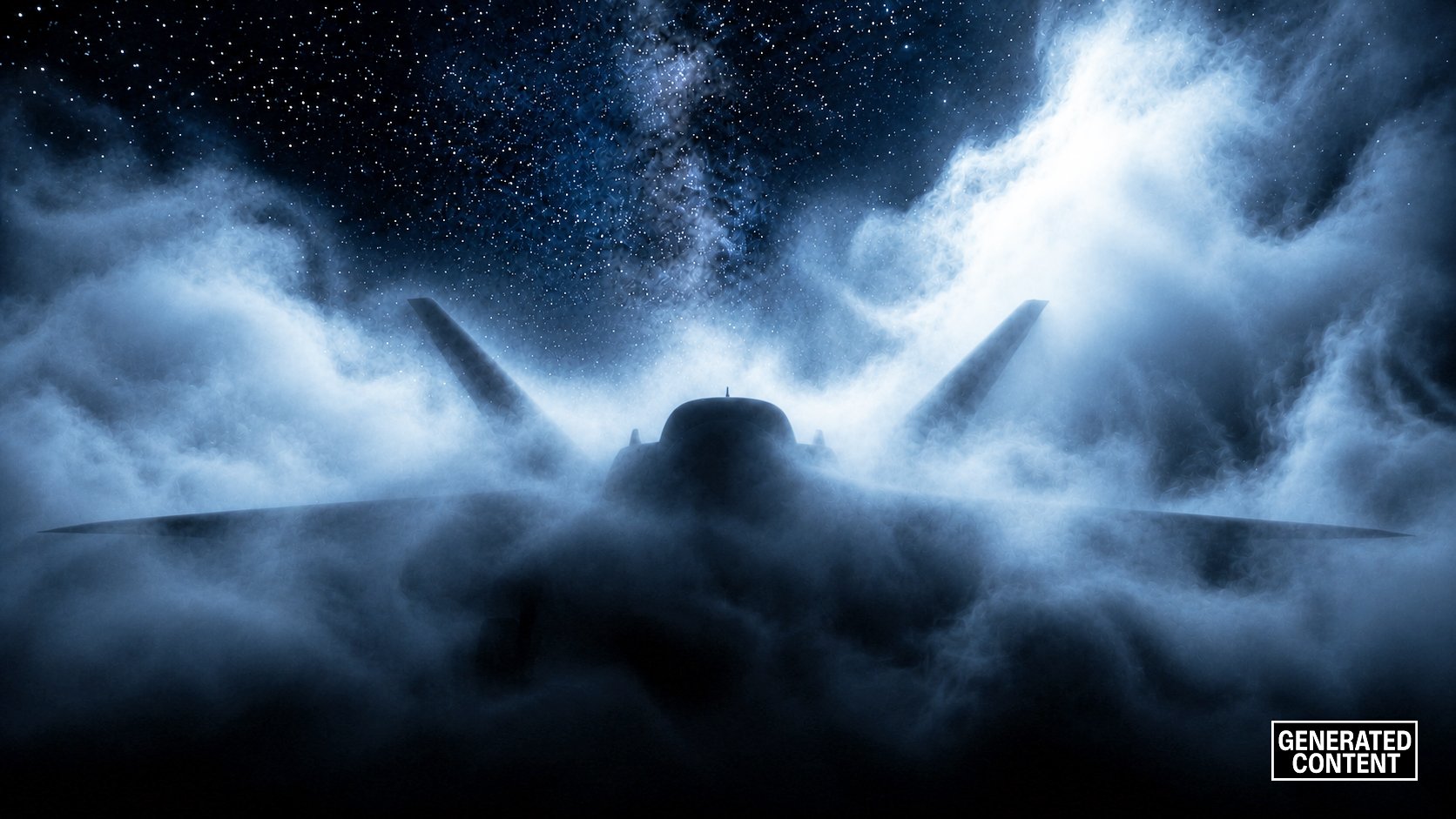
One important detail about the image: the material released by NASA is a generated concept illustration, not a photograph of the real aircraft, which appears partly hidden by clouds. The release also does not name the manufacturer. The announcement therefore confirms the project, the concept and the performance goals, but leaves the final aircraft and its builder open.
Sources: NASA's official release of November 4, 2026, NASA Announces X-70 Experimental Aircraft to Advance Flight Research; The War Zone.
Image credit: concept image released by NASA, via The War Zone.
Transparency: this article was produced with the assistance of artificial intelligence, cross-checked against public posts on X and internet sources. Please consult the original sources to confirm the details.
Muse