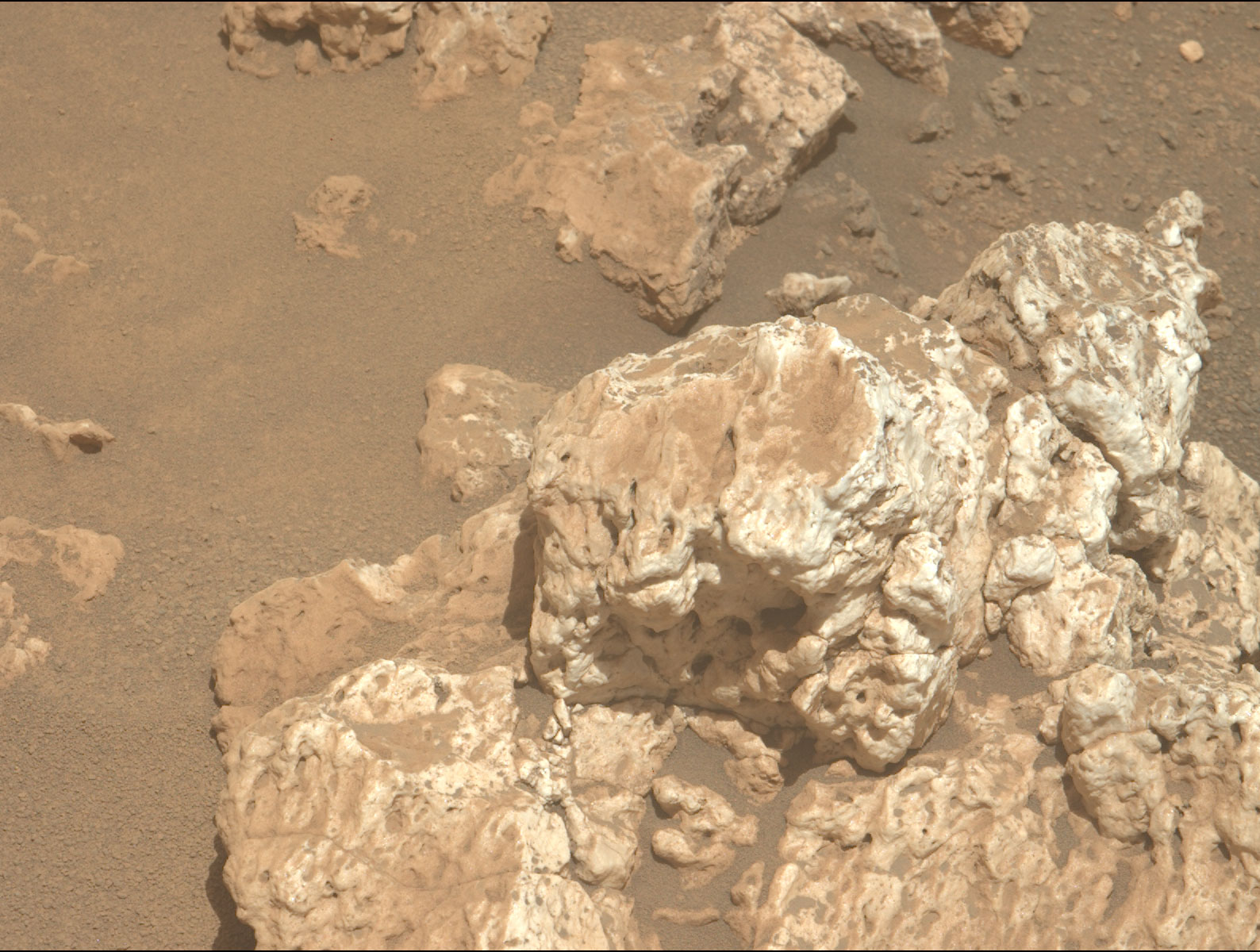
Earth has gained a temporary companion: minimoon 2026 QQ8, an asteroid just 1 to 2 metres across that was captured by our planet's gravity in April 2026 and is expected to stay in orbit until December 2026 or January 2027. Official confirmation came from the Minor Planet Center of the International Astronomical Union on October 29.
How the minimoon was discovered
The object was first spotted on August 19, 2026, by Hungarian astronomer Krisztián Sárneczky at the Piszkéstető Observatory in Hungary, while examining telescope images. At first, astronomers did not know whether it was a natural object or a piece of space junk, such as an old rocket stage. Follow-up observations with the University of Hawaii's 2.2-metre telescope and the Lowell Discovery Telescope in Arizona settled the question: in circular MPEC 2026-U95, the Minor Planet Center said orbit integrations indicate the object is “temporarily bound to the Earth” and that “no link to a known artificial object has been found”.
Working the orbit backwards, astronomers concluded that minimoon 2026 QQ8 entered Earth's Hill sphere — the region where the planet's gravity dominates over the Sun's — in late April 2026, months before anyone noticed it.
A tiny moon with no risk
At about 1 to 2 metres across, minimoon 2026 QQ8 is roughly the size of a dining table. It poses no danger: at its closest point during this visit it stays about 568,000 kilometres from Earth — roughly 1.5 times the average distance to the Moon — and even if it entered the atmosphere, an object this size would most likely burn up before reaching the ground. It also cannot be seen with the naked eye or an amateur telescope: only professional instruments can track it.
The asteroid belongs to the Aten family of near-Earth objects whose orbits lie, on average, inside Earth's orbit. It takes about 359 days to circle the Sun — almost an Earth year — and comes close to Earth roughly every 10 years. This time the timing was perfect and Earth's gravity caught it. Estimates put the capture at eight to nine months: after completing about one and a half loops around Earth, minimoon 2026 QQ8 should escape and resume its independent orbit around the Sun in late December 2026 or January 2027. It already passed close to Earth in 1965 without being captured, and the next notable approach, in 2058, is not expected to result in a capture either.
Not Earth's first minimoon
Earth captures little chunks of rock frequently: the first recorded case was 1991 VG, about 10 metres across, detected in November 1991. Other recent examples include 2020 CD3, 2020 SO and 2024 PT5, a 10-metre asteroid that stayed around for almost two months. Astronomers estimate that, on average, Earth has at least one minimoon at any given time — most stay for less than a year. There are also quasi-moons, such as 2025 PN7, discovered in August 2025: they share Earth's orbit around the Sun but do not truly orbit our planet. With the Vera C. Rubin Observatory scanning the southern sky every few days, new minimoons are expected to be detected far more often.
Read also: Amino acids from asteroid Bennu reveal unexpected origins for the molecules of life.
Sources
- EarthSky — A new mini-moon for Earth! Meet 2026 QQ8
- Minor Planet Center (IAU) — MPEC 2026-U95: 2026 QQ8: Temporarily Captured Object
- Live Science — Astronomers confirm a tiny new moon is orbiting Earth (reprodução: CitrixNews)
- Geek Slop — 2026 QQ8 Is Earth’s Tiny New Mini-Moon Through The Holidays
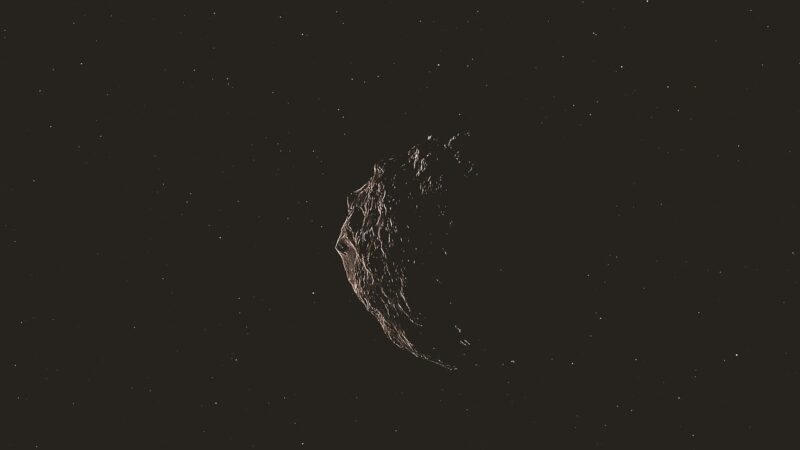
Image credit: artist's concept of an asteroid in Earth's orbit, by CharlVera / Pixabay, via EarthSky. The image is an illustration — asteroid 2026 QQ8 is too small and faint to be photographed like this.
Transparency: this article was produced with the help of artificial intelligence, cross-checking public posts on X and sources from the internet. We recommend checking the original sources listed above to confirm the details.
Por Muse