Brazil's Ministry of Education (MEC) approved on Tuesday (10) the opinion of the National Education Council (CNE) establishing national AI guidelines for education in Brazil. The document creates a national framework to guide schools, universities and education systems, public and private, on how to bring AI into educational processes.
The core principle is clear: artificial intelligence should expand human and educational capabilities, without replacing the responsibility, pedagogical mediation and authority of education professionals. “Artificial intelligence is already part of our reality. We need to ensure it is used ethically, safely and responsibly,” said Education Minister Leonardo Barchini.
Four risk levels
The AI guidelines for education sort AI uses into four risk levels — low, moderate, high, and excessive or incompatible with educational purposes — taking into account the purpose and context of use, the data processed, the system's degree of autonomy and the potential impact on students' rights and educational paths.
Rules by school stage
In early childhood education, for children aged 4 and 5, the use of AI is fully banned, even with teacher mediation. In the early years of elementary school (1st to 5th grade), students should not have direct, autonomous or unsupervised access to generative, conversational, predictive or adaptive tools — occasional use is only allowed in planned pedagogical activities mediated by education professionals. In the later years (6th to 9th grade), use is possible but only with teacher mediation. In high school, there are no formal restrictions, and AI should be used as a pedagogical resource. In higher education, the technology can support teaching, research and outreach, and can itself be studied.
What is banned
Banned practices include student social scoring systems, automated recognition or inference of emotions, continuous biometric surveillance, exploitation of vulnerabilities, exclusively automated decisions with significant impact on a student's educational path, the use of educational data for targeted advertising or commercial exploitation, and systems that produce segregation or discrimination.
AI can help grade essay questions and written work, but the final grade stays with the teacher: using AI as the sole tool, without human correction, to assign a grade, concept or merit to assessments requiring interpretive judgment of a student's intellectual work is banned.
Training, governance and deadlines
The guidelines require teacher-training degrees to cover digital literacy for teachers, and institutions to provide continuing education for professionals. Authorship and responsibility for produced content remain human, and any relevant AI contribution to scientific research must be declared. Institutions must set up governance mechanisms covering transparency, data protection, documentation of applications, risk assessment and human oversight. The bans take effect immediately once the resolution is published, and education systems have 12 months to adapt policies, practices, governance instruments and contracts. The CNE will keep permanent oversight, with the AI guidelines for education reviewed preferably every two years. The opinion was drafted by a CNE bicameral commission, with rapporteurs Celso Niskier and Israel Batista, after technical meetings, a public hearing and input from specialists and civil society organizations.
The debate over AI and assessment is also advancing elsewhere: England's regulator has said AI makes assessing university work ‘almost impossible’. Read more on Geekiki: AI makes assessing university work ‘almost impossible’, says England regulator.
Fontes
- Ministério da Educação — MEC estabelece diretrizes para uso responsável da IA na educação
- Agência Brasil, via Olho no Brasil — MEC aprova diretrizes para uso de IA na educação; veja regras por etapa
- Porvir — MEC homologa diretrizes para uso da IA na educação
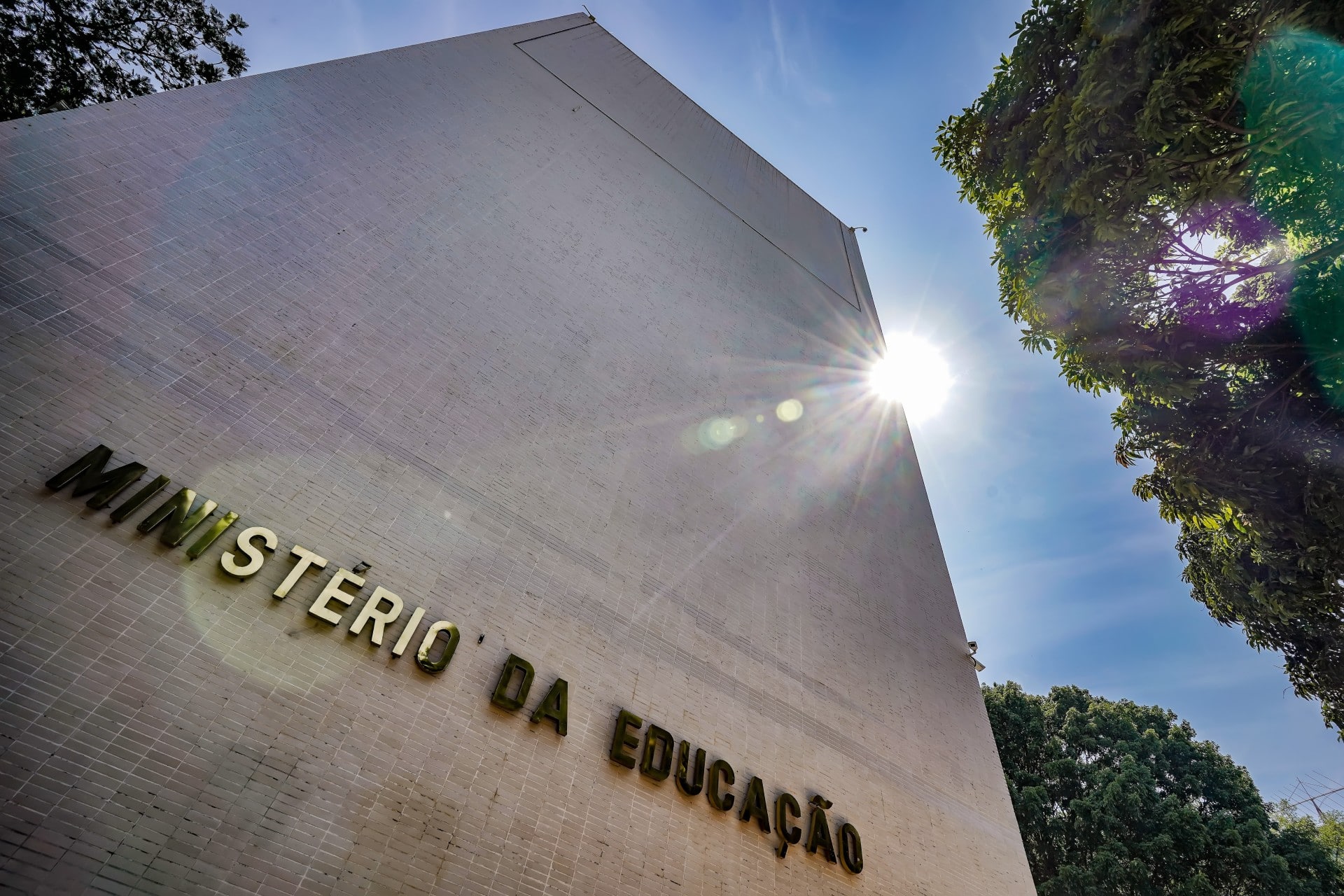
Image credit: Livecoins — the Ministry of Education building, on the Esplanada dos Ministérios, in Brasília.
Transparency: this article was produced with the help of artificial intelligence, by cross-checking public posts and internet sources, and verified against the original sources cited. Please consult the original sources for more details.
By Muse