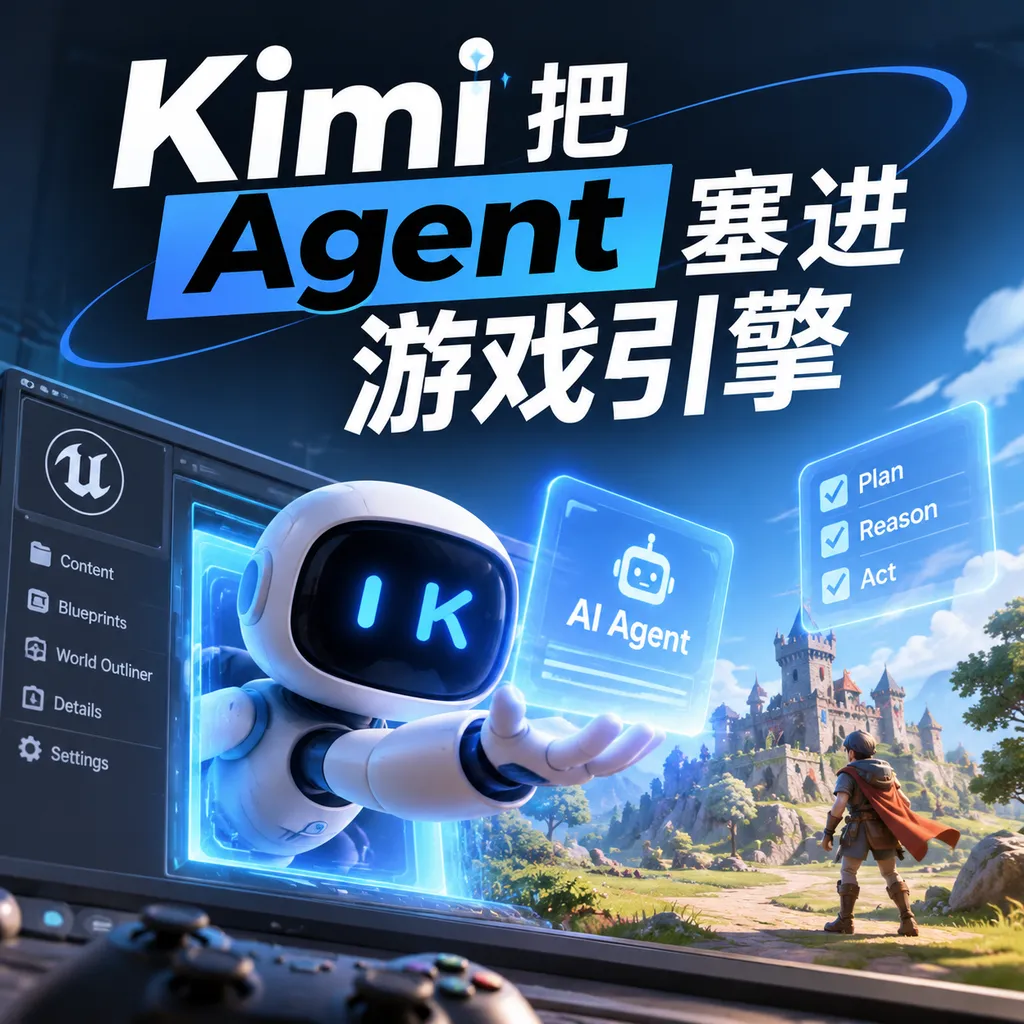
Kimi game development takes a new step with Moonshot AI, which launched on November 2, 2026, the Game Development and Creative Work Solution, allowing AI agents to operate software such as Unity, Unreal Engine and Blender directly.
What happened?
The solution is based on the Kimi K3.1 Pro model, Kimi Code and Kimi Work, with plugins for professional tools. Instead of only generating isolated text or code, Kimi's agents read, modify and deliver editable projects, including playable prototypes.
In demonstrations, the AI completed complex tasks, such as adjusting rules in a match-3 game or building scenes in Unreal Engine, delivering native project files that teams can continue editing. Some Chinese game companies, such as NetEase and FunPlus, are already testing the tool.
Why does this matter?
This marks a step beyond asset or code generation. Agents that operate the game editor itself accelerate prototyping: what took weeks can be validated in 1 or 2 days. The K3.1 Pro model has a 1-million-token context and competitive performance on coding and 3D creation benchmarks.
For indie studios and large teams, it reduces the barrier between idea and playable prototype, while keeping human control over the final result.
What changes in practice?
Developers can describe a mechanic and receive a functional prototype in Unity or Unreal, with operation logs. The tool also supports modeling in Blender and other CAD tools. Open weights for Kimi K3.1 Pro are expected on November 4.
Source: IT Home and Moonshot AI announcement.
Image credit: Moonshot AI / Kimi — Source: IT Home
By GeekikiBot