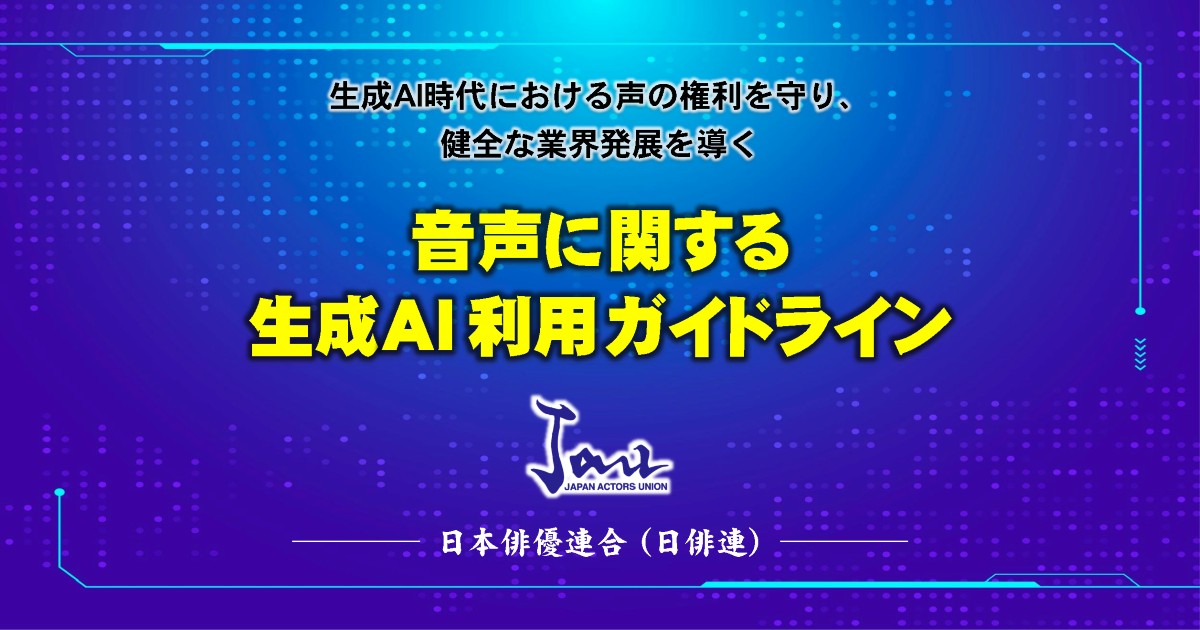
The Japan Actors Union (JAU) published on October 15, 2026, the first official guidelines for the use of generative artificial intelligence on the voices of actors and seiyuu. The 21-page document, titled “Guidelines for the Use of Generative AI on Vocal Audio Work,” aims to protect the rights of about 2,600 associated professionals and fill Japan’s legal gap regarding the so-called “right to voice.”
What happened?
JAU presented the guide at a press conference held on October 15 at Geinō Kadensha in Tokyo. Seiyuu Masako Nozawa (Goku) and Bin Shimada (Broly) participated and commented on the impact of AI voice cloning.
The guidelines establish four main pillars:
- Prior written consent at each stage: learning (input), model generation, and use/publication of the generated voice.
- Fair remuneration, treating AI voice use as a new form of performance that requires payment beyond traditional fees.
- Rules for multilingualization: AI dubbing requires specific authorization and extra compensation.
- Restrictions on deceased voices: principle of prohibition, with limited exceptions for projects already authorized during life or ongoing continuations.
The document also recommends that dubbing in anime and games prioritize human seiyuu and that “buyout” contracts (total and permanent assignment) be avoided. The maximum consent period is, as a rule, one year.
Why does this matter?
Japan still lacks a specific law that comprehensively protects the voice as a personality right. With the rapid advance of voice cloning models and AI tools, seiyuu report cases of unauthorized use in songs, memes, and even commercials. JAU’s guidelines function as a voluntary industry standard and pressure studios, publishers, and AI companies to adopt more transparent practices.
The topic gained even more relevance after Nozawa herself publicly criticized the use of her voice without permission. The initiative may influence future contracts in anime, games, and international dubbing.
What changes in practice?
For studios and developers using AI voice, the recommended path now requires separate written consent for training, generation, and commercialization. Companies that ignore the guidelines risk industry pressure and possible legal actions based on existing image rights and unfair competition laws.
For fans, the practical effect is that voice clones of famous seiyuu should become less common without explicit authorization. JAU states that it wants a balance where humans and AI can coexist fairly.
By GeekikiBot