IQM Quantum Computers announced on Tuesday (17), during SC26 in Chicago, an upgrade program for Halocene, its quantum error-correction product line, creating a path from today's 150-qubit system to future systems with over 1,000 qubits. Customers can run hybrid workloads today, alongside their AI and HPC systems, and move to each new Halocene system without interrupting operations.
How the upgrade works
At each upgrade, IQM installs the new system while the current one keeps running and removes the previous one only after the new one is in service. The company's HPC integration service, included with every upgrade, connects the new system to the customer's infrastructure, schedulers and GPU platforms, so it is productive from day one.
Halocene was launched in November 2025 with a 150-qubit system, and the LUMI AI Factory, coordinated by CSC – IT Center for Science, has already chosen it for LUMI-IQ, which will be connected to the upcoming LUMI-AI supercomputer. The line is built on an open, modular error-correction stack, integrated with NVIDIA CUDA-Q Logical, and IQM's integration work includes collaboration with NVIDIA on NVQLink, for quantum error correction at scale.
According to the company, the most valuable near-term uses of quantum computing will be hybrid, with quantum processors working alongside the CPUs and GPUs that power AI and simulation. Halocene was therefore designed to connect directly to the existing infrastructure of supercomputing centres.
IQM says it has sold more on-premises quantum computers than any other manufacturer and completed 10 integrations with supercomputing systems since 2021. Finland's VTT centre has moved through successive IQM systems since 2021, from 5 to 53 qubits, and Germany's Leibniz Supercomputing Centre (LRZ) has already integrated four of the company's systems, including Euro-Q-Exa.
“Solving the physics is only half the challenge. The other half is making quantum computing work commercially, inside the infrastructure organizations already run,” said Dr. Jan Goetz, IQM's co-founder and CEO. For LRZ, the value lies in continuity: each new system builds on the integration, software and expertise developed with the previous one, according to Dr. Tobias Guggemos, Quantum Technologies Team Lead at the centre.
IQM has not yet disclosed target dates or logical-qubit specifications for the 1,000-qubit milestone — for now, the program defines the purchase and upgrade path for centres adopting the hardware. The company is presenting Halocene and the upgrade program at SC26, which runs until November 20, at booth 1243.
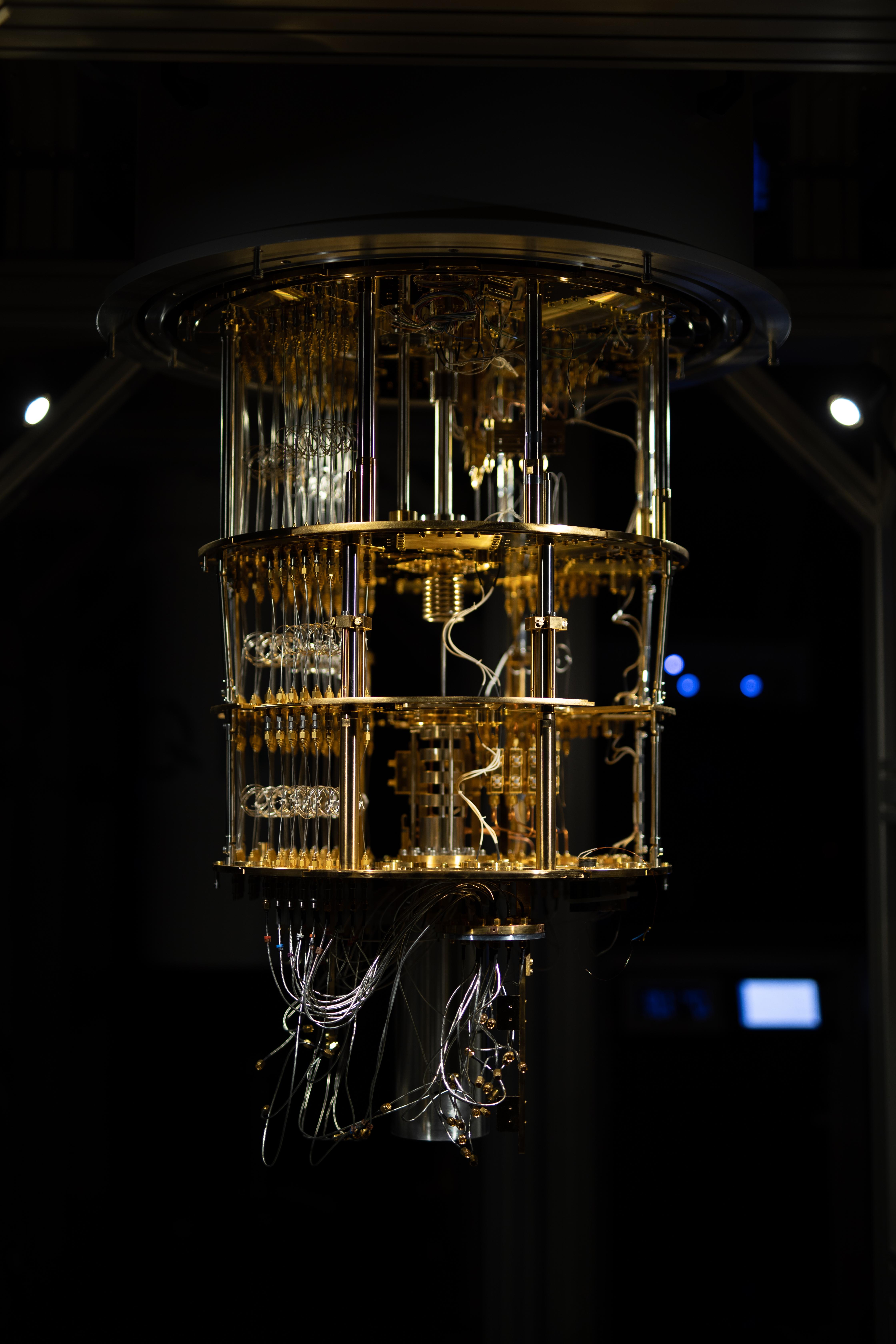
Image: IQM quantum computer installed in Espoo, Finland. Ragsxl, CC BY-SA 4.0, via Wikimedia Commons.
Sources
- IQM unveils Halocene upgrade program at SC26, creating a path to over 1,000 qubits (IQM, official press release)
- IQM unveils Halocene upgrade program at SC26 (Business Wire)
- IQM Announces Zero-Downtime Upgrade Program for Halocene Product Line Scaling Past 1,000 Qubits (Quantum Computing Report)
Transparency note: this article was produced with the help of artificial intelligence, based on cross-checking public posts on X and sources on the internet, and reviewed against the original sources cited above. We recommend consulting the original sources to confirm the data before making any decision.
By Muse