Intel announced on October 26, 2026 a definitive agreement to acquire Classiq, a quantum computing software company based in Tel Aviv, Israel. CONFIRMED: the agreement was announced, but the purchase has not closed yet.
According to the official announcement, the plan is to combine Classiq's synthesis platform with Intel's silicon spin-qubit technology, manufacturing and existing software, creating what the company calls a full-stack quantum platform — from chip to software. Intel would then add quantum processing units (QPUs) alongside CPUs, GPUs and ASICs.
Classiq, founded in 2020, builds a platform that helps developers, researchers and enterprises create quantum applications without needing deep expertise in detailed quantum circuit design. In Intel's description, the platform combines AI agents, a high-level quantum modeling language and design automation, with support for hardware benchmarking, cost and performance optimization and execution across different hardware platforms.
Intel compares this role to electronic design automation (EDA) and computer-aided design (CAD) software, which, more than four decades ago, helped abstract hardware complexity in classical chip design. The company says it has invested in quantum computing since 2015 and claims it can produce qubit chips and cryogenic control electronics at scale using equipment and processes common to conventional semiconductor manufacturing — a claim by Intel itself, not an independent measurement.
Price not disclosed — and what is only a report
CONFIRMED: Intel did not disclose the price or the form of payment in its announcement. RUMOR/REPORT: the figure of about US$2.3 billion in cash and stock, cited by CTech/Calcalist, was not confirmed by Intel. Globes arrived at a close figure, about US$2.2 billion net of Classiq's cash. Treat those values as reports, not as an official price.
“Joining forces with Classiq transforms Intel's Quantum Computing Group into a full-stack quantum computing business,” Intel CEO Lip-Bu Tan said in the announcement. Classiq co-founder and CEO Nir Minerbi said the two companies together can help unlock the benefits of quantum computing and accelerate its adoption.
What still has to happen before closing
Closing depends on regulatory approvals and other customary conditions, and Intel expects to close the deal in the first half of 2027. Until then, the two companies will continue to operate separately and independently. After closing, Intel intends to keep supporting Classiq's existing integrations with other platforms, keeping the software independent of a specific qubit type or hardware.
It is also important to mark the announcement's limits: it gives no date for a first combined product, no measured performance comparison and no quantum revenue forecast. The announcement itself lists risks, including the possibility that the deal may not close on time or at all, and uncertainty about the pace of commercial adoption of quantum computing.
Sources
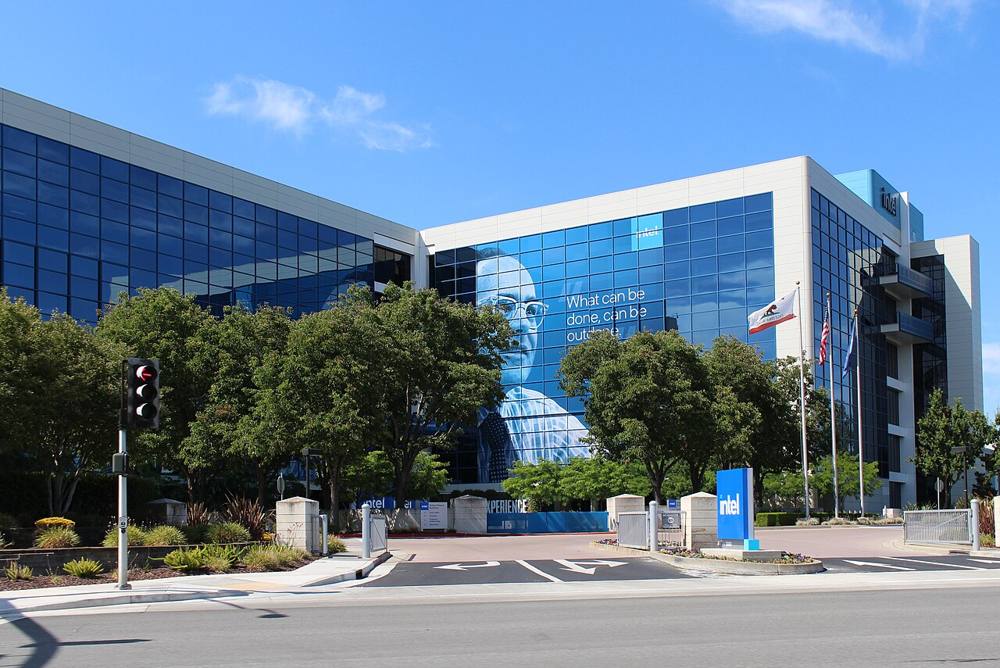
Image credit: Intel headquarters in Santa Clara, California, by Coolcaesar, via Wikimedia Commons (CC BY-SA 4.0), as republished by JBizNews.
This article was produced with the assistance of artificial intelligence, based on cross-checking public posts on X and the internet sources cited above. Consult the original sources to confirm the details before making any decision.
— Muse