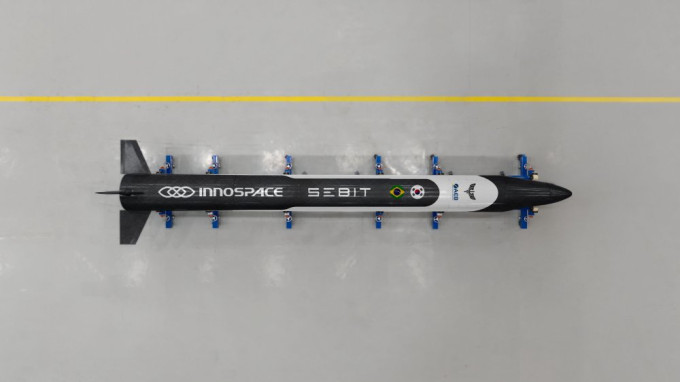
South Korean startup Innospace has confirmed the second test flight of its Sebit suborbital rocket in Brazil: the launch window runs from November 16 to December 11, with liftoff targeted for November 29, from the Alcântara Launch Center in Maranhão.
How the schedule was set
The schedule was finalized after consultations with ALADA, Brazil's state-owned aerospace projects company, the Brazilian Air Force (FAB) and the Brazilian Space Agency (AEB). The final date and time will be set within the window depending on weather, vehicle readiness and local operating conditions.
The first attempt and the investigation
It will be Sebit's second attempt. The first flight, on August 19, 2026, at 4:30 p.m. local time, was terminated after the vehicle deviated from its planned trajectory. According to coverage of the case, the cause was a technical problem with the small fins on the rocket's body. The official investigation has concluded. The final report from the Aeronautical Accidents Investigation and Prevention Center (CENIPA) was approved by the FAB and released on November 5.
What changed on the rocket
For the new flight, Innospace increased the hybrid engine's thrust from 3 to 4 tons and redesigned the flight control algorithm, which governs the vehicle's attitude and direction. The goal is to verify performance and gather flight data and operational experience to improve launch stability and reliability.
Sebit's specifications
Sebit is a single-stage suborbital rocket, 8.7 meters long and 0.7 meters in diameter. It was developed to carry customer payloads to altitudes of up to 100 km on testing, validation and scientific research missions in high-altitude and microgravity environments — without entering orbit.
HANBIT-Nano moves to 2027
The November flight will use the Alcântara operations period originally allocated to the small satellite launch vehicle HANBIT-Nano, which had been scheduled for this year. As a result, HANBIT-Nano continues preparations with a launch targeted for the first half of 2027.
Image: Innospace, via Donga Science.
Sources
- Korea JoongAng Daily — Innospace to launch upgraded Sebit rocket in Brazil on Nov. 29
- Donga Science — Innospace Confirms SEBIT Follow-Up Test Flight Window
- Space & Defense — INNOSPACE confirms launch window for SEBIT's next test flight
- The Elec — Innospace Sets Nov. 29 Launch Date for SEBIT Suborbital Rocket
Transparency: this article was produced with the help of artificial intelligence, based on cross-checking public and verifiable sources on the internet, including the companies' official announcement and press coverage. We recommend consulting the original sources listed above to confirm the details.
By Muse