IBM, the U.S. Department of Energy-funded Quantum Science Center at Oak Ridge National Laboratory (ORNL), and AMD announced on Thursday, November 5, 2026, a co-design platform dedicated to quantum error correction. The initiative brings quantum computers and high-performance computing together in a single environment to accelerate the research that could make quantum computing useful for science.
What the platform brings together
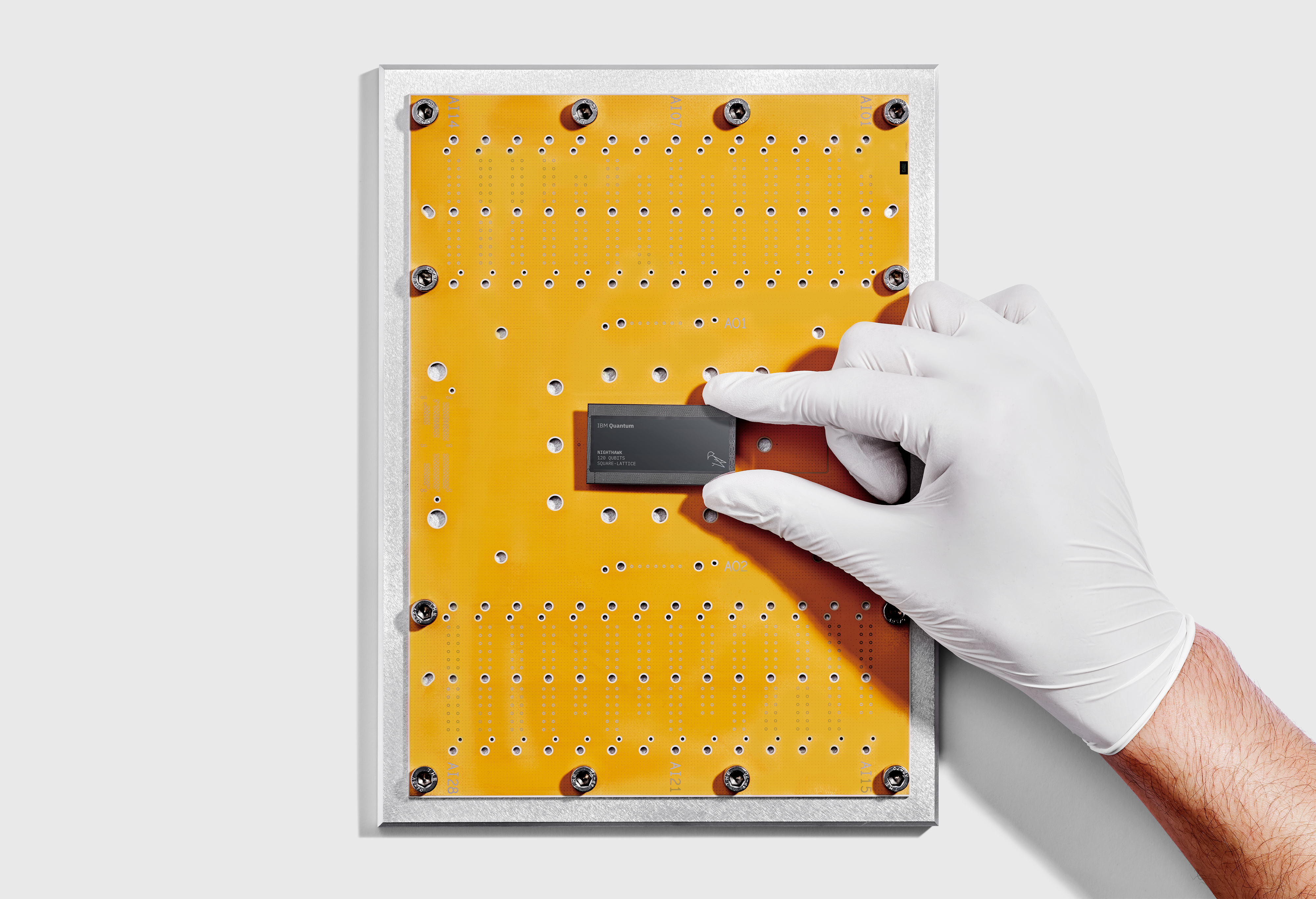
The platform was deployed at IBM's site in Poughkeepsie, New York. On the quantum side are IBM Quantum Nighthawk r2 processors, with 120 qubits, square-lattice connectivity, high circuit throughput and real-time pulse control, which allow researchers to measure qubits mid-calculation and act on the result immediately. On the classical side is Umbra, ORNL's high-performance computing system equipped with AMD Instinct MI355X GPUs and 5th Gen AMD EPYC CPUs.
The physical proximity of the two systems is central to the project: with classical hardware sitting next to the quantum processors, data moves with low latency, which is essential for error correction and for workflows in which a quantum program chooses its next step from a measurement taken during the computation.
Geekiki has previously covered the Nighthawk r2 in a test that produced 1 million samples in 19 seconds.
Why fixing errors is the bottleneck
Qubits make errors frequently. Quantum error correction spreads information across many qubits and repeats checks to detect faults. A classical program, called a decoder, reads the data from each round of checks and works out which errors occurred — and it must keep pace with the quantum processor. It is a demanding task that needs substantial classical computing.
The platform will also be used to test approaches such as hierarchical error correction, which layers two codes to protect qubits. Recent IBM research indicates this approach could reach a trillion logical operations at a physical error rate of one in a thousand, but it depends on powerful GPU decoding in a low-latency environment like the one created here.
The Department of Energy's goal
The initiative aligns with the U.S. Department of Energy's Genesis Mission, which aims for a scientifically relevant quantum computer by 2028. Its Q Competition targets 100 logical qubits running 100,000 hard operations by late 2028. Current experiments have reached 70 logical qubits through 438 hard operations — a jump of roughly 230 times still separates the current state from the goal. These are stated targets, not results already achieved.
What comes next
The platform will connect to the Oak Ridge Leadership Computing Facility in Tennessee, deepening the integration of quantum computing and supercomputing. The lessons learned should also feed into the development of IBM Quantum Starling, the fault-tolerant quantum computer IBM plans to deliver in 2029. The collaboration extends earlier joint work between IBM and AMD, which has already used AMD GPUs to accelerate quantum methods and demonstrate efficient error decoding on AMD hardware.
Featured image: IBM Quantum Nighthawk chip in a photo released by IBM (IBM Newsroom).
Sources
- IBM Quantum Blog: ORNL, IBM, AMD launch co-design platform for quantum error correction
- AMD Newsroom: AMD builds the classical foundation for quantum's future
- Official press release (PR Newswire): ORNL, IBM and AMD launch co-design platform for quantum error correction
- Reuters: IBM, AMD and Oak Ridge launch quantum error correction platform
Transparency: this article was produced with the help of artificial intelligence, based on cross-checking official publications and internet sources, including the IBM Quantum blog, the AMD newsroom and Reuters. We recommend consulting the original sources to confirm the details.
Muse