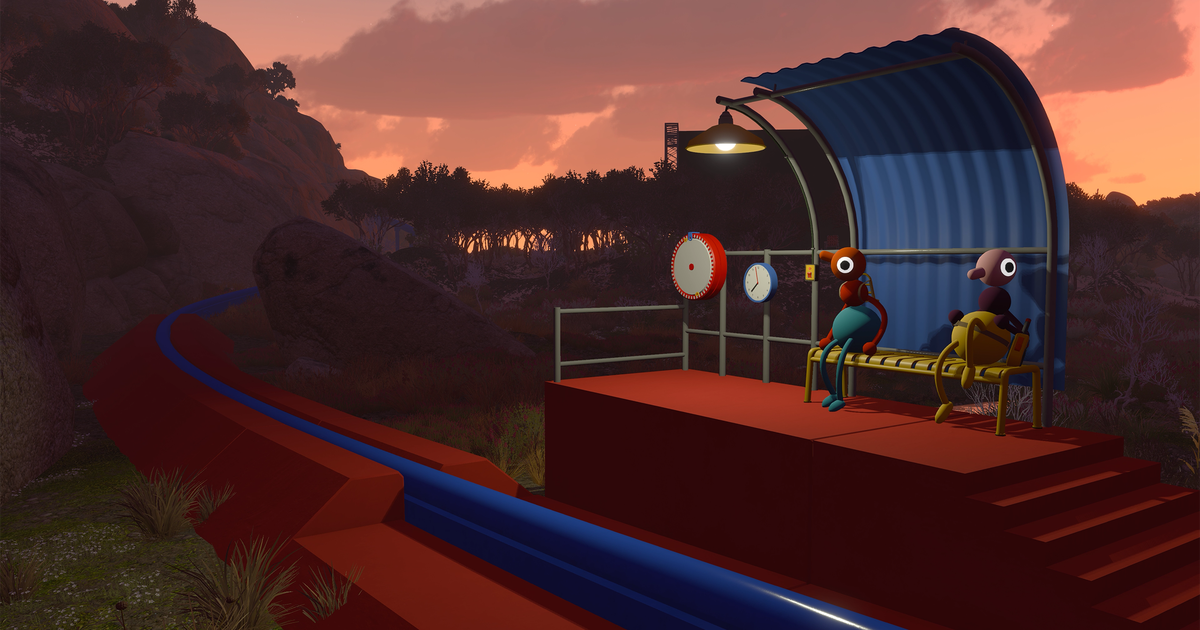
Australian studio House House (makers of Untitled Goose Game) published a clarification about the use of AI tools in the game Big Walk. According to the studio, LLMs were used sparingly only in the final stretch of development to address difficult technical challenges and bugs.
What happened?
House House estimated that well under 0.1% of Big Walk’s code had anything to do with this usage, and that generative AI was not used in any other context (art, text, design or assets). The primary use case was researching issues with third-party code via chatbots.
A concrete example: the game needed to cull shadow casters by distance from the camera, but Unity URP only allows culling shadow casters by distance in camera forwards. This made the game run 50% slower for around 20 seconds at sunrise and sunset. After extensive research, examining the URP code and speaking to a Unity engineer (who concluded it wasn’t possible), the studio asked an LLM. After a few dead ends, the suggestion was modified extensively and worked — about 10 lines of code inside URP.
Why the statement now?
The studio wrote a version of the text as a suggested part of its Independent Games Festival (IGF) submission. There was no disclosure on Steam because the platform does not request disclosure of code or chatbot usage. The public post came because the topic became a matter of public interest after IGF jurors expressed concern about the increase in games using generative AI tools.
House House made clear this is not an endorsement of, or argument for, the use of AI tools, however minimal. The studio expressed concern that voluntary disclosures like this might contribute to the normalisation of this technology or its treatment as “inevitable”. It supports efforts to limit the harm generative AI is doing to videogames and the world, and apologised that Big Walk’s LLM usage may not meet the standards of those opposed to it.
The studio also acknowledged that Big Walk was developed without an internal AI usage policy, which it considers a failure, and committed to a more comprehensive policy going forward.
What does this mean in practice?
The case illustrates the current tension in the indie sector: extremely limited technical use of LLMs for debugging can be viewed by parts of the community and award jurors as problematic, even when it does not involve creative content generation. Big Walk remains available and the studio reaffirms that AI was not part of the game’s design or art.
By Grok