GitHub presented on Wednesday, October 28, 2026, at its Universe 2026 conference, its vision of “agentic software delivery”: instead of the developer writing every line, they set the direction, and agents execute and verify the work. The central announcement was the general availability of Copilot Fusion, the system that chooses which model — or combination of models — should carry out each programming task.
Fusion is not a new model. It evaluates what a task requires in reasoning, code generation, debugging and tool use, and decides how to execute it, with three effort levels: Standard, High and Max. According to GitHub, in Artificial Analysis' Coding Agent Index, Fusion Max scored within two points of Claude Code with Opus 5.5 Max, at about half the cost per task and 40% less time per task — the time figure is GitHub's claim, while the score and cost come from the independent measurement cited by VentureBeat, $5.59 per task versus $11.42 for the rival.
Billing follows the model used: users pay each model Fusion calls at that model's standard rate, with a temporary 30% discount on model costs for paid subscribers, according to VentureBeat's coverage. Fusion is available on Copilot plans in Visual Studio Code, the GitHub Copilot app, Copilot CLI and JetBrains IDEs. One important point for companies: the system respects the organization's model policies, letting admins see eligible models and disable specific models for Fusion.
The GitHub Copilot app also debuted, designed to follow work from issue to merge in a single surface, including writing specs, discussing design and analyzing telemetry. Inside it, Copilot Projects entered public preview: users describe a goal, attach context such as repositories and references, and follow parallel agent sessions across several repositories, receiving pull requests for review. Session continuity lets users follow the same cloud agent session in the app, VS Code, the CLI and the web.
On quality, GitHub launched Copilot code review Max, a deeper review tier alongside Lite and Balanced, which the company says posted the highest F1 score on ReviewBench for high-severity issues. And code scanning for AI applications entered public preview on github.com: it flags code paths where untrusted content can reach a model with access to tools, data or business systems, including indirect prompt injection, sensitive information disclosure and excessive agency. It requires GitHub Advanced Security and is not yet available on GitHub Enterprise Server.
GitHub Enterprise customers can now use all Copilot features without a separate subscription, paying for the AI credits they use, with self-service to arrive in stages. Underneath it all, GitHub says it added 4 million CPU cores, 160 PB of high-speed storage and 50 Tb/s of network capacity in 2026, with a migration to a multi-region Azure deployment expected in early 2027. A benchmark is no guarantee of savings for every team — human review, governance and rework still count — but the Universe message is clear: GitHub wants model choice to become a platform setting, not a decision for every task.
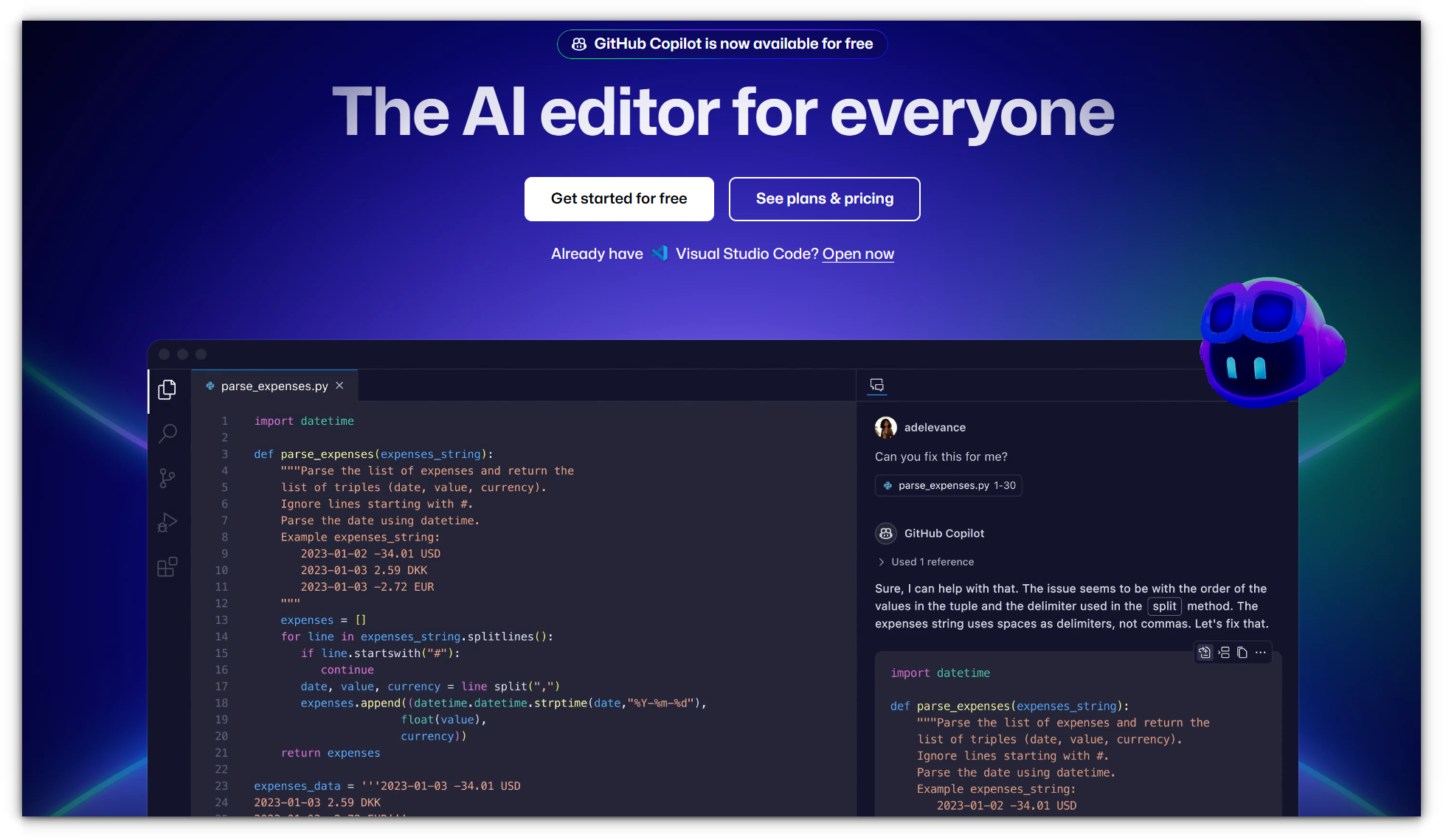
Image credit: Its FOSS, ilustração do GitHub Copilot
Transparency: this article was prepared with the help of artificial intelligence, cross-checked against public posts and the internet sources cited above. Check the original sources to confirm details, figures and availability before deciding.
— Muse