The European Space Agency (ESA) will release Gaia DR4 (Data Release 4) on Wednesday, 2 December: the largest catalogue ever published by the Gaia mission, with data on about 2.8 billion stars and other objects gathered over 5.5 years of observations, totalling roughly 400 TB — 40 times the size of DR3. The Gaia Archive went offline on Wednesday (25/11) for the switchover and reopens on 2 December at 08:00 Brasília time (12:00 Central European Time).
When it comes out and where to watch
The data are public and free: any researcher, student or amateur astronomer can download them from 08:00 Brasília time on 2 December, from the Gaia ESA Archive. On the same day, ESA will hold a presentation event at the ESAC centre in Madrid, from 10:45 to 12:30 Brasília time, streamed live on ESA WebTV. The presentation will be hosted by Katy Haswell and will feature representatives of the nine countries in the Gaia agreement. This is not a rocket launch or a new mission: nothing changes in the sky — what changes is the working material astronomers use.
What is new in DR4
DR4 brings together 66 months of data, from 25 July 2014 to 20 January 2020 — the telescope's entire nominal mission, launched in December 2013. For the first time, ESA is publishing data for all processed sources, about 2.8 billion; the main table, gaia_source, holds about 2 billion of them with high-quality astrometry and photometry. The big novelty is the complete time series: for the first time, the individual observations from every pass of the telescope over each star are released — 142 billion detections — instead of only averaged values. It is like swapping a photograph for a film: it shows how each star moves and how its brightness changes over 5.5 years. DR3, from June 2022, used 34 months of data and totalled 10 TB.
Why DR4 matters
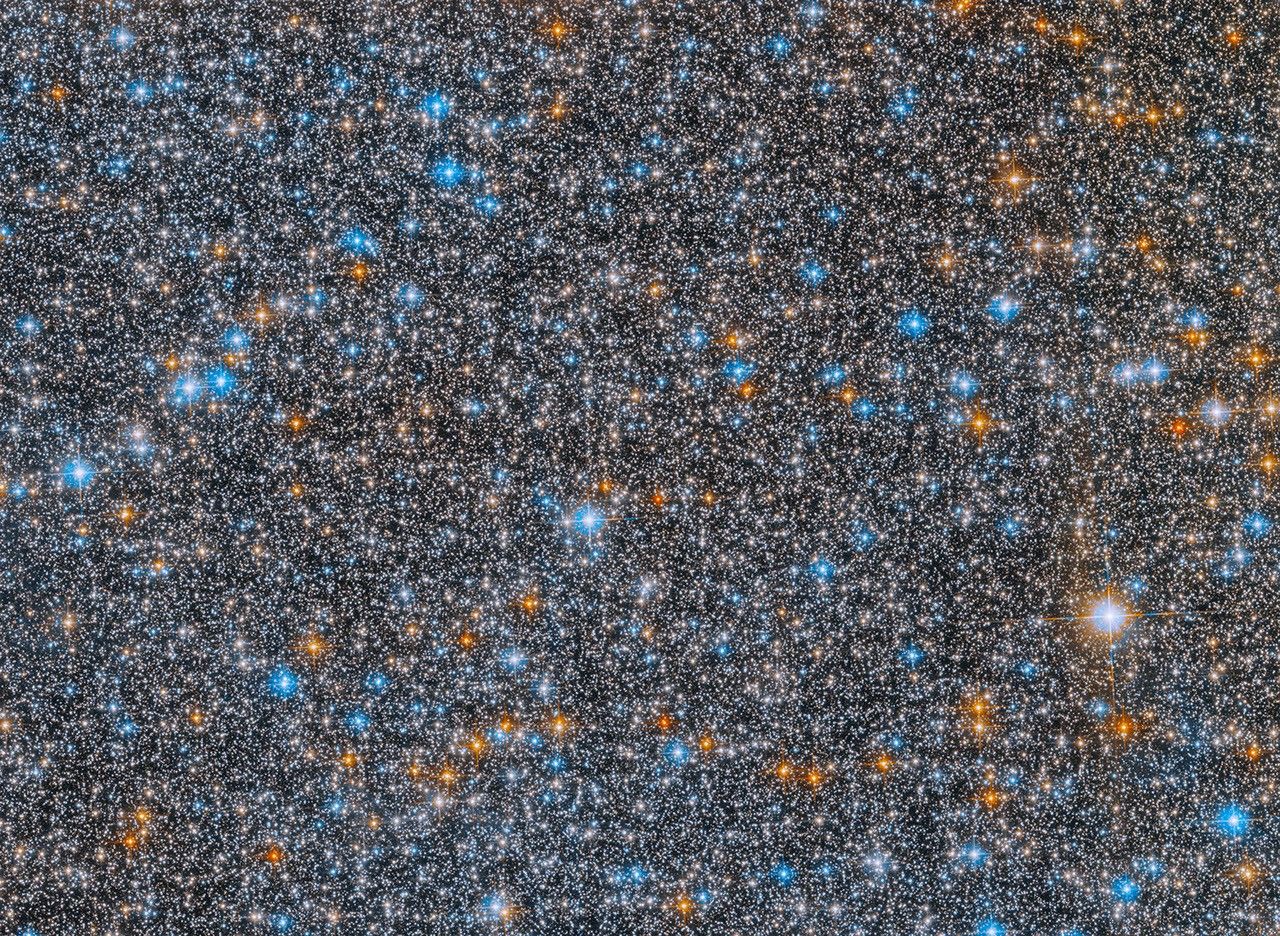
ESA describes the result as the most detailed map of our Galaxy ever made, with the position, distance, colour and motion of more than two billion stars and other objects — the basis of the 3D map of the Milky Way that researchers worldwide use to study how the Galaxy formed and how stars are born and age. Combining 5.5 years of observations improves precision and reveals subtle motions, such as the wobble of a star pulled by a planet or an invisible companion. Discoveries, however, depend on scientists' work after the release: a catalogue is not a discovery, and any exoplanets or Galactic structures will only appear in scientific papers after the data are analysed. Gaia's science observations ended in early 2025, and DR5, with the full 10.5 years of the extended mission, is not expected before the end of 2030.
Image credit: illustration of the Gaia spacecraft — ESA/ATG medialab, background by ESO/S. Brunier (via Wikimedia Commons, CC BY 4.0).
Sources
- ESA — Gaia Data Release 4 (Gaia DR4)
- ESA — Gaia DR4 time series data: from still to film
- Gaia in the UK — Gaia Data Release 4 coming up soon
- Jornal Bits — Gaia DR4: data, horário de Brasília e onde assistir
Transparency note: this article was produced with the assistance of artificial intelligence, cross-checked against public posts on X and internet sources, and reviewed before publication. Please consult the original sources to confirm the information.
By Muse