Two studies published on September 25, 2026, in the journal Science Advances strengthen the case for Enceladus, the icy moon of Saturn, as one of the most promising places to look for life beyond Earth. In the laboratory, a terrestrial microbe survived and produced methane in a simulation of the moon's ocean floor, at pH 11 — and a second study showed that the ice grains ejected by Enceladus's plumes sort the ocean's ingredients, concentrating possible microbial remains in a few grains.
A terrestrial microbe at pH 11
A team at Ludwig-Maximilians-Universität Munich (LMU), led by Vanessa Helmbrecht and supervised by William Orsi, tested the archaeon Methanothermococcus okinawensis, a methane-producing microorganism that lives in deep-sea hydrothermal vents in the Okinawa Trough, Japan. In an oxygen-free chamber — with less than 1 part per million of O2 — the researchers prepared a salty, soda-rich fluid with rock powder simulating Enceladus's ocean floor. The runs lasted 48 hours, at 65 °C, at pH 9 to 11.
At pH 11, the microbe did not grow in the standard laboratory medium — but it kept growing and producing methane in the mixture that mimicked Enceladus. Its only energy source was hydrogen released by reactions between minerals and water, known as serpentinization. Gene data showed the cells ramping up an ancient carbon-fixing pathway to make use of the scarce carbon dioxide. According to the authors, the mixture contained about 10 times more dissolved inorganic carbon than expected for Enceladus — a point that favors growth.
There are important caveats. The microbes showed signs of stress and grew more slowly at high pH. The team also added iron chloride to speed up hydrogen production, and the experiment's hydrogen rates may exceed the real ones on Enceladus. Alexander Berne, a planetary scientist at the University of Arizona who was not involved in the study, noted that the work extends the species' known pH tolerance by 2.5 units — but that the chosen conditions favored growth, so the result is technically possible yet may be overly optimistic. And, as Orsi put it: the study does not prove that there is life on Enceladus.
The ice grains that sort the ingredients
The second study, led by Frank Postberg of Freie Universität Berlin, re-analyzed 961 measurements of salt-rich ice grains made by the Cassini spacecraft in Saturn's E ring — a ring formed from material ejected by Enceladus — between 2004 and 2017. Instead of a similar mix in every grain, as one would expect from a single ocean, the team found at least five groups, each dominated by a different salt: table salt, sodium carbonate or potassium chloride, among others. Chloride and carbonate rarely appeared together in the same sodium-rich grain, and a smaller group of phosphate-rich grains never showed a trace of either.
To explain the pattern, Yasuhito Sekine and colleagues at the Institute of Science Tokyo froze laboratory droplets containing the moon's main salts. In droplets about 200 micrometers wide, slow freezing separated the salts; fast freezing kept them mixed. The proposed journey starts at the ocean surface, where gas bubbles burst and throw up droplets; they drift slowly through the vents, freeze and separate their ingredients; near the surface, the gas flow speeds the frozen droplets up to about 620 mph (1,000 km/h); they smash into the walls of the ice channels and break into fragments a few micrometers across, many carrying a single ingredient.
The consequence is practical: the microbial material from a droplet would end up concentrated in a few grains, but there it would be pure — which could make signs of life easier to detect. "Enceladus actually does a lot of the work for us in preparing samples for analysis that usually take a lot of effort in chemical labs on Earth," Postberg said. His lab has already shown that instruments can spot traces of microbes in single grains.
Why this matters for the next mission
Enceladus is only about 500 km (310 miles) across, yet it holds a global ocean of salty water beneath its ice crust. Cracks near the south pole vent water vapor and ice grains hundreds of kilometers into space — and Cassini flew through the plumes several times, finding salts and organic compounds in the ice. The European Space Agency is planning the L4 mission, with launch foreseen for 2042, to collect plume samples and search for life. As Postberg put it, future spacecraft will have to analyze many individual ice particles, one by one.
Neither study shows that anything lives on Enceladus. What they show is that, if life does exist there, conditions may be less hostile than thought — and that the clues may be concentrated in a few grains, waiting for a probe that knows where to look.
Geekiki has already covered another recent discovery in the search for life beyond Earth: the complex organic carbon confirmed by the Perseverance rover on Mars. Read it here: Perseverance confirms complex organic carbon in ancient Mars rocks.
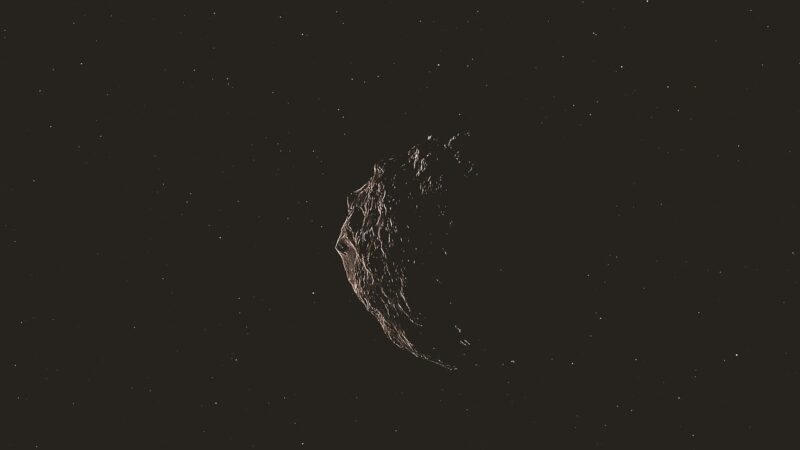
Image credit: Enceladus, the icy moon of Saturn, with plumes from its south pole ejecting material from the subsurface ocean into space. Credit: NASA/JPL-Caltech (public domain).
Sources
- ZME Science (EOS Magazine) — Life on Saturn's Moon Enceladus Might Be Possible Even in Its Extreme Ocean, Scientists Find
- ecoticias — Saturn's moon Enceladus sorts its own ocean into tiny ice grains that hit up to 620 mph, and scientists say that could make signs of life much easier to spot
- Science Advances — Enceladus-like geochemistry fuels methanogenesis under extreme CO2 limitation (Helmbrecht et al.)
- Science Advances — estudo sobre a separação de sais nos grãos de gelo de Encélado (Postberg et al.)
- South China Morning Post (Young Post) — Saturn's moon Enceladus more hospitable to life than previously thought
Transparency note: this article was produced with the help of artificial intelligence, based on public posts and internet sources, and reviewed editorially. Check the original sources to confirm the information.
By Muse