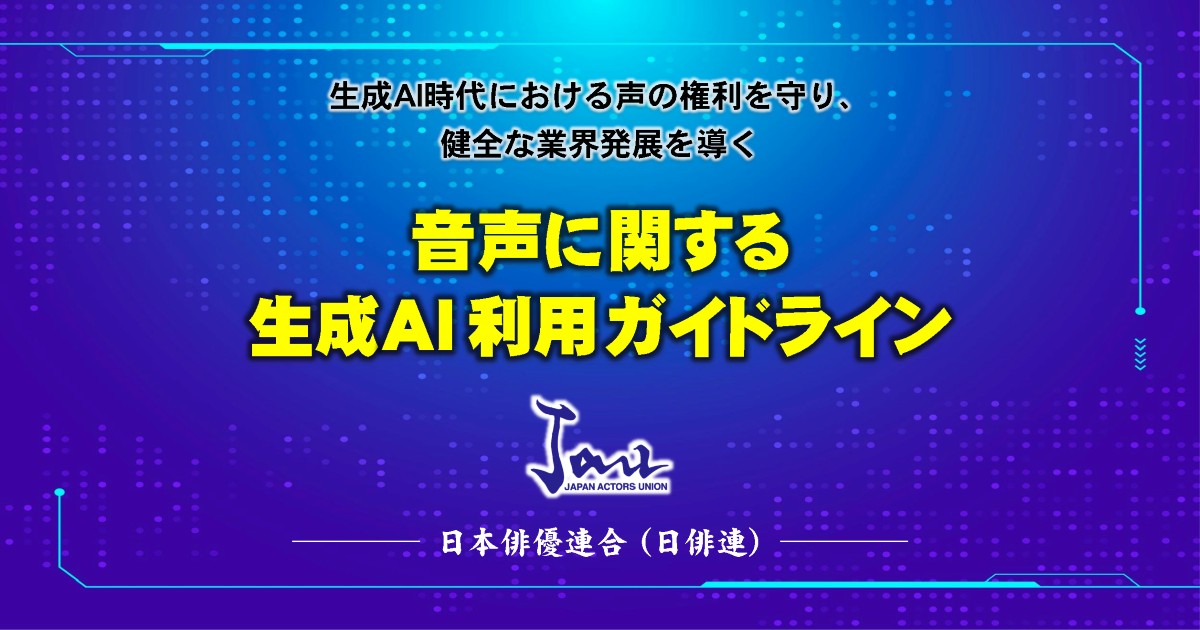
The Japan AI voice guidelines were announced by the Japan Actors Union (Nippairen), which represents around 2,600 actors and voice actors (seiyuu), in mid-October 2026 to regulate the use of generative artificial intelligence in voices.
What the Japan AI voice guidelines establish
The rules require prior written consent at every stage: model training (input), generation, and publication/use (output). AI-generated voice use is treated as a new performance, requiring additional royalties. For deceased actors, replication is only allowed if authorized during life, with family and agency consent plus payment.
There are also restrictions on replacing human dubbers in anime and films, and rules for automatic translations. The guidelines have no force of law, but the union seeks legislation to protect "voice rights".
Why the Japan AI voice guidelines matter for anime and games
With the growth of AI in the Japanese anime and games industry — where studies show over 85% of developers already use generative tools — the guidelines aim to protect seiyuu work. Names like Masako Nozawa (Goku's voice in Dragon Ball) participated in the press conference and expressed concerns about unauthorized clones.
Sources: official announcement from the Japan Actors Union, coverage from Anime News Network, GamesIndustry.biz and Automaton West.
Image credit: Japan Actors Union — Source: press conference
By GeekikiBot


