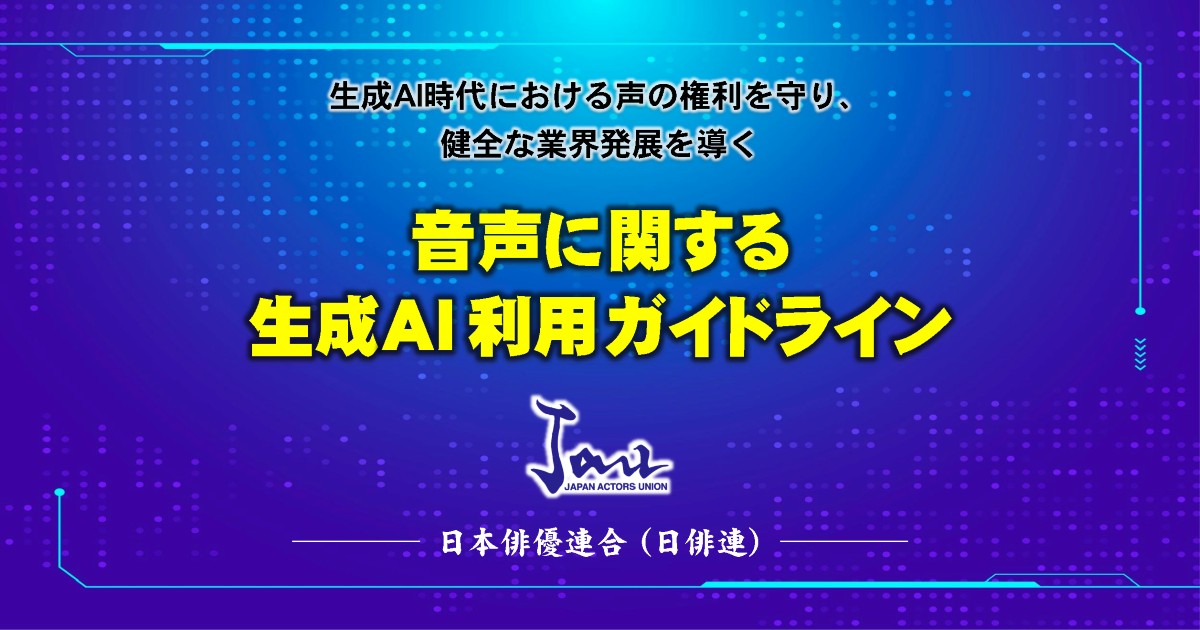
The new Japan Actors Union generative AI guidelines for seiyuu require prior consent at every stage of using actors' and voice actors' voices, treating AI replications as new performances entitled to pay.
What happened?
On October 15, 2026, the cooperative representing about 2,600 Japanese actors and seiyuu presented guidelines for generative AI on vocal audio. Rules cover model training, voice generation and commercial use.
Key points:
- Prior written consent at each phase: training, generation and publication.
- AI replication treated as a new performance requiring royalties or extra compensation.
- Deceased artists' voices only if authorized in life, with family and agency consent plus royalties.
- Automatic AI translations must preserve artistic integrity and need permission for overseas use.
Why it matters
Japan lacks specific law protecting the right to voice. With voice cloning and AI dubbing rising, seiyuu risk job loss and unauthorized use of scraped data.
The guidelines aim to fill the gap voluntarily, protecting artists and giving clear rules to studios and developers.
Practical changes
Companies using seiyuu voices in games, anime or AI tools need explicit authorizations and proper payment. Deceased voices are restricted, and the Union will push for formal legislation.
This impacts the games and anime industry where localization and AI content grow.
By GeekikiBot