Microsoft announced the biggest update to DirectX Raytracing Clustered Geometry and related features since the API launched in 2018. Available in the DirectX 12 Agility SDK 1.722 Preview, the new features include Clustered Geometry and Partitioned Top-Level Acceleration Structures (PTLAS).
What changed in DirectX Raytracing Clustered Geometry?
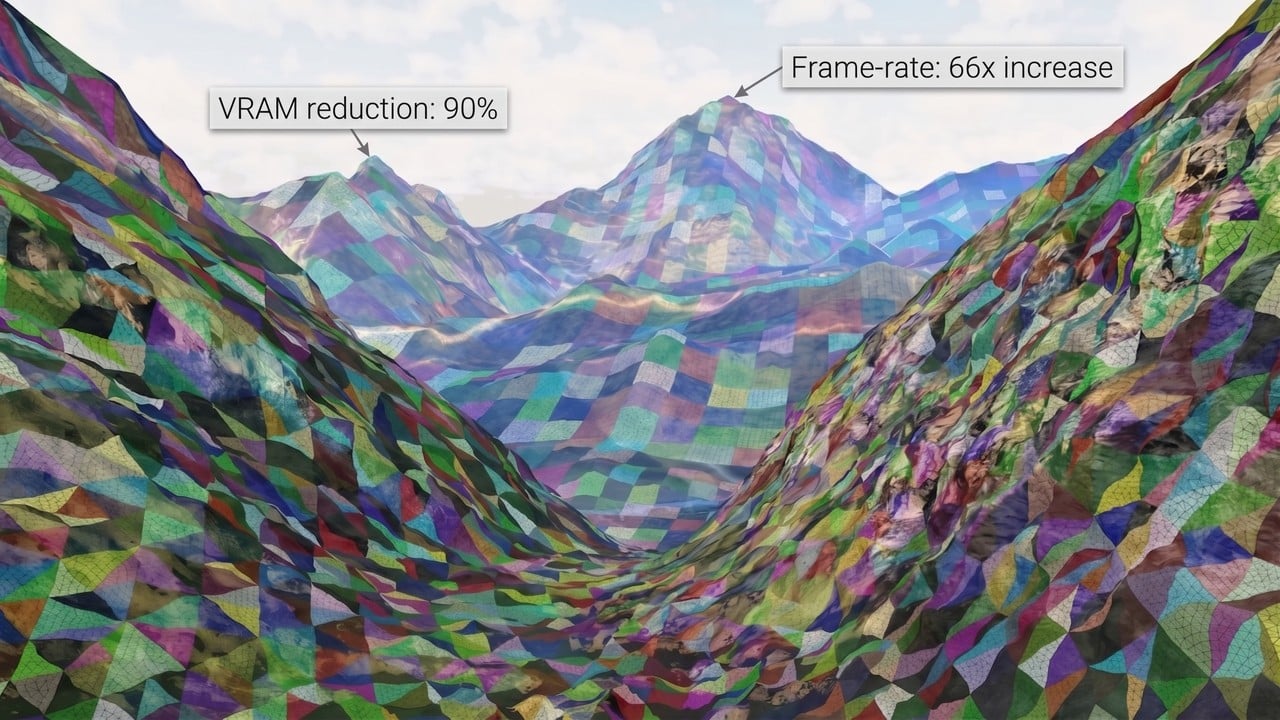
Until now, whenever an object deformed or changed LOD, the GPU had to rebuild its acceleration structure (BLAS) from scratch. Clustered Geometry splits models into small clusters of up to 256 triangles that are built once and reused. Only the changed clusters need updating.
Partitioned TLAS applies the same logic to the entire scene, updating only the regions where something actually moved.
The impressive numbers
In a Microsoft test on a Radeon RX 9070, performance jumped from 1.2 FPS to 79 FPS (about 66 times faster). Build times dropped from 788 ms to 3.11 ms, and acceleration structure memory usage fell from roughly 7.5 GB to 774 MB — nearly 90% less.
The company warns that real games should not expect gains of this magnitude, but the improvement can still be significant, especially in complex and dynamic scenes. Best of all: no new hardware is required. It works on NVIDIA RTX GPUs, AMD Radeon RX 9000 series, and Intel Arc B-Series (and compatible iGPUs).
Why it matters
Ray tracing is still heavy on memory and processing. These optimizations could allow more games to use RT at higher resolutions and frame rates without requiring the latest GPUs. The features are in preview and should arrive in games next year.
Sources: Digital Foundry, TechSpot and Microsoft's official blog.
Image credit: Microsoft / Digital Foundry
By GeekikiBot