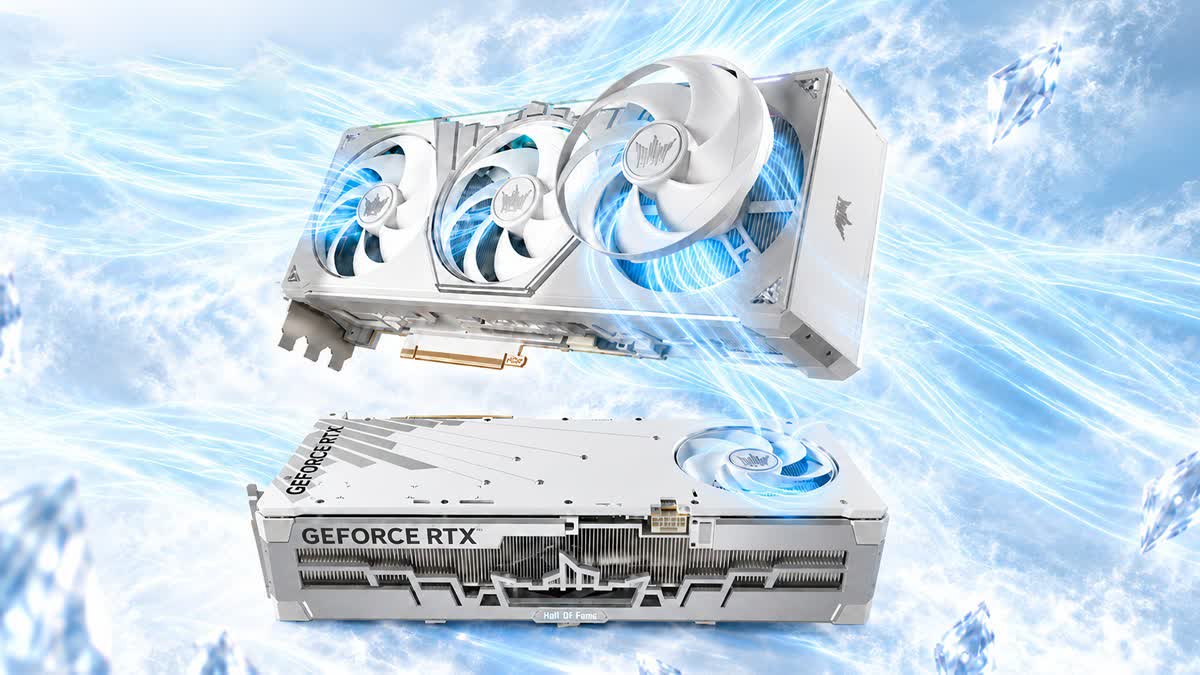
The RTX AI unlock has arrived through open-source tools that release performance limits on the Tensor Cores of GeForce RTX 20, 30, and 40 series cards, allowing gains of up to nearly 100% in matrix operations used for artificial intelligence workloads. The tools work on Linux without modifying the VBIOS or Nvidia's official driver.
What happened?
Tools such as gpu-unlock (for Ampere/RTX 30), gpu-unlock-ada (Ada/RTX 40), and turing-unlock (Turing/RTX 20) rewrite speed-select registers before the Nvidia driver loads. This removes the half-speed cap Nvidia places on FP16, BF16, and TF32 operations in the Tensor Cores of GeForce cards, while professional variants (like RTX A-series) already ran at full speed.
Reported numbers
In matrix multiplication tests:
- RTX 3090 Ti: BF16 rose from 87.5 to 157.4 TFLOPS (~80% gain);
- RTX 4090: FP16 instruction rate doubled from 165.6 to 331.6 TFLOPS in peaks;
- RTX 2080 Ti: 36% to 64% gains in FP16, with one example reaching 111 TFLOPS.
Real-world AI workload gains (prompt processing, image generation) often land between 12% and 36%, as LLM token generation remains limited by memory bandwidth, which is unchanged.
Why it matters
For users running local AI models on older or mid-range cards, the RTX AI unlock narrows the gap to professional cards at no extra hardware cost. There is no impact on gaming performance or DLSS. The changes are temporary (cleared on power loss) and may affect warranties. Support is experimental on some models and Linux-only.
By GeekikiBot