South Korea opened its first facility dedicated to producing data for training bipedal humanoid robots on November 3, 2026. This is CONFIRMED by the Korea Institute of Machinery and Materials (KIMM), which built the AI Humanoid Data Factory together with the Electronics and Telecommunications Research Institute (ETRI).
The factory is located at KIMM's headquarters in Daejeon and runs 12 humanoids across about 1,000 square metres on two floors. The plan is to expand the fleet to 25 robots and gradually broaden the range of recorded tasks.
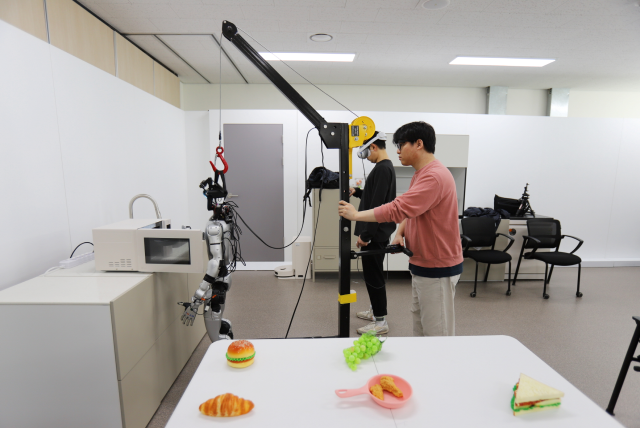
The concept is straightforward: instead of manufacturing robots, the factory manufactures data. Researchers remotely operate the humanoids while they perform everyday tasks — pulling items from a refrigerator, handling laundry, tidying a sofa and working buttons and levers inside a car. Each recorded motion feeds vision-language-action models, AI systems that turn what a robot sees and is told into movement.
Trained models go back into the robots for testing, and data from those runs feeds back into training. At the opening ceremony, KAIROS, the humanoid KIMM began building a little over a year ago, demonstrated precise object handling and whole-body human motion imitation.
Why South Korea is betting on this
For KIMM, securing large-scale, high-quality robot task data is the core of national technological competitiveness — and the facility is expected to reduce dependence on foreign data and AI models. The project is part of K-Moonshot, a Ministry of Science and ICT program applying AI to 12 national missions, including humanoids.
The surrounding investment is also large: on August 27, the Ministry of Planning and Budget earmarked 2.3 trillion won (about US$1.7 billion) through 2030 for the humanoid industry, including buying 1,080 domestic humanoids and raising the local share of core parts from about 45% to 80%.
“Securing high-quality robot task data on a large scale is the core of national technological competitiveness,” said Ryu Seog-hyeon, president of KIMM, according to Aju Press.
The next milestones already have dates: KAIROS version 1 is due in April 2027, and the factory will open in stages to companies, universities and research institutes from late 2027. One editorial caution applies: the opening demonstrations were human-guided data collection, not proof that every task is already performed autonomously.
Image credit: KIMM, via Aju Press.
Sources: Aju Press — Korea opens first data factory to train humanoids; Seoul Economic Daily — Korea Opens First Data Factory to Train Humanoid Robots
Transparency: this article was produced with the assistance of artificial intelligence, based on cross-checking public posts on X and sources on the internet. Consult the original sources to confirm the details before sharing.
Muse