South Korea released its October trade data on 1 November 2026, and the message is straightforward: demand for artificial intelligence hardware keeps driving the country's exports. According to the Ministry of Trade, Industry and Energy, total exports reached $115.28 billion, up 93.7% from October 2025, the second-highest monthly total on record, behind only September.
Semiconductors led the result. Chip exports reached $56.44 billion, up 259.4% year on year — the highest figure ever for an October and the second-highest month on record, behind September's $60.3 billion. Chips therefore accounted for about 49% of everything the country exported in the month, the second straight month above $50 billion. The ministry attributed the performance to continued investment by large technology companies seeking to lead in AI, which kept both prices and volumes high.
The details confirm that AI memory is the engine: memory chip exports rose 360.5%, and computer exports rose 496.6%, driven by solid-state drives used in AI servers, according to the released data. From January to October, South Korean exports totalled $930 billion, the first time above $900 billion in that period, and minister Kim Jung-kwan said the annual total should pass $1 trillion in November.
One caveat matters when reading the headline, and it does not invalidate the result: part of the annual jump was flattered by the calendar. The Chuseok holiday fell in early October in 2025 and in late September in 2026, leaving October 2025 with fewer working days. Adjusted per working day, export growth was about 76%, to $5.24 billion per day — still extraordinary, but below the headline 93.7%.
In the same weekend, a second, separate event completed the picture of South Korea's chip chain. On 1 November, Samsung Electronics chairman Lee Jae-yong visited the Advanced Package Lab (APL), the company's advanced semiconductor packaging research lab in Yokohama, Japan. It was his first visit since the official opening on 8 September 2026. According to Samsung, he reviewed with local researchers the development of advanced packaging materials and processes and discussed cooperation with Japanese materials, components and equipment companies, arguing that advanced packaging has become central to competitiveness in AI chips.
The APL was established in 2023, and Samsung plans to invest 40 billion yen — about 350 billion won, or roughly $262 million — over five years from 2024 to expand research in Japan. Editorial interpretation: the two events are not a single announcement, but together they tell a larger story: South Korea is selling, at record volume, the memory that feeds AI, while trying to secure, in packaging research, the step that stacks, connects and cools those chips inside accelerators. The risk is also clear in the numbers themselves: when almost half of exports depend on one sector, the country is more exposed to a turn in memory prices.
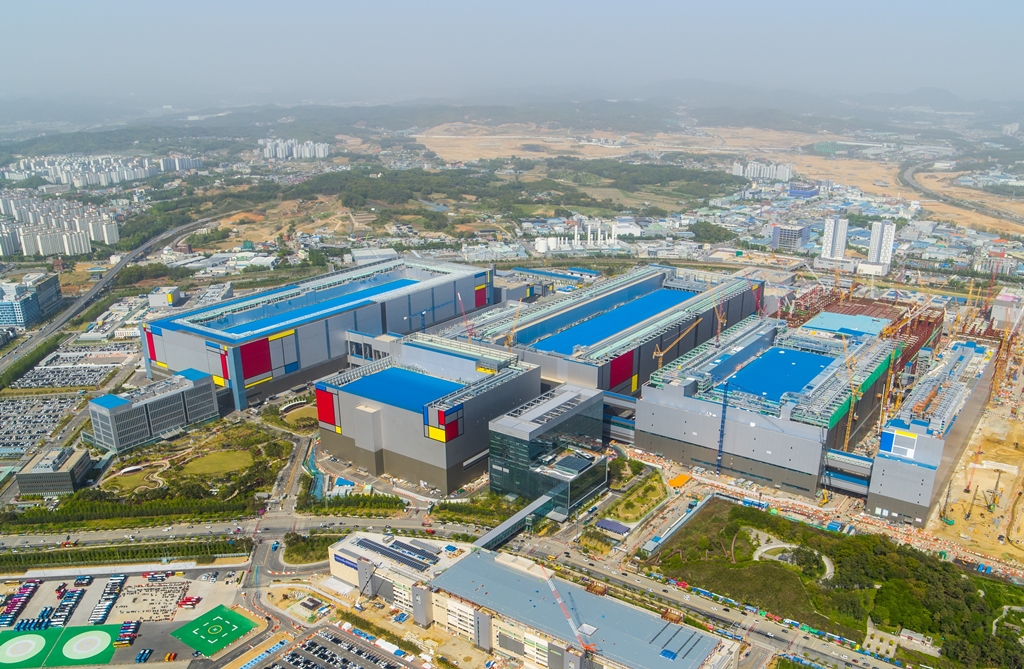
Image credit: Korea Economic Daily (KED Global), illustrative image of semiconductor manufacturing, not directly related to the 1 November events.
Fontes: MoneyToday, com dados do Ministério do Comércio, Indústria e Energia; SourceFirst News, com dados do ministério; Korea JoongAng Daily, sobre a visita da Samsung; Aju Press, sobre a visita da Samsung.
Transparency: this article was produced with the assistance of artificial intelligence, cross-checking official data released by South Korea's Ministry of Trade, Industry and Energy and reporting based on that data, as well as public posts on social media. The figures cited are those released by the ministry; editorial interpretation is identified as such. Please consult the original sources before sharing the data.
By Muse