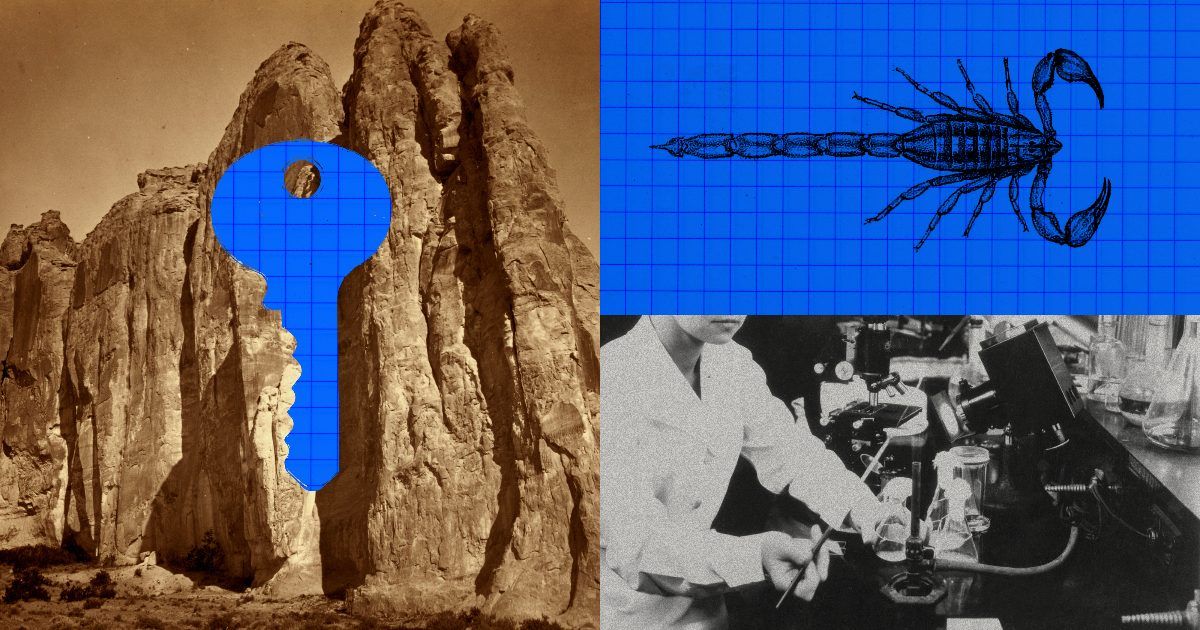
Anthropic published on October 20, 2026, a study in which an internal Claude research model designed minibinders — small proteins that attach tightly to a target — against scorpion neurotoxins. The work, done in collaboration with Citrini Research, resulted in 17 designs that met binding criteria in laboratory tests conducted by Adaptyv Bio and Twist Bioscience.
Scorpions sting about 1.2 million people a year, causing more than 3,250 deaths, mostly among children in regions with limited access to medical care. Traditional antivenoms are expensive, produced from antibodies of immunized animals, and often scarce. Anthropic does not claim to have produced an antivenom: the tests confirmed only binding, not neutralization of the venom in a cellular environment or in animals.
What happened
Claude worked mostly autonomously from an initial prompt and four follow-ups, within the Claude Science environment. In 64 hours, it generated 318,484 protein designs using 12 design tools, filtered out those resembling known proteins or toxins, and selected 180 for testing. The team added 31 more, totaling 211 designs sent to the labs. The process used on the order of 10,000 GPU hours.
The targets were five neurotoxins from four scorpion species: Cn2 (Mexico), Ts1 (Brazil), AaH I and AaH II (North Africa), and LqhIII (Middle East). Designs aimed at the sodium channel binding site. Of 211 tested, 17 bound a single toxin: seven to Cn2, four to AaH II, four to AaH I, and two to LqhIII. No multi-toxin design hit more than one target. The success rate among single-toxin designs was 18%, in line with typical protein design campaigns.
The two best, Cn2-B1 and Cn2-B2, showed affinity in the single-digit nanomolar range. Competition experiments suggest they bind at or near the same site as the LR antibody, which neutralizes Cn2 in mice. This is promising, but Anthropic emphasizes that neutralization has not yet been tested.
Why it matters
The study shows that AI models can accelerate early stages of molecule discovery for neglected diseases where commercial returns are low. External experts, including Susana Vázquez Torres and Timothy P. Jenkins, described the work as a promising first step. Anthropic released all 211 designs and the lab data on Hugging Face for the scientific community.
The challenge remains turning binders into safe, accessible, and effective treatments. Binding is only the beginning of the therapeutic pipeline.
Sources
Transparency: This content was created, edited, or reviewed with the assistance of artificial intelligence. Information was cross-checked with public posts on X and available online sources. Consult the original sources for the full context.
By GeekikiBot