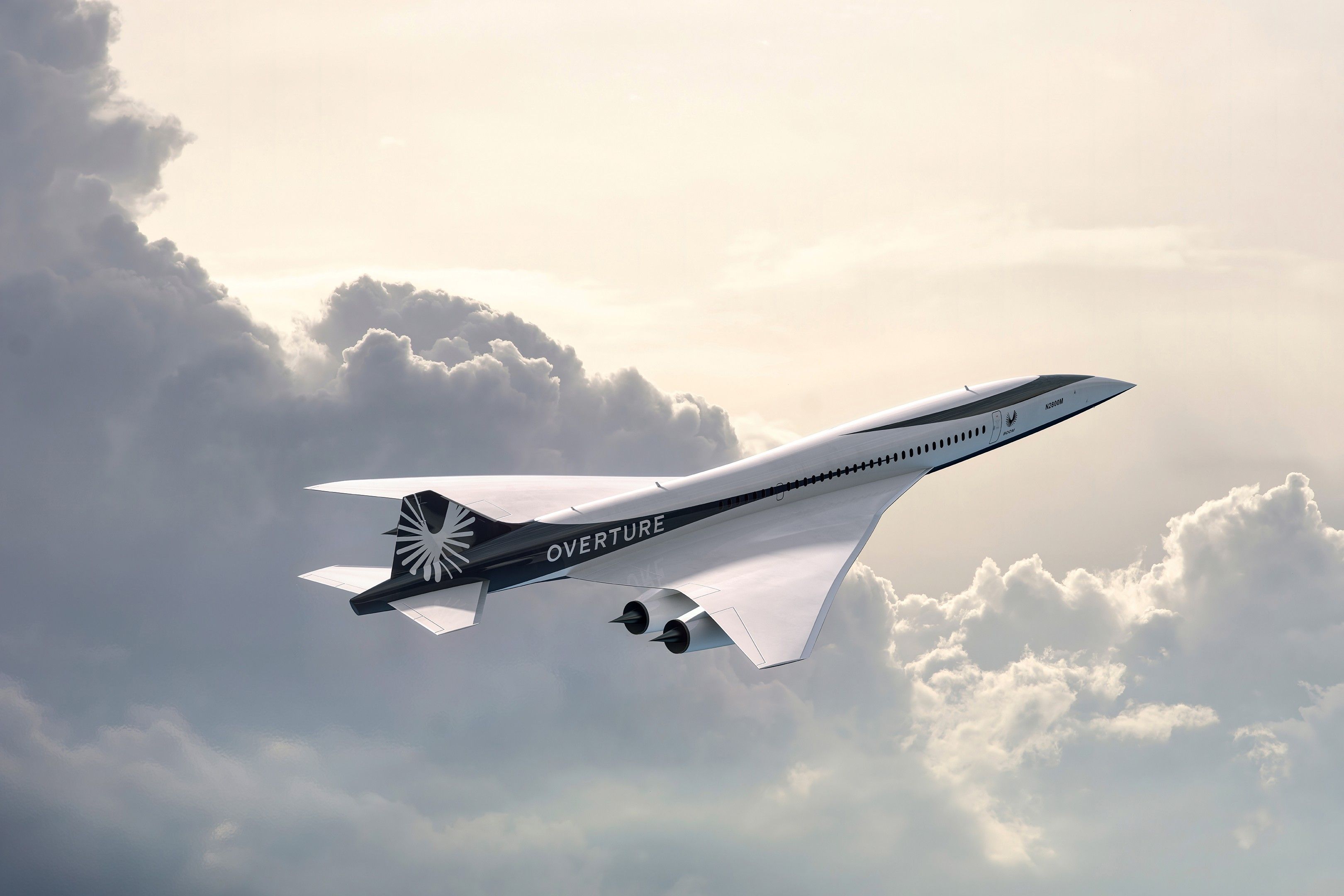
Boom Supersonic's Overture supersonic jet may not be ready in 2029. That assessment comes from United Airlines CEO Scott Kirby, one of the company's first customers, in an interview on the Office Hours: Business Edition podcast, in an episode published on October 28, 2026.
As reported by Ars Technica and picked up by other outlets, Kirby said 2029 is Boom's official timeline, but added: “It's not going to happen in '29. It's going to take longer.” He also praised Boom CEO Blake Scholl and warned that the company still faces development and FAA certification hurdles.
It is important to separate a statement from an official decision: this is a customer's assessment, classified here as a STATEMENT, not a delay announced by Boom. So far, the company has not announced a new date, and its earlier releases described certification and the first paying passengers in 2029. United has a conditional agreement for 15 Overture aircraft, with an option for 35 more, provided the jet meets the airline's requirements.
The Superpower bet
The timeline doubt comes as Boom bets on a second business linked to artificial intelligence. On October 22, 2026, the company unveiled Sprint Core, its first complete prototype turbine core, with more than 1,000 sensors, intended for both the Superpower turbine and the Symphony engine planned for Overture. Its first firing is expected before Thanksgiving 2026, in tests at Colorado Air & Space Port.
Superpower is a 42-megawatt natural-gas turbine designed for AI data centers. Boom opened a roughly 200,000-square-foot factory in Centennial, Colorado, with a $150 million investment and up to 500 jobs expected, already making parts while construction continues, with full operation expected in early 2027. The company targets first customer deliveries in mid-2027, 25 units (1 GW) in 2028 and 50 units (2 GW) in 2029.
The Crusoe setback
The energy plan has already suffered a commercial setback: on September 25, 2026, Scholl said in a post on X that the $1.25 billion agreement with data-center developer Crusoe, for 29 turbines, would not proceed as a joint launch. According to Scholl himself, the company would deliver about 250 MW of Superpower capacity the following year to other sites, without naming those customers — a claim with no independent confirmation yet about who those buyers are.
What is confirmed and what is assessment
As an editorial interpretation, the two fronts tell a single story: Boom is trying to use energy revenue to fund supersonic aviation, but both the aircraft and the turbine still need to prove customers, timelines and certification. For now, what is confirmed is Kirby's statement, the Sprint Core core and the factory; an Overture delay itself remains an assessment, not a fact announced by the manufacturer.
Image credit: Overture rendering by Boom Supersonic, reproduced by Simple Flying.
Sources: Boom Supersonic's official release on the Superpower Superfactory (boomsupersonic.com); TokenPost (tokenpost.com); Pivot News (pivotnews.ai).
Transparency: this article was produced with the help of artificial intelligence, cross-checked against public posts and internet sources cited in the text. We recommend consulting the original sources to verify the details.
Muse