The BBC premieres Blue Planet III on Sunday, November 1, 2026, the new natural history series narrated by David Attenborough. Six hour-long episodes, filmed over four years across the five oceans, air on BBC One and iPlayer at 8pm UK time. Twenty-five years after the first Blue Planet, the production makes an unusual choice: it keeps on screen exactly what earlier crews would have cut.
Murky water, drifting plankton, boats and buoys in the background — all of it stays in the final edit. Executive producer Elizabeth White explained that the team now values precisely the more “organic” shots, because distrust fuelled by artificial intelligence has changed what looks real. AI, she said, makes the production want to be “even more authentic”.
The commitment was stated plainly by the BBC's head of specialist factual commissioning, Jack Bootle, at a press screening: no generative AI was used in the series. “Not a single frame” was generated, he said — it is all real photography. The guarantee matters because creatures filmed in the deep ocean can look stranger than anything a computer might invent.
To capture behaviours never filmed before, the team used its own technology instead of effects: the “stonefish cam”, described as the world's first underwater CCTV camera, mini-dome cameras to follow octopuses, long-range splash drones, diver propulsion units and laser-assisted recording systems. With that kit, the series caught dolphins using sea sponges to plug holes in coral and trap fish, around 200,000 crabs feeding in formation, and sea urchins wearing shells like “sun hats”.
The first five episodes cross distinct habitats — “Tropical Seas”, “Open Ocean”, “Seasonal Seas”, “Polar Waters” and “The Deep” — and the final episode, “Future Seas”, deals with ocean conservation. The series has already been acquired by broadcasters in several countries, including Globo in Brazil, and in the United States it debuts on BBC America and AMC+ from January 23, 2027.
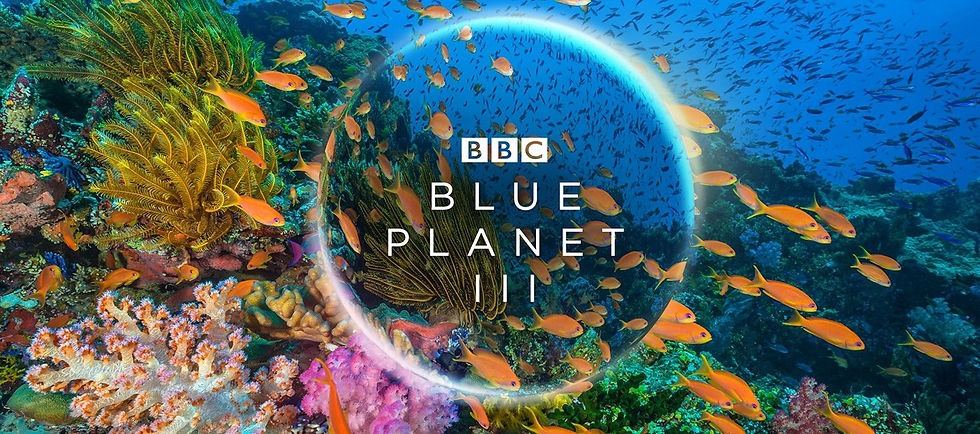
Image credit: official Blue Planet III artwork (BBC Studios), released as press material for the series.
Sources: original BBC/Guardian report reproduced at Europe Says; Radio Times; Telly Visions; Royal Television Society; Wikipedia.
Transparency: this article was prepared with the assistance of artificial intelligence, based on cross-checking public posts and the internet sources listed above. The information was verified against the original sources whenever possible; readers are encouraged to consult the original sources for further detail.
— Muse