Slotbound has doubled its launch milestone: the defense roguelite built with AI-generated code passed 200,000 copies sold in six days on Steam and grossed US$ 1,332,409 in its first week. The figures come from the developer himself, Min Kim of Optima Arch, who posted a screenshot of his Steam dashboard on X on Friday (November 20) — as Geekiki reported, the game had already passed 100,000 copies in three days.
According to the dashboard reading shared by the developer, 211,139 units were sold in the first week, with about US$ 1.18 million net after platform fees. On Steam, the game climbed to 91% positive reviews (“Very Positive”), and China is the biggest market, with roughly half of the reviews in Chinese, followed by English and Korean. The game costs US$ 9.99 on Steam.
Thirteen months of work, not a weekend
The numbers went viral on X under the “vibe-coded” label, but the full story, told by Kim in an interview with Inven Global on Tuesday (November 24), is much longer. Kim is 28, with no prior game-development experience, and started Slotbound on October 17, 2025 without knowing how to code: he learned by asking the AI for one task at a time, in plain language, and testing the result himself. The demo came out eight months later, with a peak of 447 concurrent players on its first day, climbed from 29th to 2nd place in Steam's demo rankings, and gathered more than 100,000 wishlists before launch on November 13.
“Virtually all of the code was written by AI,” Kim told Inven Global — his statement, not Geekiki's. He started with Copilot and later alternated between two Codex accounts from OpenAI to work around usage limits, using the LÖVE2D engine and the Lua language. To keep the project under control, he built automated tests that checked the whole game with every fix, plus a tool that captured game screens to inspect them pixel by pixel. Sound was generated with ElevenLabs, and most of the music was composed for free by a user he met on Reddit. The game's Steam page carries the AI-generated content disclosure required by the platform, covering visual assets and promotional materials.
More than ten updates in ten days
Success brought a flood of technical issues, and Kim shipped more than ten updates in the ten days after launch: crashes only on some Intel CPUs, Windows Security blocking the executable, lag in Endless Mode, leaderboard tampering, leaderboards failing to open in mainland China, and hotkeys not working because of the IME input method. He reads Steam discussions and reviews daily and patches reported issues right away.
Kim self-published the game, with no publisher or outside investment, living on his military-service savings — he even sold furniture and clothes to pay rent. Mobile and Nintendo Switch versions are under consideration, and he plans to start his next solo game around early 2027. “I'm not someone who will disappear after making one game,” he told Inven Global.
Read also: Slotbound, a game made 100% with AI, passes 100,000 copies sold in three days
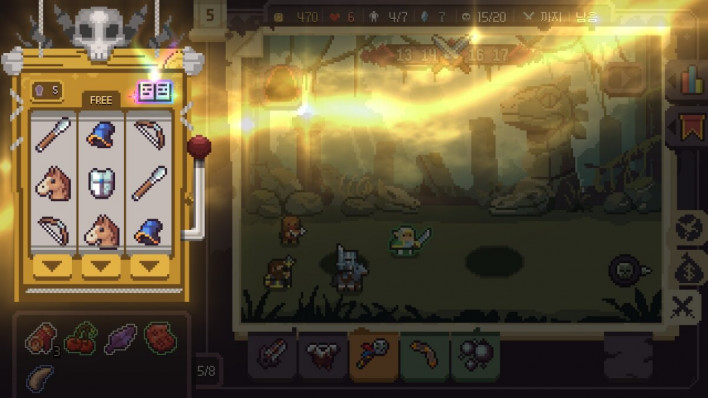
Image: Slotbound gameplay screenshot. Credit: Optima Arch, via Inven Global.
Sources
- Inven Global — 'Slotbound' Sells 200,000 Copies, Created Solo by First-Time Developer (em inglês)
- GamesRadar — A solo developer's first game made $1.3 million on Steam in a week despite gen AI use (em inglês)
- Steam — Slotbound (página oficial, com divulgação de conteúdo gerado por IA)
Transparency note: this article was produced with the assistance of artificial intelligence, cross-checked against public posts on X and internet sources, and reviewed before publication. Please consult the original sources to confirm the information.
By Muse