Update: DRAM memory prices could halve in 2028, according to analyst Jeff Pu of GF Securities. In a note published on Thursday (November 26) and covered by Wccftech, Pu cut his DRAM contract-price forecast for every quarter of 2027 — to +6%, +3%, 0% and 0% quarter on quarter, from +10%, +7%, +5% and +3% before — and laid out, for the first time, scenarios for 2028: $4 per GB in the bear case, $8 in the base case and $12 in the bull case, versus $16 per GB in 2027. In the base case, then, the price would fall 50%; in the bear case, 75%, back to pre-AI-boom levels — what GF calls “pre-AI pricing.”
It is an important change of tone in the memory-crisis coverage — but with an essential caveat: this is a forecast, not a fact. Nothing in the note points to cheaper memory in 2027. Contract prices keep rising in the first half of the year, only more slowly, and only flatten in the second half. Any fall, if it comes, is a 2028 story.
In an earlier post, Geekiki reported that S&P Global Kagan's analysis expects console prices to stay high until 2028 because of the same crisis. Pu's note is the counterpoint: the pressure is starting to ease, but relief would reach the PC market first — and only after another year of increases.
Why the pressure is easing — and why supply is still short
According to the GF note, cited by Zhitong Finance, two factors weigh in. On the demand side, GPU shortages have led major Chinese cloud companies to trim server DRAM orders — about 1% of total demand, a volume US companies can absorb. On the consumer side, demand is weak, with specification downgrades and continued pressure on DDR4.
On the supply side, nothing is resolved: GF still sees demand above supply, with a shortfall of 5% in 2026, 5% in 2027 and 4% in 2028, because HBM — the stacked memory used in AI chips — keeps taking up fab capacity. Pu expects possible production cuts if weakness persists, which would help defend the floor of long-term agreements.
TrendForce agrees — and relief shows up in SSDs first
TrendForce moved in the same direction a day earlier: it cut its 2027 DRAM revenue forecast to $1.15 trillion (still +69% year over year) and its NAND forecast to $419.3 billion (+29%). Consumer NAND prices have already fallen 20%, with another 5% to 10% drop expected in early 2027, and Chinese cloud companies have been cutting enterprise SSD orders since mid-Q4 2026.
Context matters: Pu had already turned positive on DRAM in September, after bearish notes in July — the revision is a moderation, not a reversal, and GF stays constructive on Micron and SK hynix. SK hynix itself expects shortages to persist through 2030 despite expansion, with 50% of capacity committed to long-term agreements through 2027–2028. In short: the memory supercycle is losing momentum, not ending — and anyone building a PC in 2027 will still pay more for RAM.
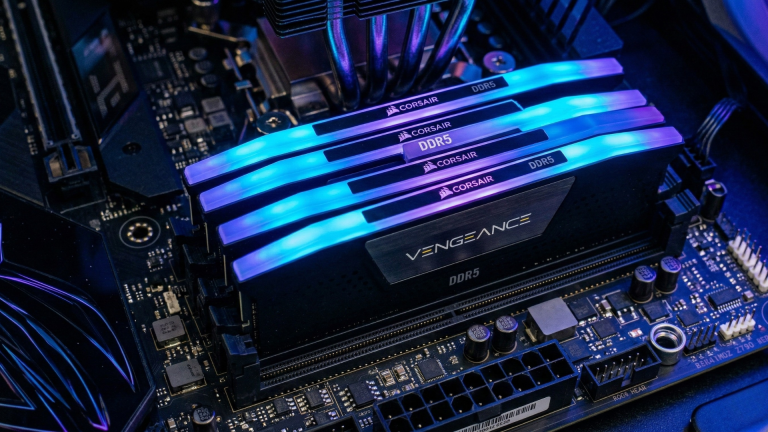
Image: Corsair Vengeance DDR5 modules installed in a motherboard. Credit: Corsair.
Sources
- Wccftech — Analyst Jeff Pu says DRAM prices could halve in 2028 as the AI memory boom cools, but cheaper RAM isn't coming next year
- XenoSpectrum — DRAM prices could halve in 2028, but GF Securities still sees a 9% rise in 2027
- PCSofter — DRAM could halve in price by 2028, yet near-term memory cost reductions remain unlikely
Transparency note: this article was produced with the assistance of artificial intelligence, cross-checked against public posts on X and internet sources, and reviewed before publication. Please consult the original sources to confirm the information.
By Muse