AdGuard Home 1.0 is out. The open-source, network-wide ad and tracker blocker had its stable release on Friday (November 20), eight years after the first preview, v0.1, in 2018. The headline change is an interface rebuilt from scratch, keeping the same structure as before, plus a new versioning scheme.
New interface, same logic
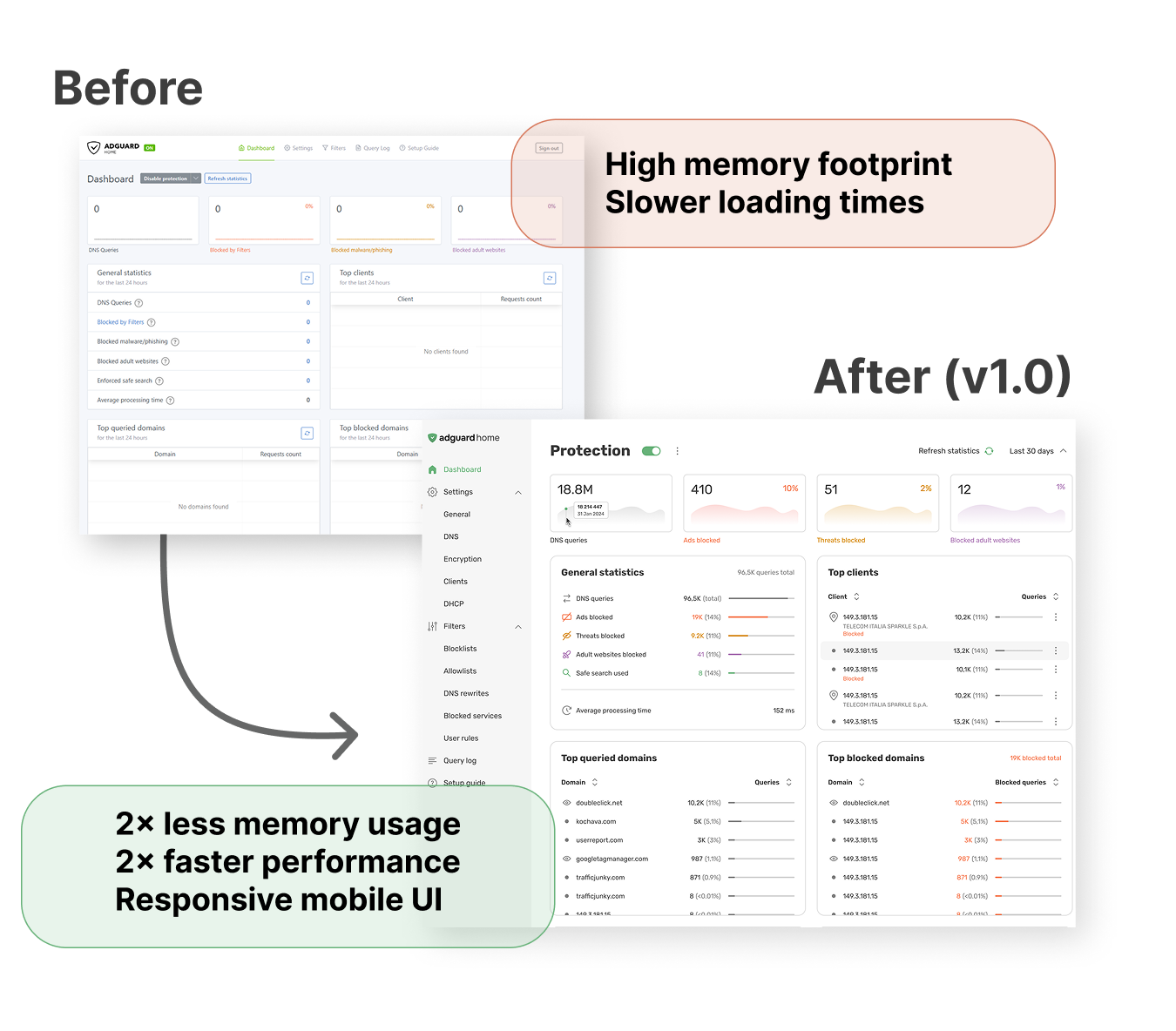
According to AdGuard, the new interface has a rebuilt frontend, lower memory usage and a responsive layout that works on low-power devices and on phones — without moving sections or changing where things are. In the comparison published by the company itself, v1.0 promises half the memory usage and twice the performance of the previous interface. Three screens changed most: client settings now allow profiles and rules per device, the query log shows more details on each card and adds sorting and filtering, and the filters section gathers blocklists, allowlists, DNS rewrites and user rules, with configurable update intervals.
What changes in the version
Version 1.0 adopts a flexible versioning scheme, similar to AdGuard's other products: from now on, minor releases — from v1.0.0 to v1.1.0, for example — may include backward-incompatible changes, which should allow new features to ship faster. The update asks nothing of existing users: the configuration schema is the same as v0.107.x, so the AdGuardHome.yaml file and the data directory keep working as they are. In total, v1.0.0 brings 22 stability improvements and one behavioral change over v0.107.80, after two public betas since the end of September.
Mind the default DNS
One change deserves attention in new installations: the default DNS is now Cloudflare's, instead of Quad9, which remains available as a manual choice. Existing AdGuard Home users keep their current settings — nothing is rewritten automatically. But anyone whose traffic goes through France should switch the upstream and bootstrap DNS before November 24, when Quad9 stops serving the country. For the future, AdGuard promises a self-diagnostics page, mass-importing of filtering lists, search inside the interface, and automatic issuing and renewal of TLS certificates.
Users on the beta or edge channels get the update automatically through the built-in updater. Users on the stable version should follow the prompt in the interface; from the command line, the command is ./AdGuardHome --update -v; and with Docker, just change the image tag to :latest and recreate the container.
Image: before/after comparison of the AdGuard Home v1.0 interface (AdGuard, official blog image).
Sources
Transparency note: this article was produced with the assistance of artificial intelligence, cross-checked against public posts on X and internet sources, and reviewed before publication. Please consult the original sources to confirm the information.
By Muse


